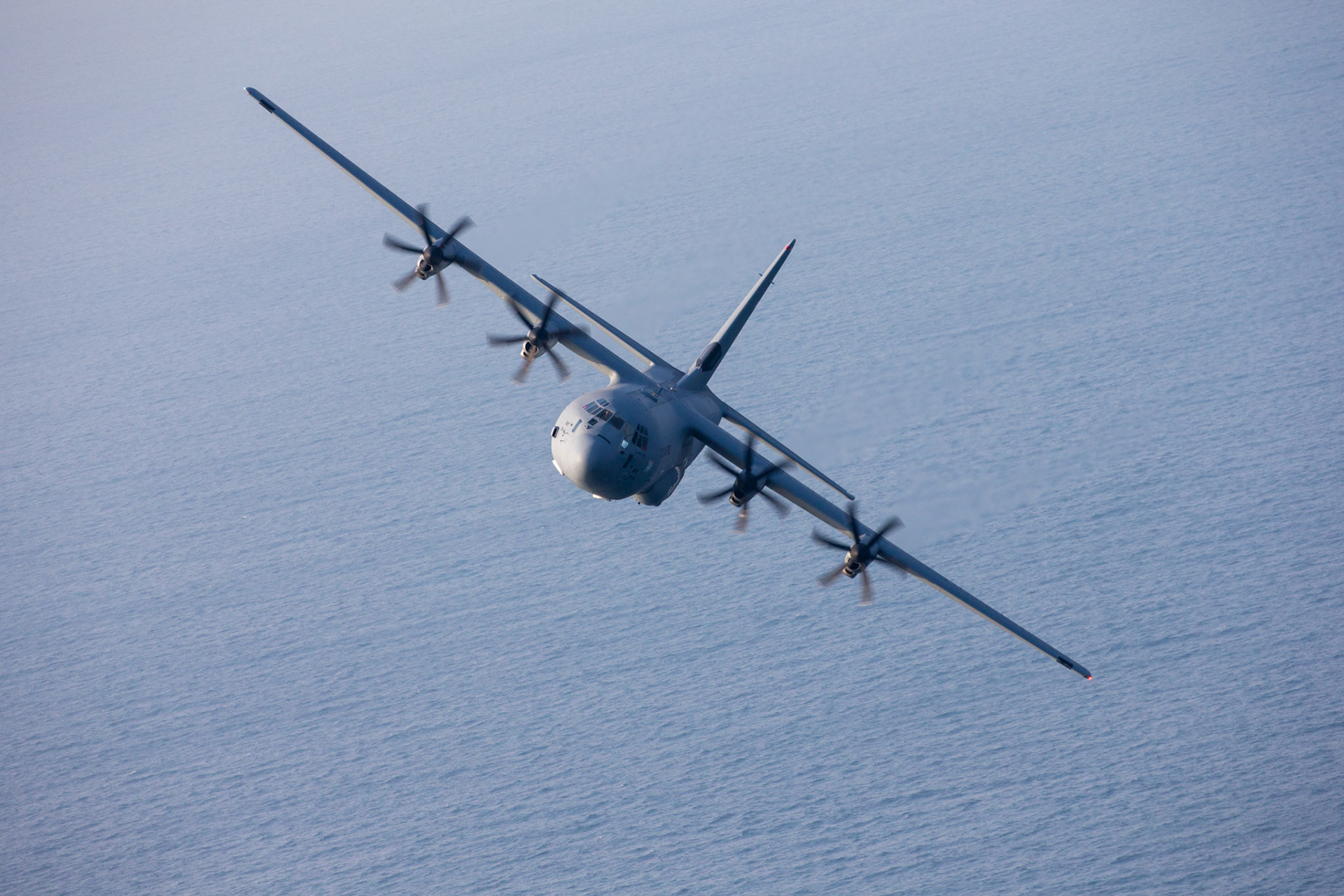
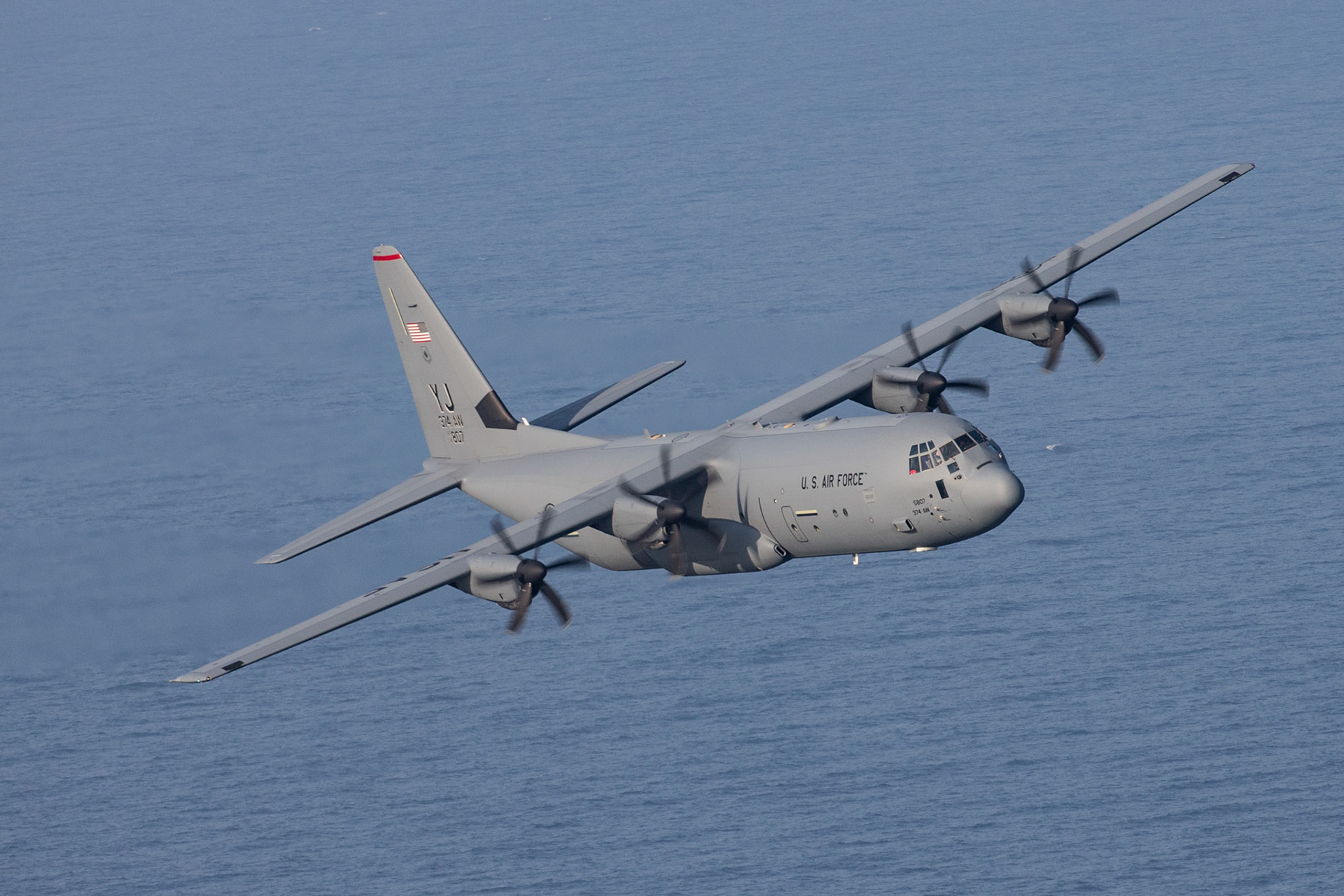
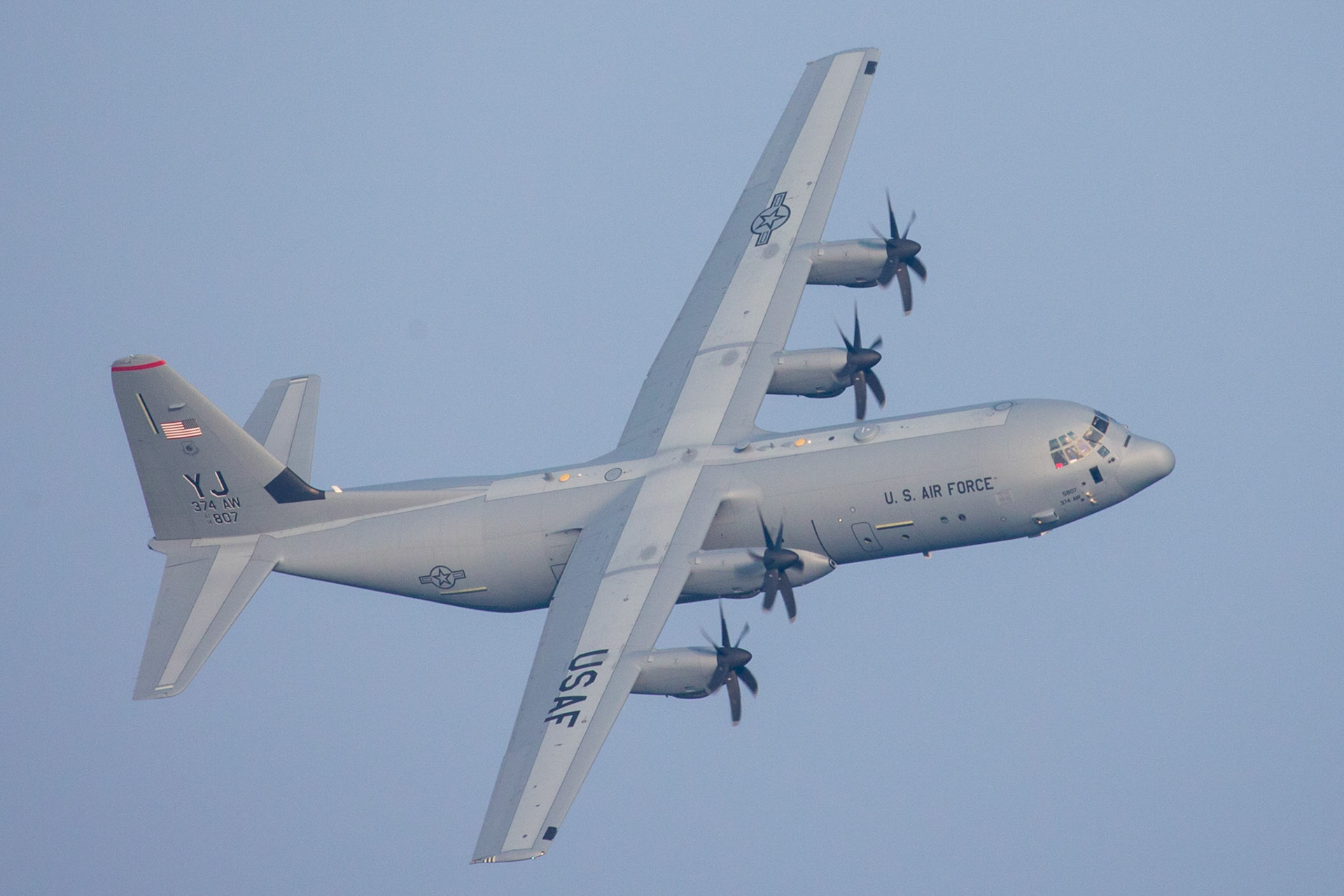
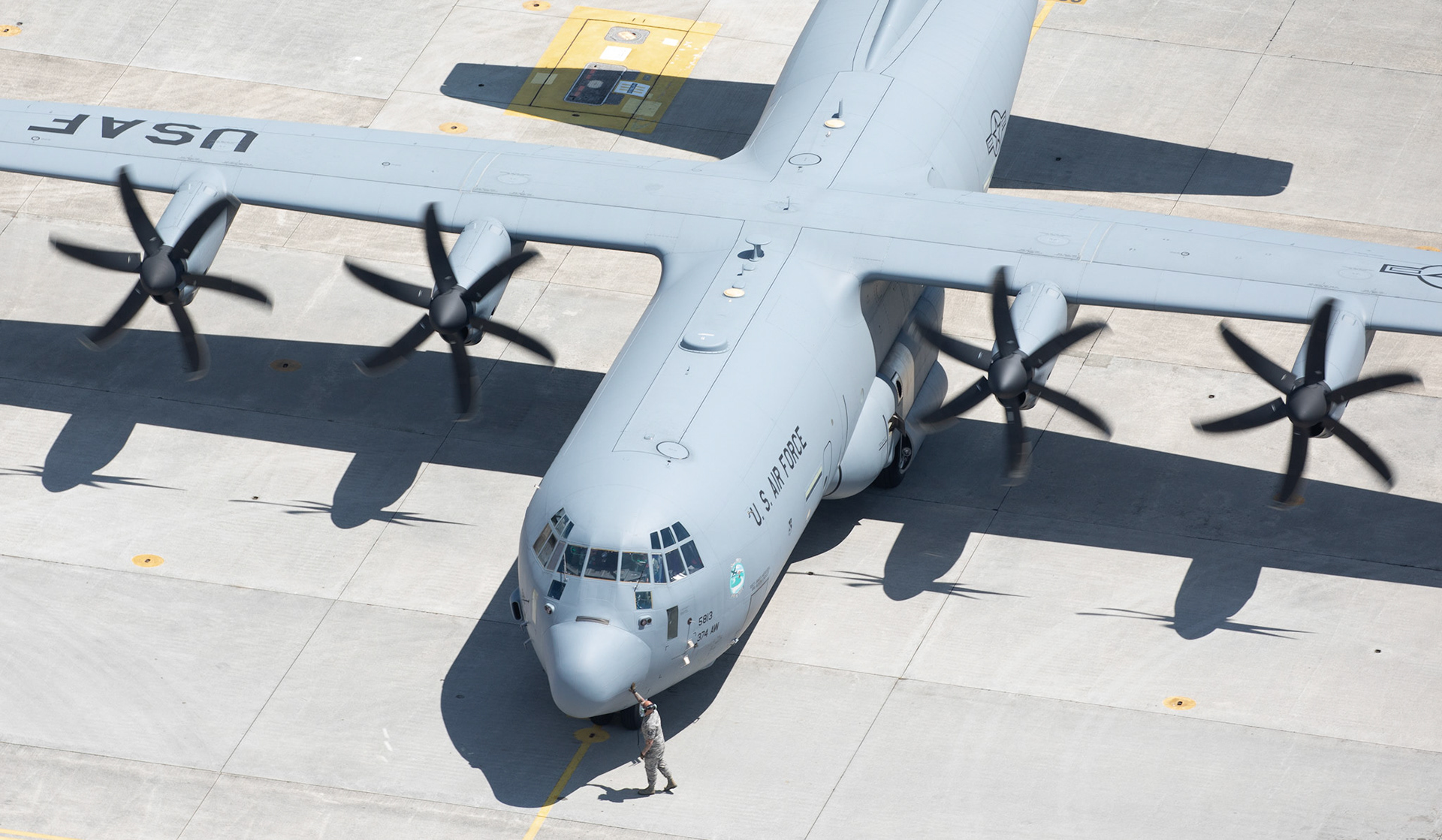
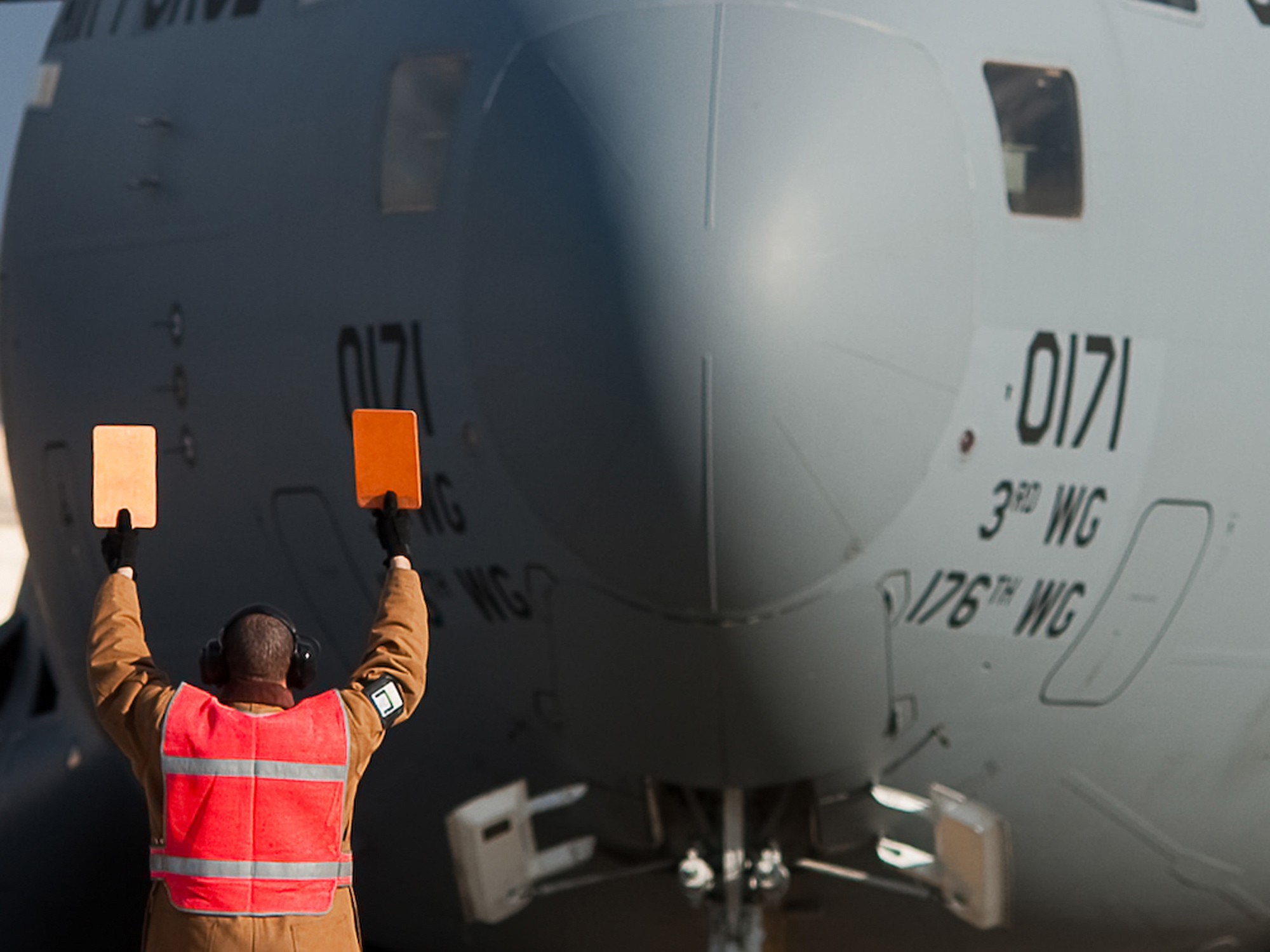
A C-130J Super Hercules assigned to the 36th Airlift Squadron fries nearby Mt. Fuji, Japan, during a routine sortie, Jan. 12, 2018 at Yokota Air Base, Japan. The 36 AS regularly conducts training missions to remain proficient in the necessary skills to support any contingency. (U.S. Air Force photo by Yasuo Osakabe)
A U.S. Air Force F-35A Lightning II assigned to the 34th Fighter Squadron, Hill Air Force Base, Utah, sits on the flightline at Yokota Air Base, Japan, Feb. 9, 2018, in support of the vice president‘s visit to Japan. The F-35A is deployed under the U.S. Pacific Command’s Theater Security Package program, which has been in operation since 2004. This long-planned deployment demonstrates the continuing U.S. commitment to stability and security in the region. (U.S. Air Force photo by Yasuo Osakabe)
Senior Airman Thomas Smith, left, 374th Civil Engineer Squadron firefighter, fastens and checks protective gear for Hidekazu Suzuki, 374th CES firefighter, while conducting simulated aircraft fire drills at Yokota Air Base, Japan, March 8, 2018. Aircraft live-fire training is conducted periodically throughout the year to ensure Airmen and civilian firefighters with the Yokota Fire Department and 374th Maintenance Squadron repair and reclamation section are always prepared to combat aircraft fuel fire. (U.S. Air Force photo by Yasuo Osakabe)
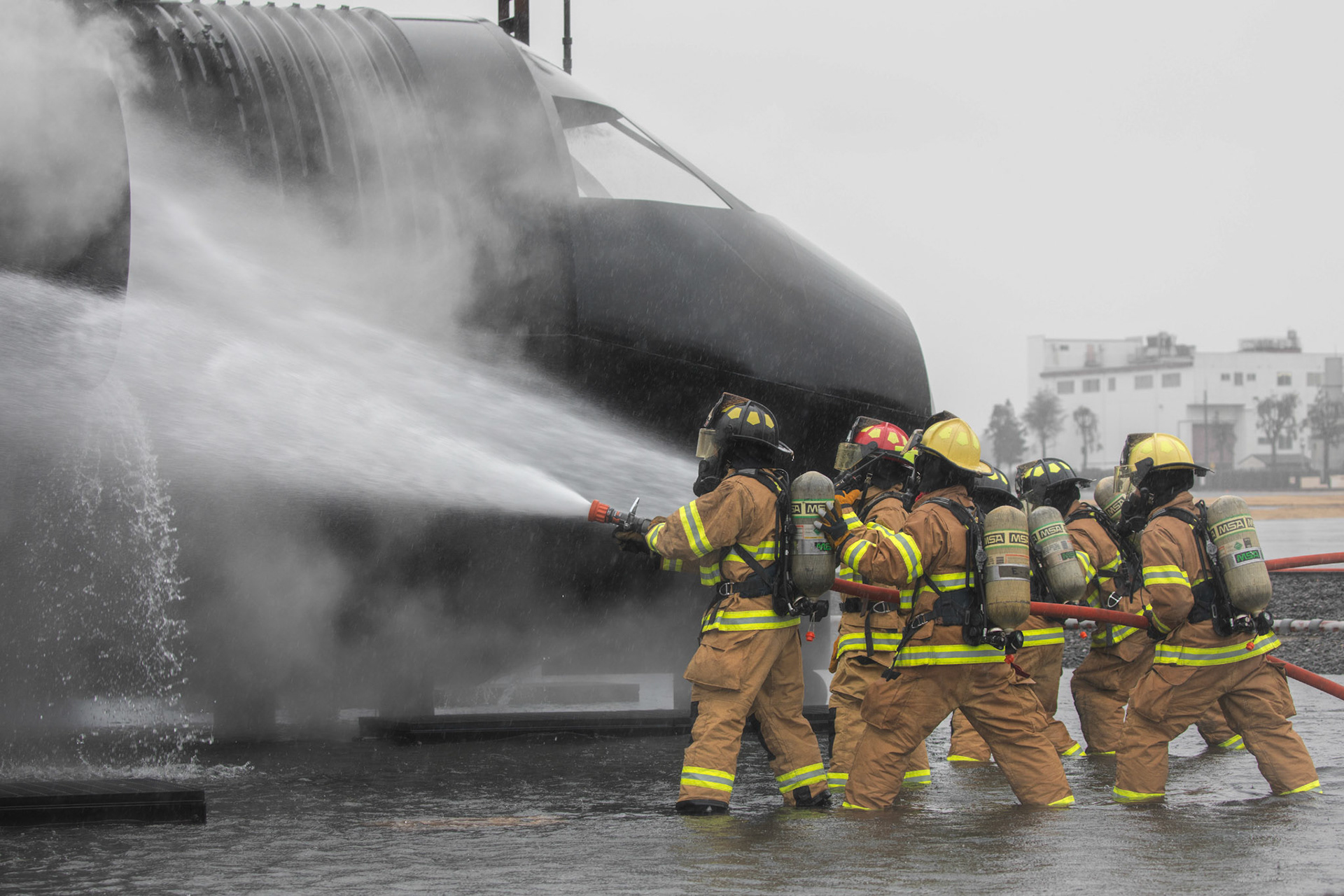
A two-person fire attack crew with the 374th Civil Engineer Squadron fire and emergency services flight, aim a stream of water on a simulated aircraft fire at Yokota Air Base, Japan, March 8, 2018. Aircraft live-fire training is conducted periodically throughout the year to ensure Airmen and civilians with the 374th CES and 374th Maintenance Squadron repair and reclamation section are always prepared to combat aircraft fuel fires. (U.S. Air Force photo by Yasuo Osakabe)
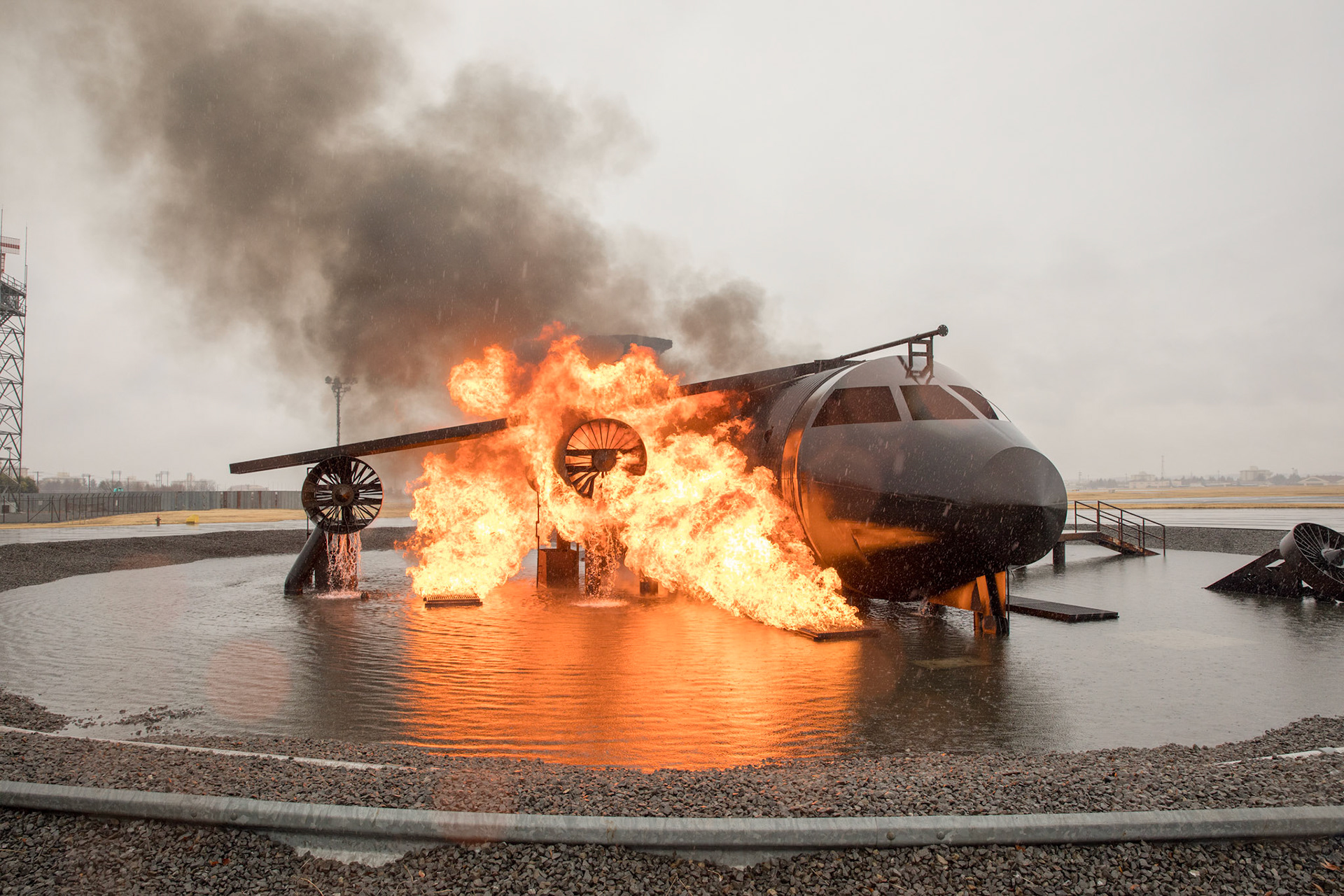
Firefighters with the 374th Civil Engineer Squadron fire and emergency services battle a simulated aircraft fire during a live-fire training at Yokota Air Base, Japan, March 8, 2018. Aircraft live-fire training is conducted periodically throughout the year to ensure Airmen and civilians with the 374th CES and 374th Maintenance Squadron repair and reclamation section are always prepared to combat aircraft fuel fires. (U.S. Air Force photo by Yasuo Osakabe)
Airman 1st Class Jade Strofaci, 374th Civil Engineer Squadron firefighter, secures his protective gear before conducting a simulated aircraft fire drill at Yokota Air Base, Japan, March 8, 2018. The Yokota Fire Department and the 374th Maintenance Squadron repair and reclamation section joined forces to prepares for the possibility of an aircraft fire. (U.S. Air Force photo by Yasuo Osakabe)
The 374th Civil Engineer Squadron fire and emergency services flight conduct live-fire training with an aircraft fire simulator at Yokota Air Base, Japan, March 8, 2018. Yokota firefighters and the 374th Maintenance Squadron repair and reclamation section conduct live-fire training to keep Airmen ready for a real-world emergency. (U.S. Air Force photo by Yasuo Osakabe)
A two-person fire attack crew with the 374th Civil Engineer Squadron fire and emergency services flight, aim a stream of water on a simulated aircraft fire at Yokota Air Base, Japan, March 8, 2018. Aircraft live-fire training is conducted periodically throughout the year to ensure Airmen and civilians with the 374th CES and 374th Maintenance Squadron repair and reclamation section are always prepared to combat aircraft fuel fires. (U.S. Air Force photo by Yasuo Osakabe)
A two-person fire attack crew with the 374th Civil Engineer Squadron fire and emergency services flight aim a stream of water on a simulated aircraft fire at Yokota Air Base, Japan, March 8, 2018. Aircraft live-fire training is conducted periodically throughout the year to ensure Airmen and civilians with the 374th CES and 374th Maintenance Squadron repair and reclamation section are always prepared to combat aircraft fuel fires. (U.S. Air Force photo by Yasuo Osakabe)
Senior Airman Eric Poole, 374th Civil Engineer Squadron firefighter, battles a simulated aircraft fire during live-fire training at Yokota Air Base, Japan, March 8, 2018. Aircraft live-fire training is conducted periodically throughout the year to ensure Airmen and civilians with the 374th CES and 374th Maintenance Squadron repair and reclamation section are always prepared to combat aircraft fuel fires. (U.S. Air Force photo by Yasuo Osakabe)
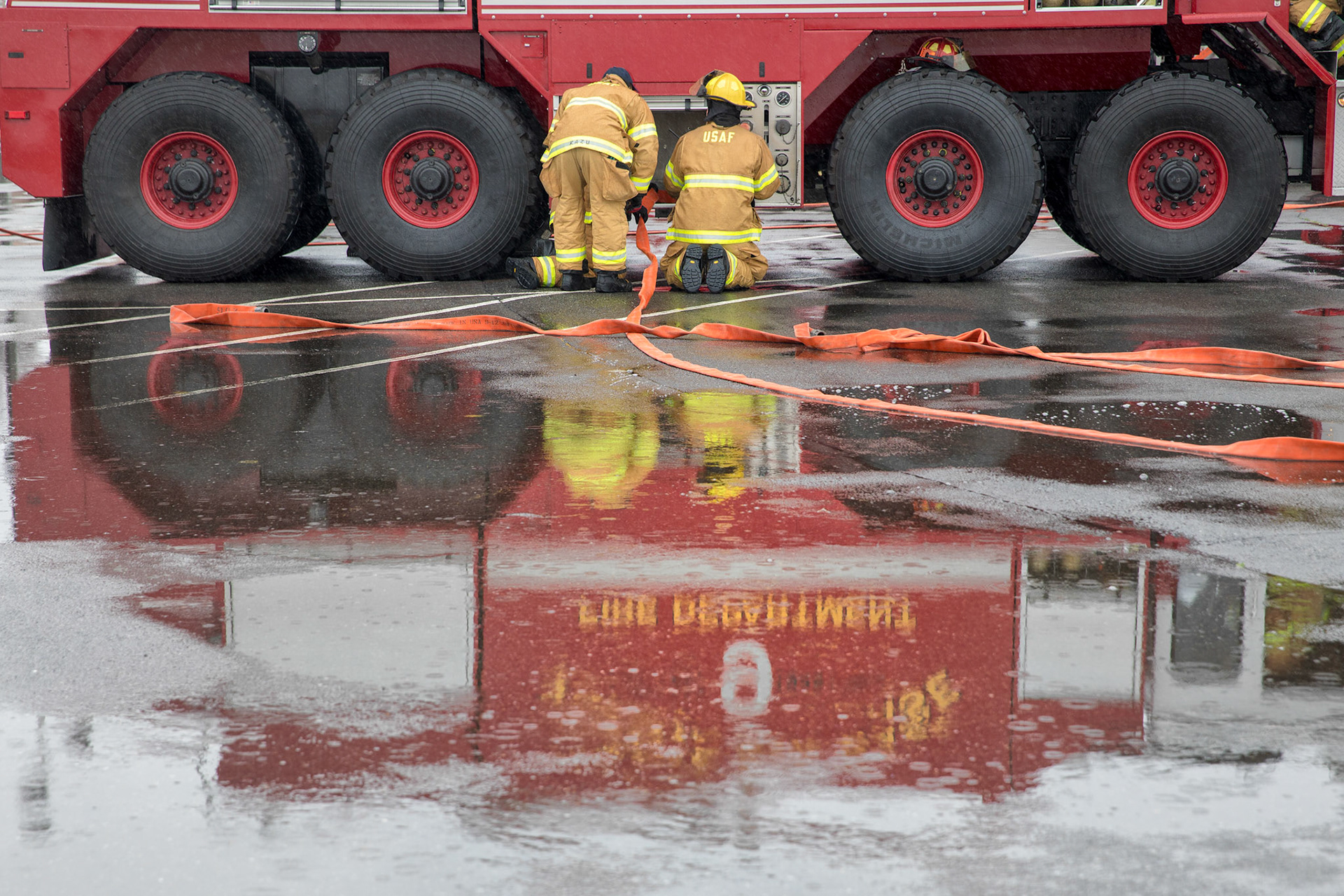
Staff Sgt. Trevor Alexis, 374th Civil Engineer Squadron firefighter, straightens out a hose after battling a simulated aircraft fire at Yokota Air Base, Japan, March 8, 2018. Aircraft live-fire training is conducted periodically throughout the year to ensure Airmen and civilians with the 374th CES and 374th Maintenance Squadron repair and reclamation section are always prepared to combat aircraft fuel fires. (U.S. Air Force photo by Yasuo Osakabe)
Firefighters assigned to the 374th Civil Engineer Squadron pack away hoses after conducting a simulated aircraft fire drill at Yokota Air Base, Japan, March 8, 2018. Aircraft live-fire training is conducted periodically throughout the year to ensure Airmen and civilians with the 374th CES and 374th Maintenance Squadron repair and reclamation section are always prepared to combat aircraft fuel fires. (U.S. Air Force photo by Yasuo Osakabe)
180319-F-PM645-0431
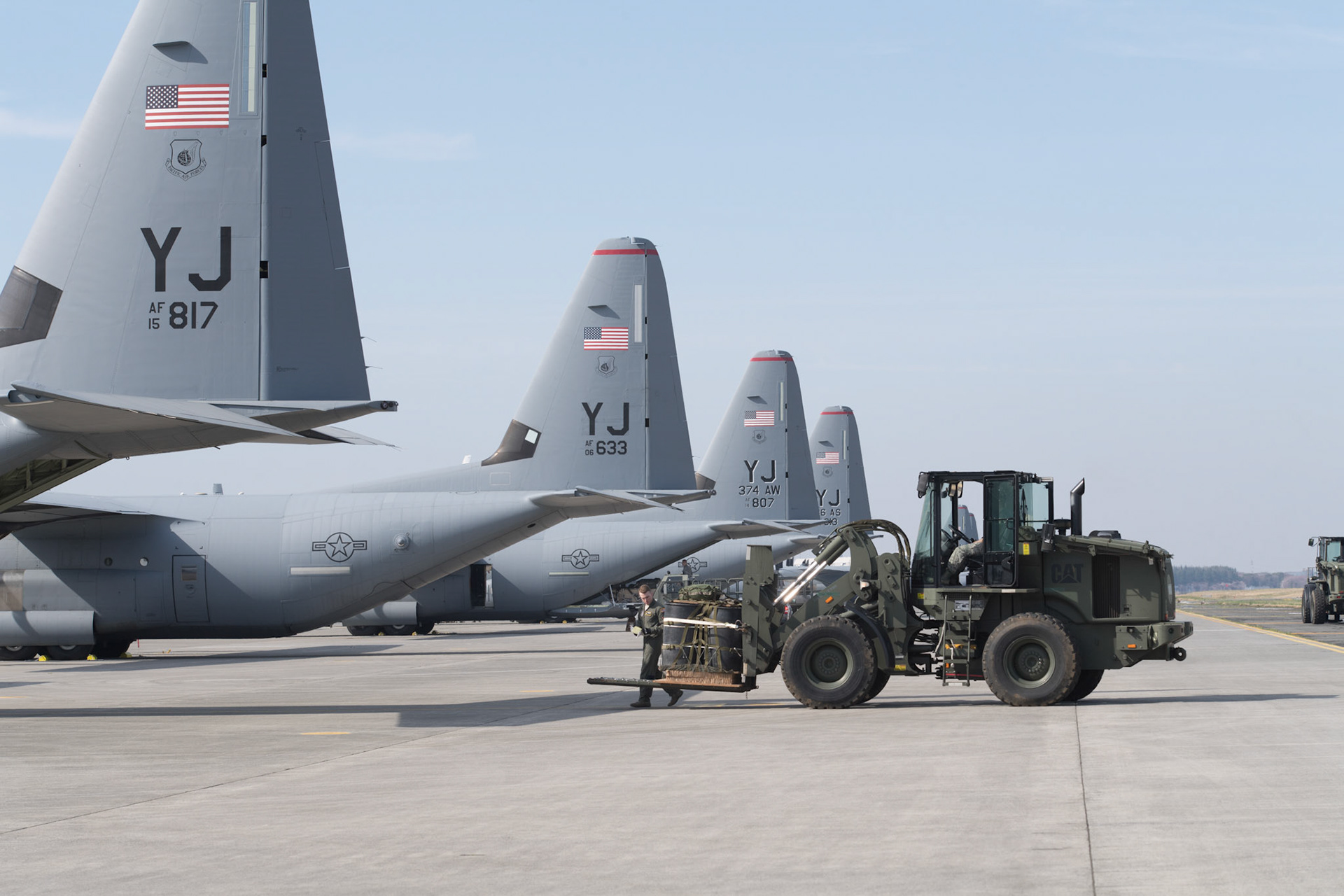
Airmen with the 374th Logistics Readiness Squadron and 36th Airlift Squadron load a Container Delivery System (CDS) bundle onto a C-130J Super Hercules at Yokota Air Base, Japan, March 26, 2018. The 374th LRS combat mobility flight maintain and prepare aerial cargo delivery systems and equipment for use during training exercises and real-world deployments. (U.S. Air Force photo by Yasuo Osakabe)
(Left to right) Airman 1st Class Matthew Pfeffer and Senior Airman Stephen Clark, both 36th Airlift Squadron C-130J loadmasters, secure a Container Delivery System (CDS) bundle onto a C-130J Super Hercules at Yokota Air Base, Japan, March 26, 2018. Three C-130Js assigned to the 36th AS trained on airdropping CDS bundle and heavy equipment pallets over the Combined Arms Training Center (CATC) Camp Fuji. (U.S. Air Force photo by Yasuo Osakabe)
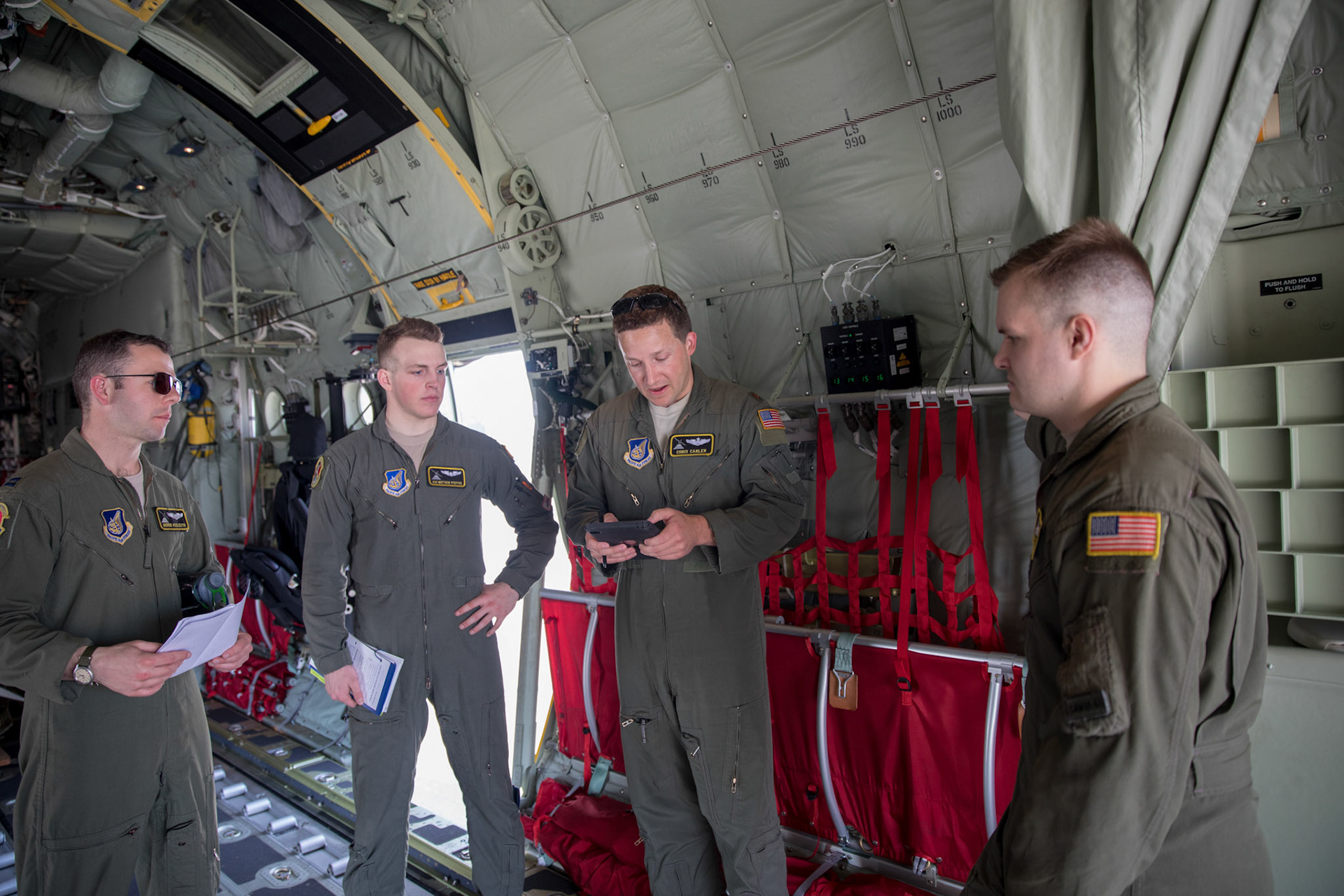
Maj. Christopher Carlen (center), 36th Airlift Squadron C-130J pilot, gives a pre-flight briefing at Yokota Air Base, Japan, March 26, 2018. The 36th AS Airmen trained on airdrops, flew with nigh vision goggles and performed tasks to prepare for U.S. Air Force peacetime and contingency operations. (U.S. Air Force photo by Yasuo Osakabe)
A U.S. Air Force C-130J Super Hercules assigned to the 36th Airlift Squadron flies near Suruga Bay, Japan, March 26, 2018. Performing regular in-flight operations gives all related personnel real-world experience to stay prepared for contingency situations and regular operations. (U.S. Air Force photo by Yasuo Osakabe)
A U.S. Air Force C-130J Super Hercules assigned to the 36th Airlift Squadron flies over Suruga Bay, Japan, March 26, 2018. Performing regular in-flight operations gives all related personnel real-world experience to stay prepared for contingency situations and regular operations. (U.S. Air Force photo by Yasuo Osakabe)
A U.S. Air Force C-130J Super Hercules assigned to the 36th Airlift Squadron flies during a training mission over Izu Peninsula, Japan, March 26, 2018. The C-130J provides tactical airlift worldwide. Its flexible design allows it the capability to operate in austere environments. (U.S. Air Force photo by Yasuo Osakabe)
A U.S. Air Force C-130J Super Hercules assigned to the 36th Airlift Squadron flies over the Izu Peninsula, Japan, March 26, 2018. Performing regular in-flight operations gives all related personnel real-world experience to stay prepared for contingency situations and regular operations. (U.S. Air Force photo by Yasuo Osakabe)
A U.S. Air Force C-130J Super Hercules assigned to the 36th Airlift Squadron flies during a training mission over Izu Peninsula, Japan, March 26, 2018. The C-130J provides tactical airlift worldwide. Its flexible design allows it the capability to operate in austere environment. (U.S. Air Force photo by Yasuo Osakabe)
Two Air Force C-130J Super Hercules’ assigned to the 36th Airlift Squadron fly near Mount Fuji, Japan, March 26, 2018. The C-130J provides tactical airlift worldwide. Its flexible design allows it the capability to operate in austere environments. (U.S. Air Force photo by Yasuo Osakabe)
Two Air Force C-130J Super Hercules assigned to the 36th Airlift Squadron fly over Sizuoka prefecture, Japan, March 26, 2018. The C-130J provides tactical airlift worldwide. Its flexible design allows it the capability to operate in austere environments. (U.S. Air Force photo by Yasuo Osakabe)
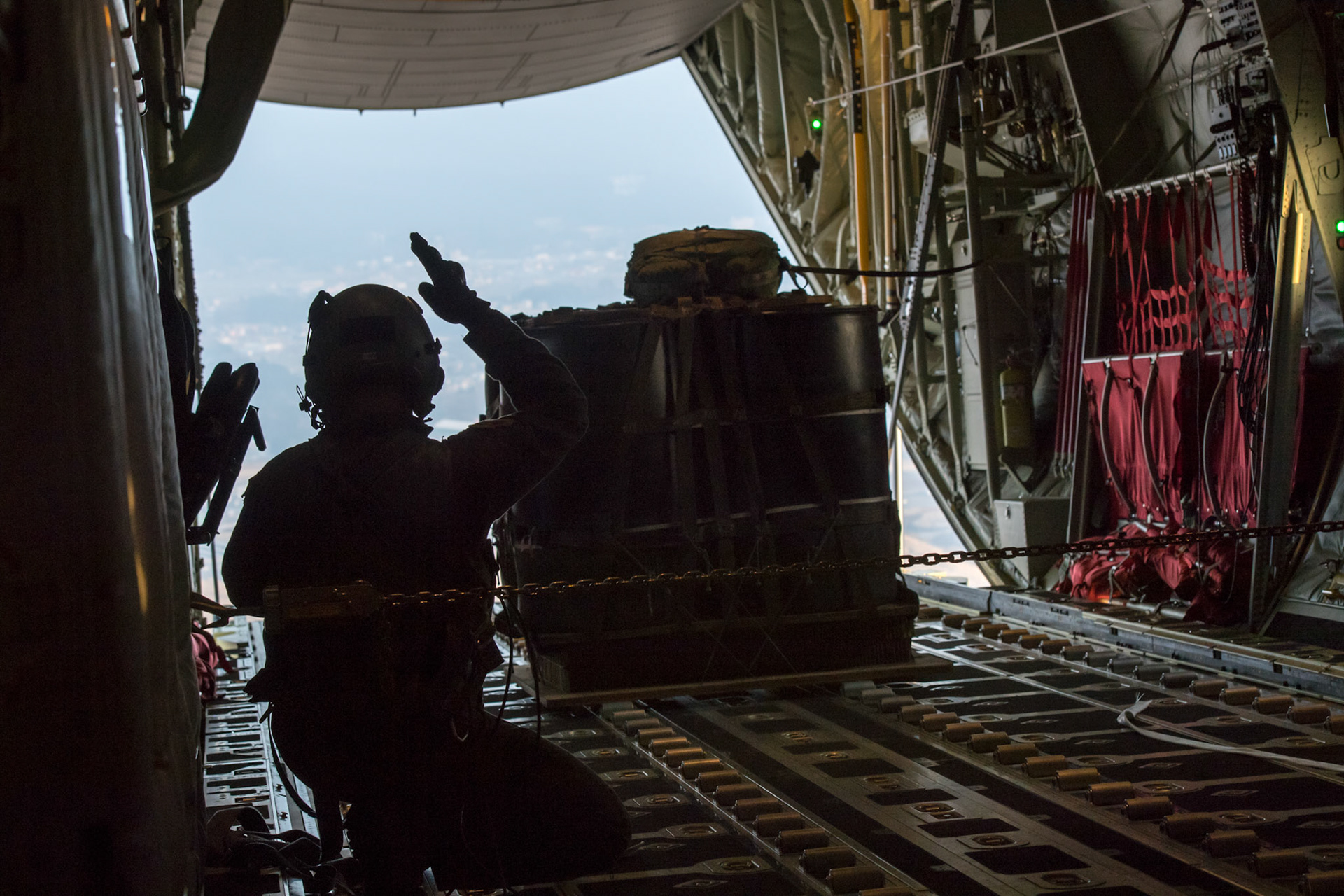
Airman 1st Class Matthew Pfeffer, 36th Airlift Squadron C-130J loadmaster, performs a Container Delivery System (CDS) bundle airdrop over Combined Arms Training Center Camp Fuji, Japan, March 26, 2018. CDS are most commonly used for quick aerial insertion of supplies for military and contingency operations. Bundles are used as a means of delivering equipment too heavy for the individual jumper to carry. (U.S. Air Force photo by Yasuo Osakabe)
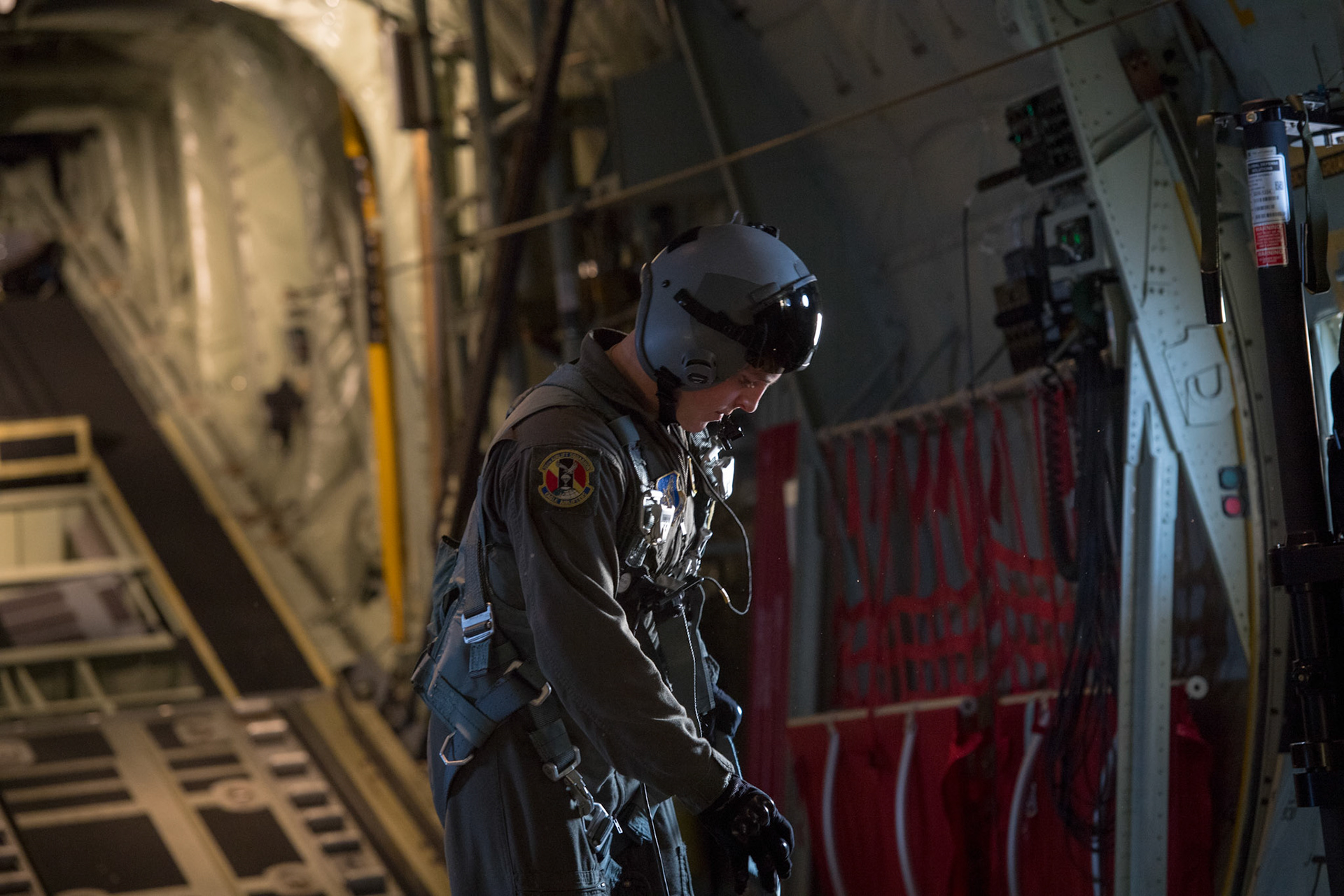
Airman 1st Class Matthew Pfeffer, 36th Airlift Squadron C-130J loadmaster, secures his harness before conducting Container Delivery System (CDS) bundle airdrops over Combined Arms Training Center Camp Fuji, Japan, March 26, 2018. CDS are most commonly used for quick aerial insertion of supplies for military and contingency operations. Bundles are used as a means of delivering equipment too heavy for the individual jumper to carry. (U.S. Air Force photo by Yasuo Osakabe)
Two Air Force C-130J Super Hercules fly over Yamanashi Prefecture, Japan, after conducting airdrop training missions, March 26, 2018. The C-130J assigned to the 36th Airlift Squadron regularly conducts training missions to remain proficient in necessary skills to support any contingency. (U.S. Air Force photo by Yasuo Osakabe)
(Left to right) Capt. Andrew Huddleston and Maj. Christopher Carlen, both 36th Airlift Squadron C-130J pilots, approach a runway in a C-130J Super Hercules during a training mission at Yokota Air Base, Japan, March 26, 2018. Yokota aircrews regularly conduct night flying operations to ensure they are prepared for a variety of contingencies throughout the Indo-Asia Pacific region. (U.S. Air Force photo by Yasuo Osakabe)
(Left to right) Capt. Andrew Huddleston and Maj. Christopher Carlen, the 36th Airlift Squadron C-130J pilots, approve the runway in a C-130J Super Hercules during a training mission at Yokota Air Base, Japan, March 26, 2018. Yokota aircrews regularly conduct night flying operations to ensure they are prepared for a variety of contingencies throughout the Indo-Asia Pacific region. (U.S. Air Force photo by Yasuo Osakabe)
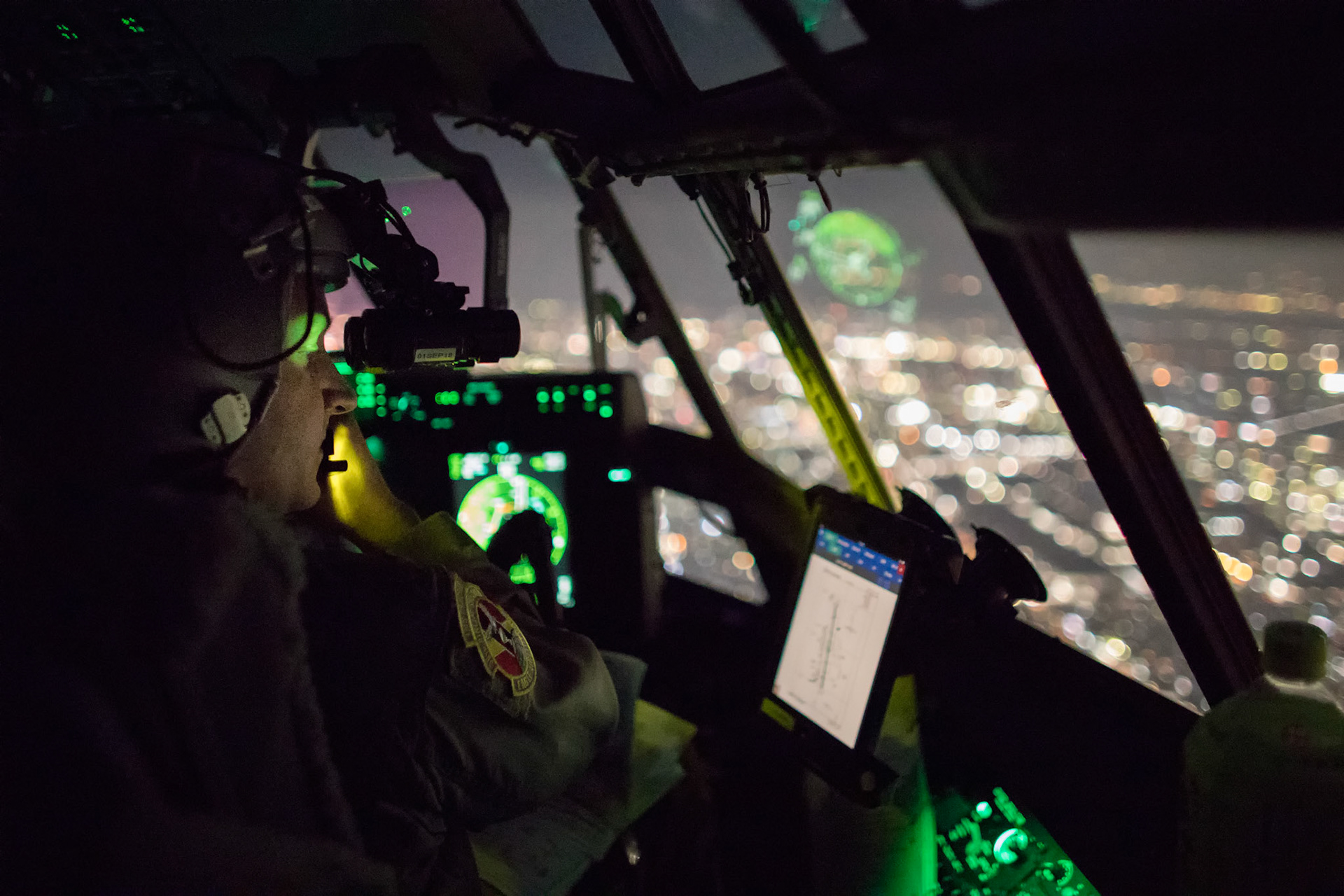
Maj. Christopher Carlen, 36th Airlift Squadron C-130j pilot, wears night vision goggle during a training mission above Yokota Air Base, Japan, March 26, 2018. Yokota aircrews regularly conduct night flying operations to ensure they are prepared for a variety of contingencies throughout the Indo-Asia Pacific region. (U.S. Air Force photo by Yasuo Osakabe)
Capt. Andrew Huddleston, 36th Airlift Squadron C-130J pilot, wears night vision goggle during a training mission above Yokota Air Base, Japan, March 26, 2018. Yokota aircrews regularly conduct night flying operations to ensure they are prepared for a variety of contingencies throughout the Indo-Asia Pacific region. (U.S. Air Force photo by Yasuo Osakabe)
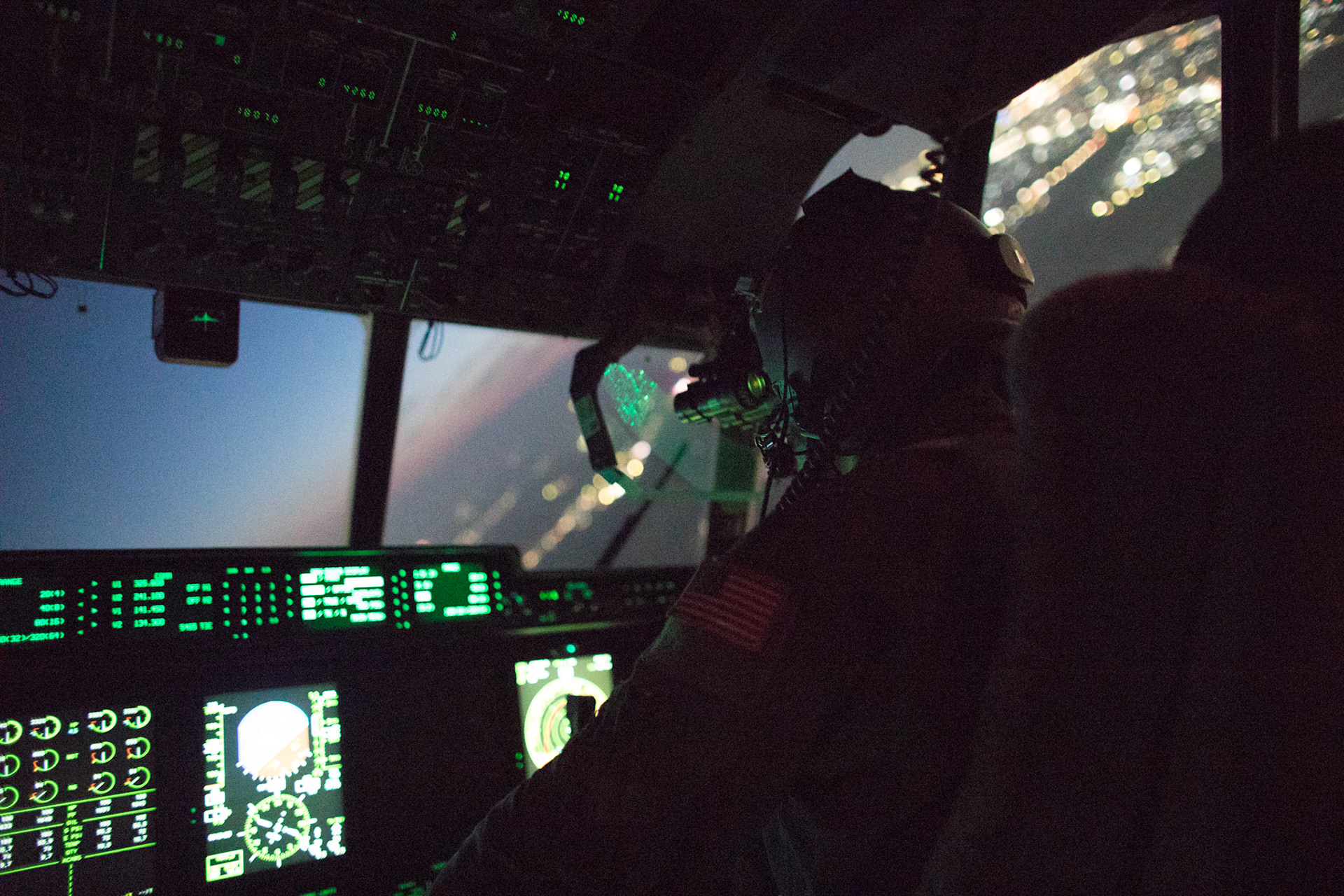
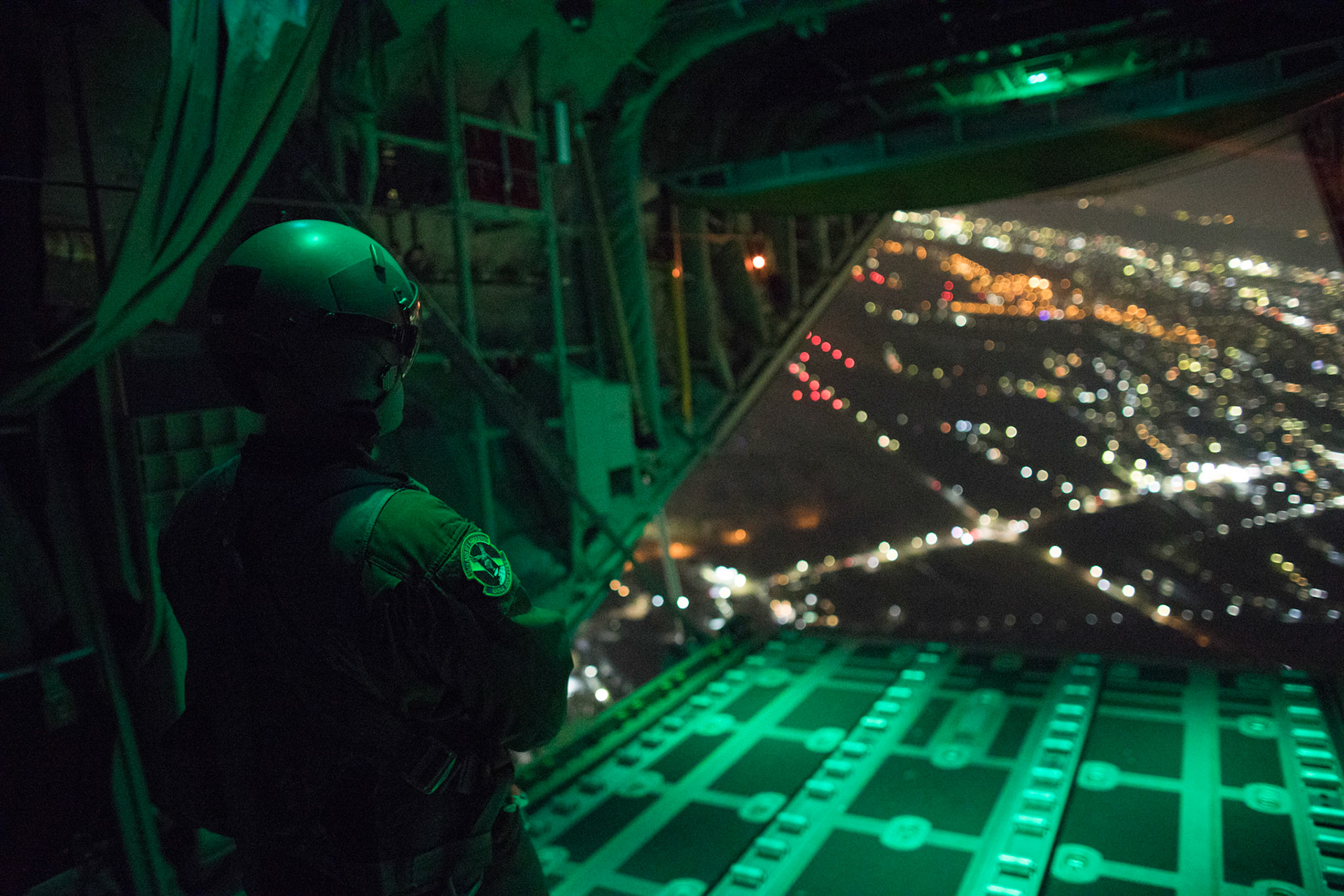
Maj. Christopher Carlen, 36th Airlift Squadron C-130J pilot, performs a visual confirmation with night vision goggles during a training mission ver the Kanto Plain, Japan, March 26, 2018. Yokota aircrews regularly conduct night flying operations to ensure they are prepared for a variety of contingencies throughout the Indo-Asia Pacific region. (U.S. Air Force photo by Yasuo Osakabe)
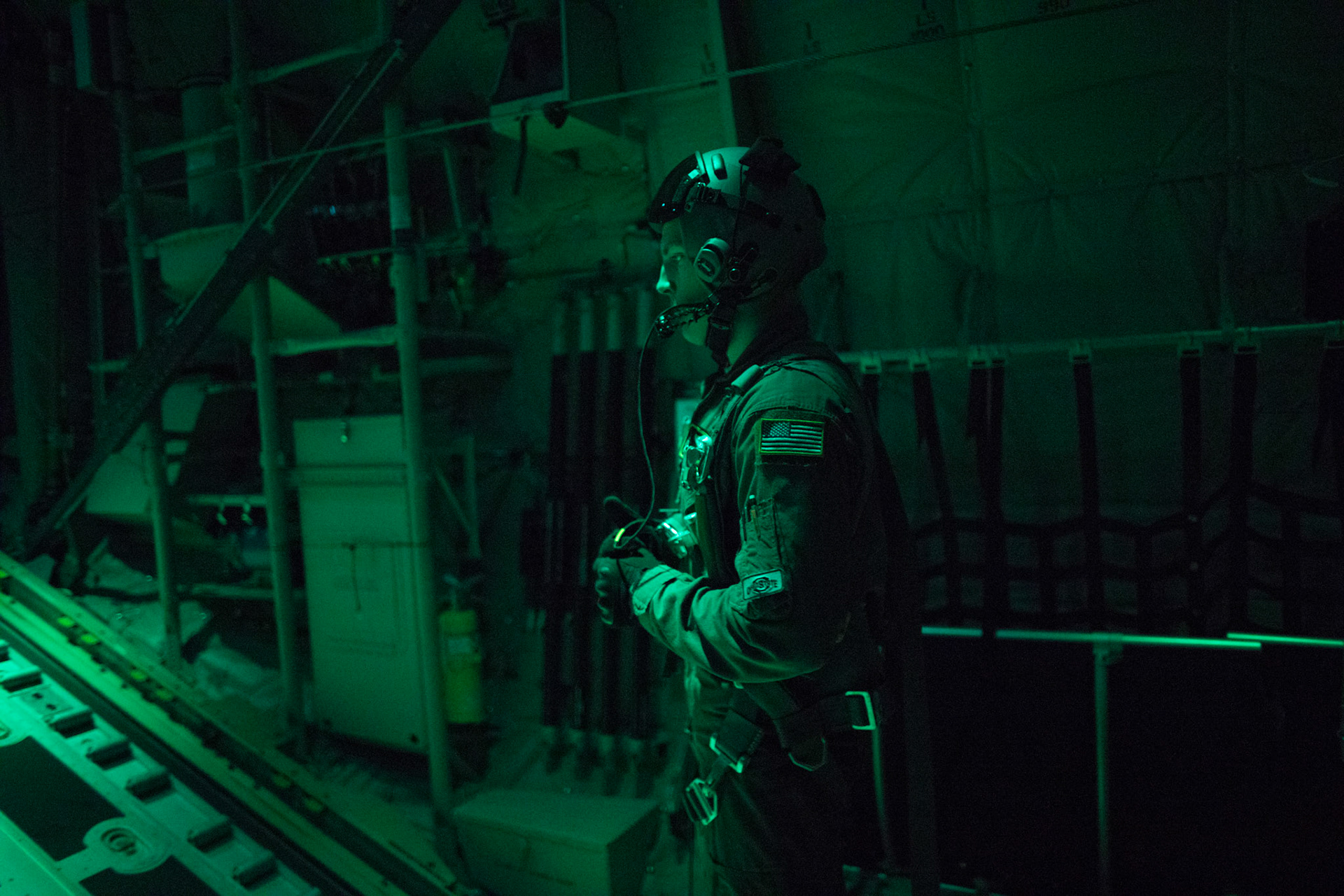
Airman 1st Class Matthew Pfeffer, 36th Airlift Squadron C-130J loadmaster, communicates with aircrew during a training mission over the Kanto Plain, Japan, March 26, 2018. Yokota aircrews regularly conduct night flying operations to ensure they are prepared for a variety of contingencies throughout the Indo-Asia Pacific region. (U.S. Air Force photo by Yasuo Osakabe)
An aerial view of the Kanto Plain, Japan from a C-130J Super Hercules assigned to the 36th Airlift Squadron, March 26, 2018, during a training mission. (U.S. Air Force photo by Yasuo Osakabe)
(Left to right) Senior Airman Stephen Clark and Airman 1st Class Matthew Pfeffer, 36th Airlift Squadron C-130J loadmasters, sit on the open ramp of a C-130J Super Hercules flying near Yokota Air Base, Japan, March 26, 2018, before conducting a simulated airdrop over Yokota. Yokota aircrews regularly conduct night flying operations to ensure they are prepared for a variety of contingencies throughout the Indo-Asia Pacific region. (U.S. Air Force photo by Yasuo Osakabe)
(Left to right) Senior Airman Stephen Clark and Airman 1st Class Matthew Pfeffer, 36th Airlift Squadron C-130J loadmasters, sit on the open ramp of a C-130J Super Hercules flying near Yokota Air Base, Japan, March 26, 2018, before conducting a simulated airdrop over Yokota. Yokota aircrews regularly conduct night flying operations to ensure they are prepared for a variety of contingencies throughout the Indo-Asia Pacific region. (U.S. Air Force photo by Yasuo Osakabe)
(Left to right) Senior Airman Stephen Clark and Airman 1st Class Matthew Pfeffer, 36th Airlift Squadron C-130J loadmasters, sit on the open ramp of a C-130J Super Hercules flying near Yokota Air Base, Japan, March 26, 2018, before conducting a simulated airdrop over Yokota. Yokota aircrews regularly conduct night flying operations to ensure they are prepared for a variety of contingencies throughout the Indo-Asia Pacific region. (U.S. Air Force photo by Yasuo Osakabe)
(Right to left) Senior Airman Stephen Clark and Airman 1st Class Matthew Pfeffer, 36th Airlift Squadron C-130J loadmasters, sit on the open ramp of a C-130J Super Hercules flying near Yokota Air Base, Japan, March 26, 2018, before conducting a simulated airdrop over Yokota. Yokota aircrews regularly conduct night flying operations to ensure they are prepared for a variety of contingencies throughout the Indo-Asia Pacific region. (U.S. Air Force photo by Yasuo Osakabe)
(Left to right) Senior Airman Stephen Clark and Airman 1st Class Matthew Pfeffer, 36th Airlift Squadron C-130J loadmaster, perform a simulated airdrop over Yokota Air Base, Japan, March 26, 2018. Yokota aircrews regularly conduct night flying operations to ensure they are prepared for a variety of contingencies throughout the Indo-Asia Pacific region. (U.S. Air Force photo by Yasuo Osakabe)
Senior Airman Stephen Clark, 36th Airlift Squadron C-130J loadmaster, observes the ramp while it closes during a training mission over Yokota Air Base, Japan, March 26, 2018. Yokota aircrews regularly conduct night flying operations to ensure they are prepared for a variety of contingencies throughout the Indo-Asia Pacific region. (U.S. Air Force photo by Yasuo Osakabe)
An Air Force C-130J Super Hercules parks on the flightline after returning a night training mission at Yokota Air Base, Japan, March 26, 2018. The C-130J assigned to the 36th Airlift Squadron regularly conducts training missions to remain proficient in necessary skills to support any contingency. (U.S. Air Force photo by Yasuo Osakabe)
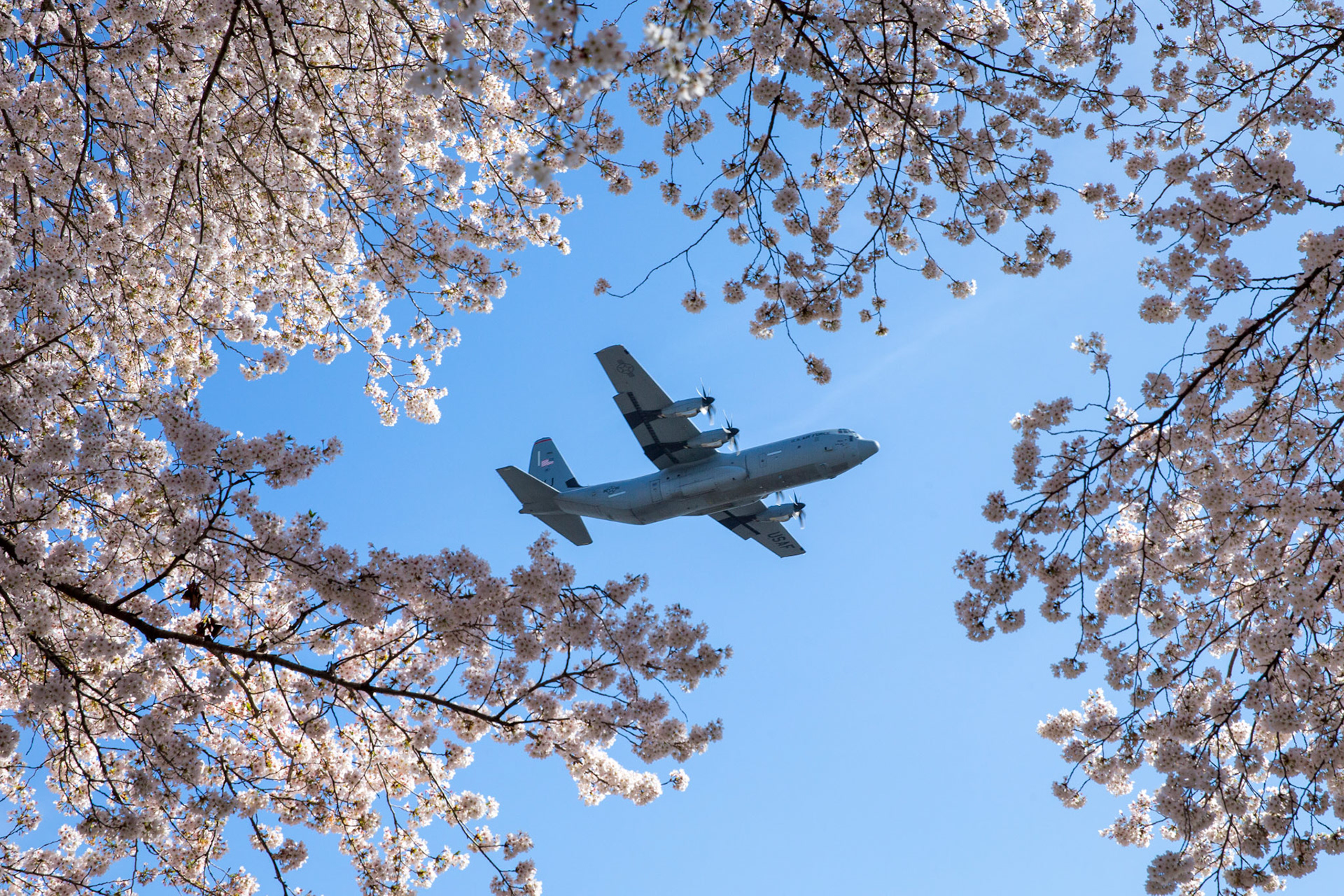
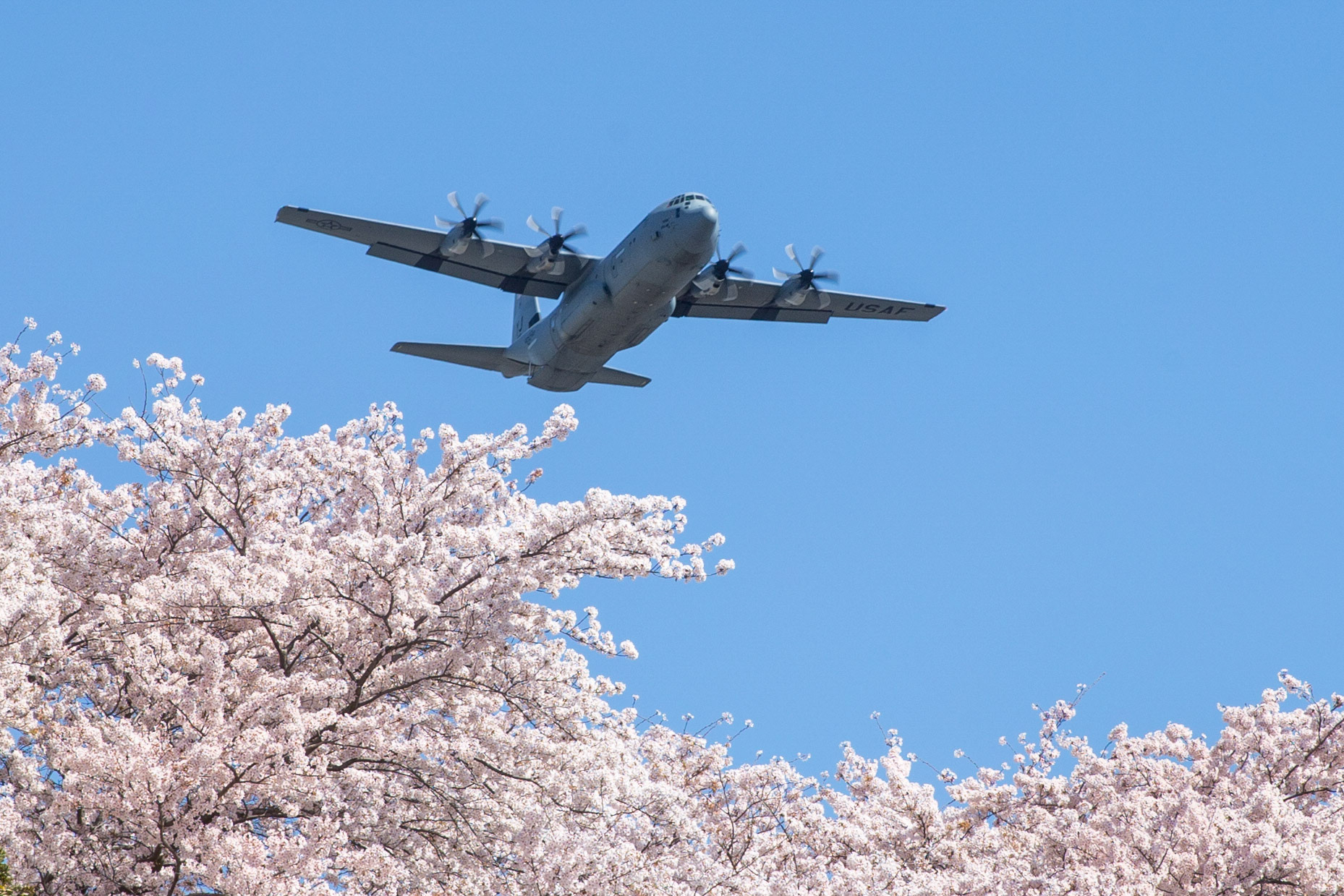
An Air Force C-130J Super Hercules assigned to the 36th Airlift Squadron flies over Yokota Air Base, Japan, during a training mission, March 30, 2018. Sakura trees bloomed at Yokota eight days earlier that last year. (U.S. Air Force photo by Yasuo Osakabe)
An Air Force C-130J Super Hercules assigned to the 36th Airlift Squadron flies over Yokota Air Base, Japan, during a training mission, March 30, 2018. Sakura trees bloomed at Yokota eight days earlier that last year. (U.S. Air Force photo by Yasuo Osakabe)
Col. Kenneth Moss, 374th Airlift Wing (AW) commander, talks to crewmembers prior to the 374th AW Generation Exercise Elephant Walk at Yokota Air Base, Japan, May 4, 2018. The 374th AW operates a mission fleet of C-130J Super Hercules, C-12 Hurons and UH-1N Iroquois as the primary Western Pacific airlift hub for U.S. Air Force peacetime and contingency operations. (U.S. Air Force photo by Yasuo Osakabe)
Crewmembers with the 459th Airlift Squadron perform a pre-flight briefing prior to the 374th Airlift Wing (AW) Generation Exercise Elephant Walk at Yokota Air Base, Japan, May 4, 2018. The 374th AW trained its humanitarian aid and disaster relief and formation flying capabilities during the exercise. (U.S. Air Force Photo by Yasuo Osakabe)
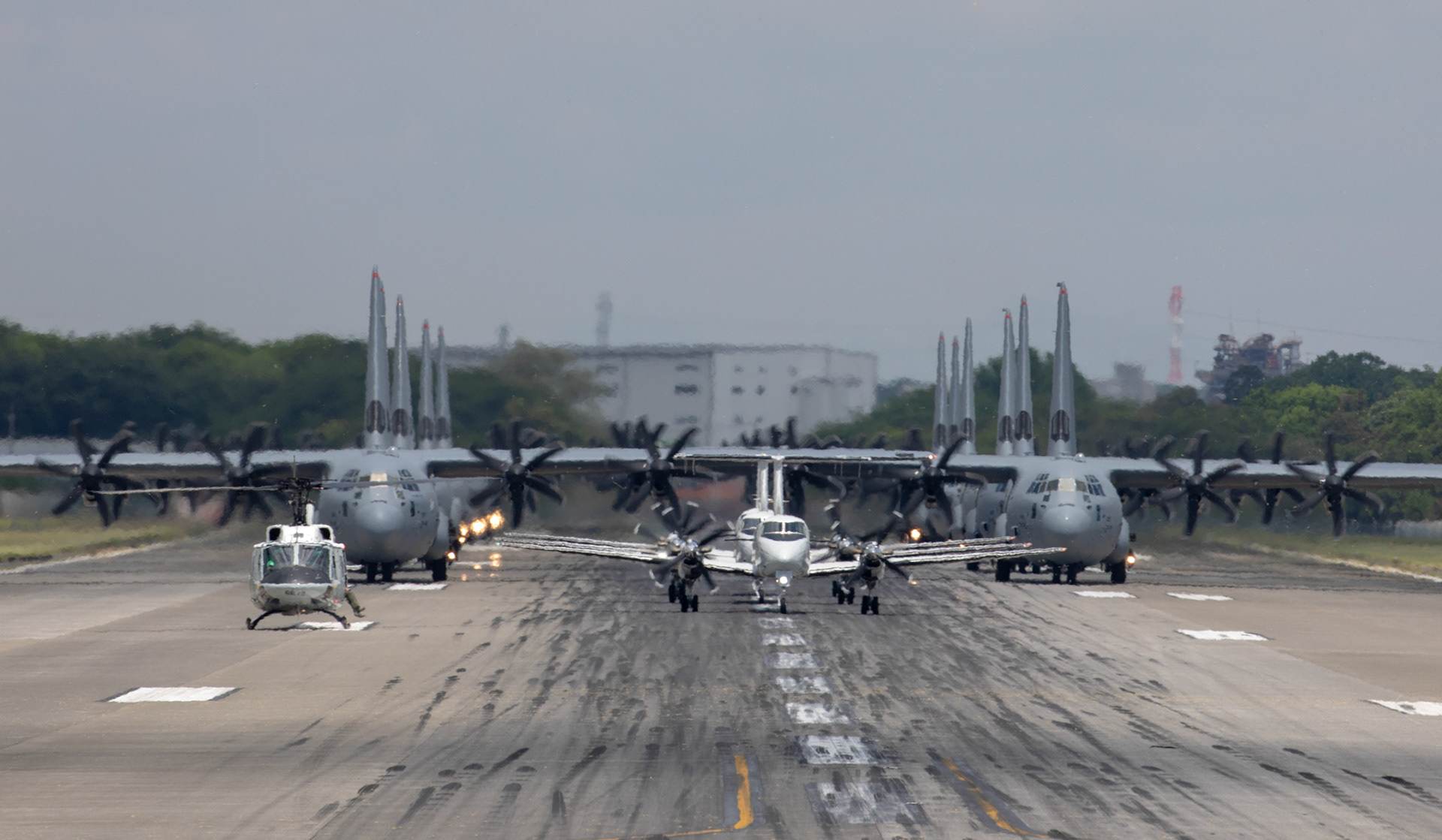
C-130J Super Hercules and a C-12 Huron sit on the flightline during the 347th Airlift Wing (AW) Generation Exercise Elephant Walk at Yokota Air Base, Japan, May 4, 2018. The 374 AW conducted the exercise to train the wing’s ability to rapidly provide humanitarian aid and disaster relief throughout the Indo-Pacific region. (U.S. Air Force photo by Yasuo Osakabe)
Pilots assigned to the 459th Airlift Squadron check their watches to make sure all the pilot‘s watches are synchronized during the 374th Airlift Wing (AW) Generation Exercise Elephant Walk at Yokota Air Base, Japan, May 4, 2018. The 374th AW operates a mission ready fleet of C-130J Super Hercules, C-12 Hurons and UH-1N Iroquois as the primary Western Pacific airlift hub for U.S. Air Force peacetime and contingency operations. (U.S. Air Force photo by Yasuo Osakabe)
Tech. Sgt. Nicholas Poe, 459th Airlift Squadron special missions aviator, communicates with his crewmembers during the 374th Airlift Wing Generation Exercise at Yokota Air Base, Japan, May 4, 2018. This part of the exercise was conducted in order to demonstrate the wing’s ability to complete a formation flight with multiple aircraft. (U.S. Air Force photo by Yasuo Osakabe)
Three C-12 Hurons from the 459th Airlift Squadron take part in an elephant walk before taking off during the 374th Airlift Wing (AW) Generation Exercise at Yokota Air Base, Japan, May 4, 2018. The 374th AW conducted the exercise to train the wing’s ability to rapidly provide humanitarian aid and disaster relief throughout the Indo-Pacific region. (U.S. Air Force photo by Yasuo Osakabe)
A crew chief from the 374th Aircraft Maintenance Squadron inspects a C-130J Super Hercules' nose before it taxis to the runway during the 374th Airlift Wing (AW) Generation Exercise Elephant Walk at Yokota Air Base, Japan, May 4, 2018. The 374th AW conducted the exercise to train the wing’s ability to rapidly provide humanitarian aid and disaster relief throughout the Indo-Pacific region. (U.S. Air Force photo by Yasuo Osakabe)
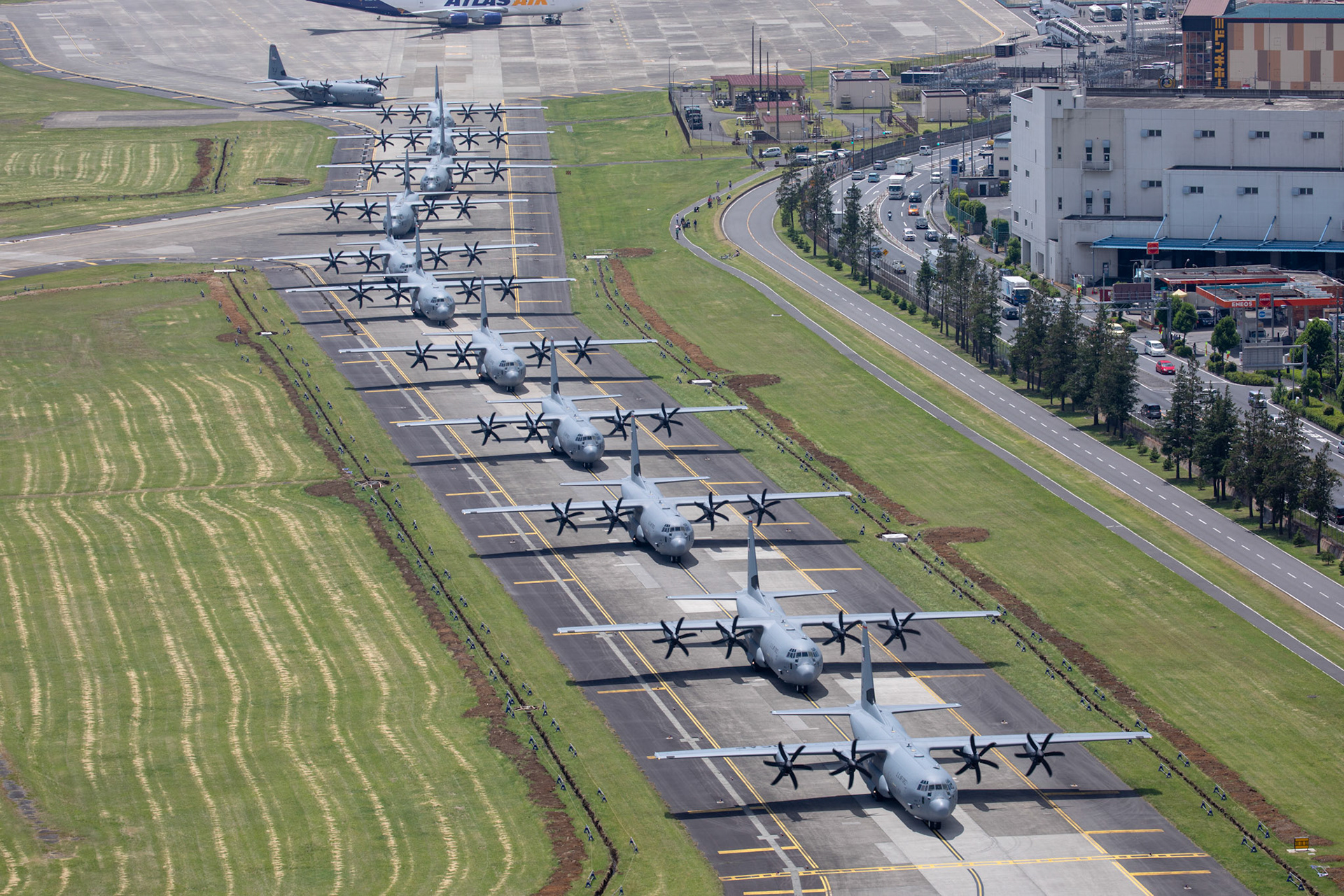
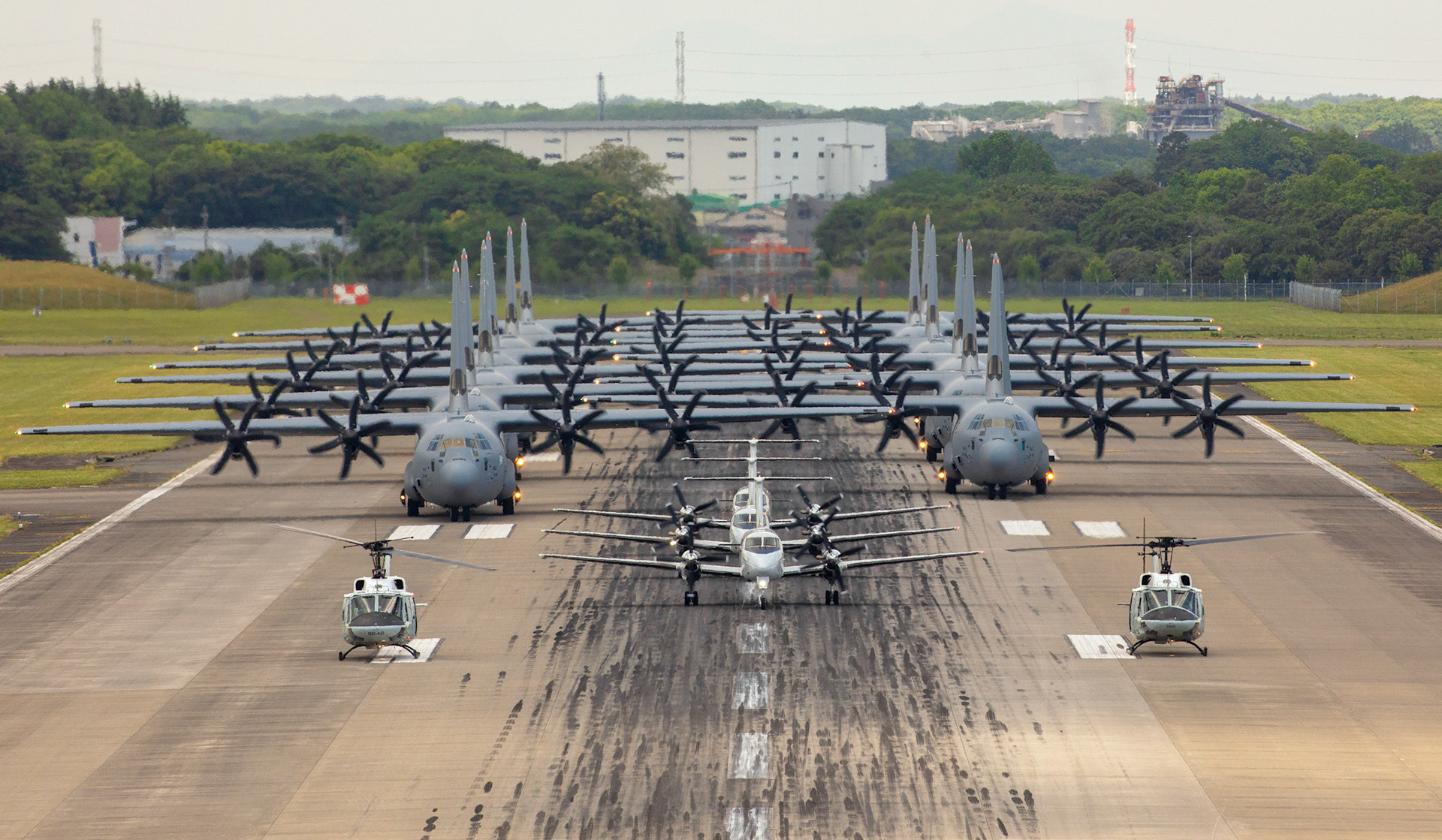
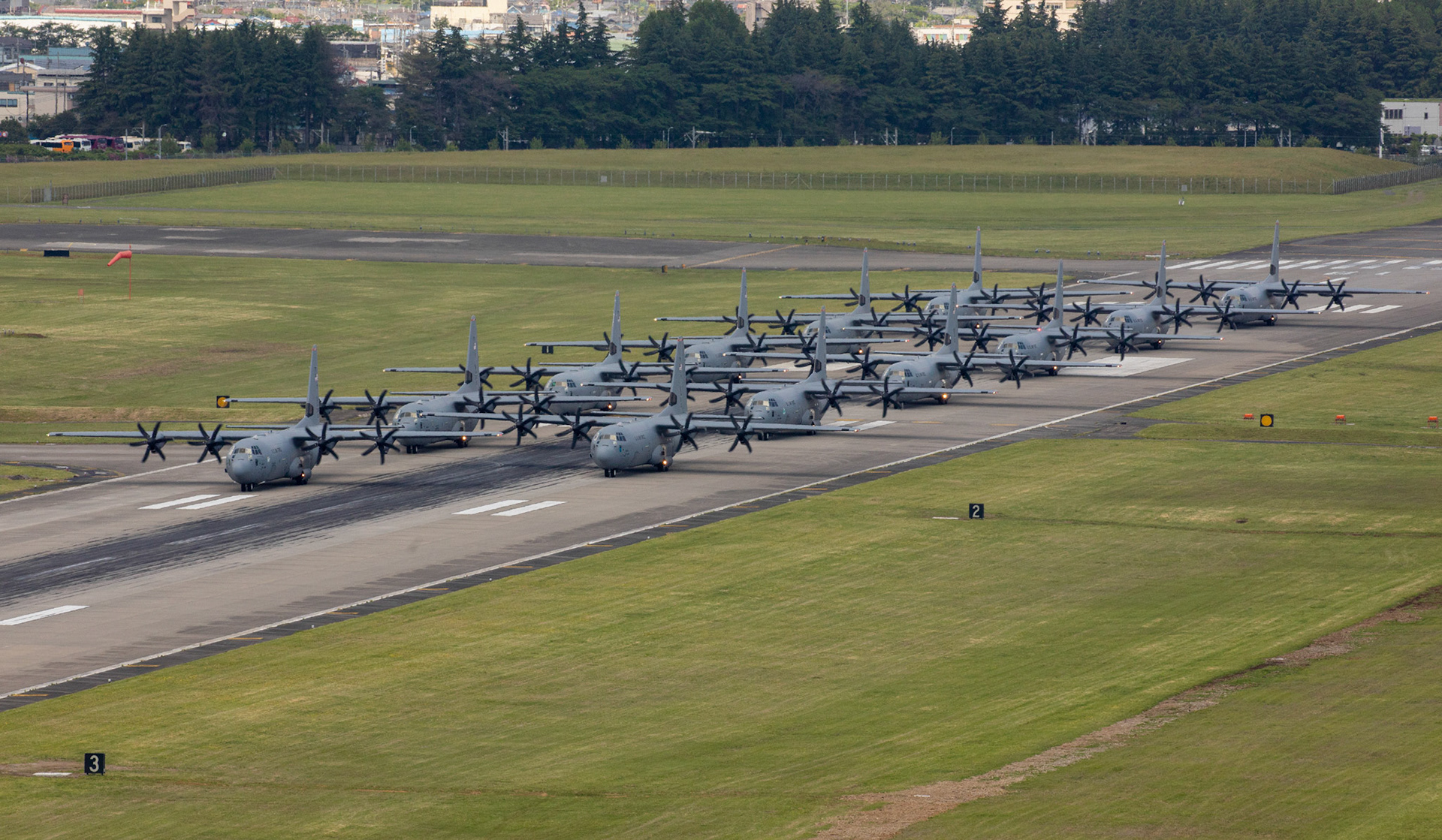
Twelve C-130J Super Hercules from the 36th Airlift Squadron take part in an elephant walk before taking off during the 374th Airlift Wing (AW) Generation Exercise at Yokota Air Base, Japan, May 4, 2018. The 374th AW conducted the exercise to train the wing’s ability to rapidly provide humanitarian aid and disaster relief throughout the Indo-Pacific region. (U.S. Air Force photo by Yasuo Osakabe)
Twelve C-130J Super Hercules from the 36th Airlift Squadron take part in an elephant walk before taking off during the 374th Airlift Wing (AW) Generation Exercise at Yokota Air Base, Japan, May 4, 2018. The 374th AW conducted the exercise to train the wing’s ability to rapidly provide humanitarian aid and disaster relief throughout the Indo-Pacific region. (U.S. Air Force photo by Yasuo Osakabe)
Aircraft from the 374th Airlift Wing (AW) conduct the 374th AW Generation Exercise Elephant Walk at Yokota Air Base, Japan, May 4, 2018. The 374th AW conducted the exercise to train the wing’s ability to rapidly provide humanitarian aid and disaster relief throughout the Indo-Pacific region. (U.S. Air Force photo by Yasuo Osakabe)
Aircraft from the 374th Airlift Wing (AW) conduct the 374th AW Generation Exercise Elephant Walk at Yokota Air Base, Japan, May 4, 2018. The exercise was conducted in order to demonstrate the wing’s ability to rapidly deploy forces across Indo-Pacific region. The 374th AW maintains and operates the C-130J Super Hercules, C-12 Huron, and UH-1N Iroquois, making it the primary Western Pacific airlift hub for U.S. Air Force peacetime and contingency operations. (U.S. Air Force photo by Yasuo Osakabe)
Two UH-1N Iroquois helicopters, assigned to the 459th Airlift Squadron, fly in formation during the 374th Airlift Wing (AW) Generation Exercise Elephant Walk at Yokota Air Base, Japan, May 4, 2018. The 374th AW conducted the exercise to train the wing’s ability to rapidly provide humanitarian aid and disaster relief throughout the Indo-Pacific region. (U.S. Air Force photo by Yasuo Osakabe)
Twelve C-130J Super Hercules from the 36th Airlift Squadron prepare to takeoff during the 374th Airlift Wing (AW) Generation Exercise Elephant Walk at Yokota Air Base, Japan, May 4, 2018. The 374th AW maintains and operates the C-130J Super Hercules, C-12 Huron, and UH-1N Iroquois, making it the primary Western Pacific airlift hub for U.S. Air Force peacetime and contingency operations. (U.S. Air Force photo by Yasuo Osakabe)
Twelve C-130J Super Hercules perform an Elephant Walk as part of the 374th Airlift Wing (AW) Generation Exercise to test the rapid mobility capabilities and teamwork of the crewmembers at Yokota Air Base, Japan, May 4, 2018. The 374th AW maintains and operates the C-130J Super Hercules, C-12 Huron, and UH-1N Iroquois, making it the primary Western Pacific airlift hub for U.S. Air Force peacetime and contingency operations. (U.S. Air Force photo by Yasuo Osakabe)
C-130J Super Hercules from the 36th Airlift Squadron prepare to take off during the 374th Airlift Wing Generation Exercise Elephant Walk at Yokota Air Base, Japan, May 4, 2018. The exercise was conducted in order to demonstrate the wing’s ability to rapidly deploy forces across Indo-Pacific region. The 374th AW maintains and operates the C-130J Super Hercules, C-12 Huron, and UH-1N Iroquois, making it the primary Western Pacific airlift hub for U.S. Air Force peacetime and contingency operations. (U.S. Air Force photo by Yasuo Osakabe)
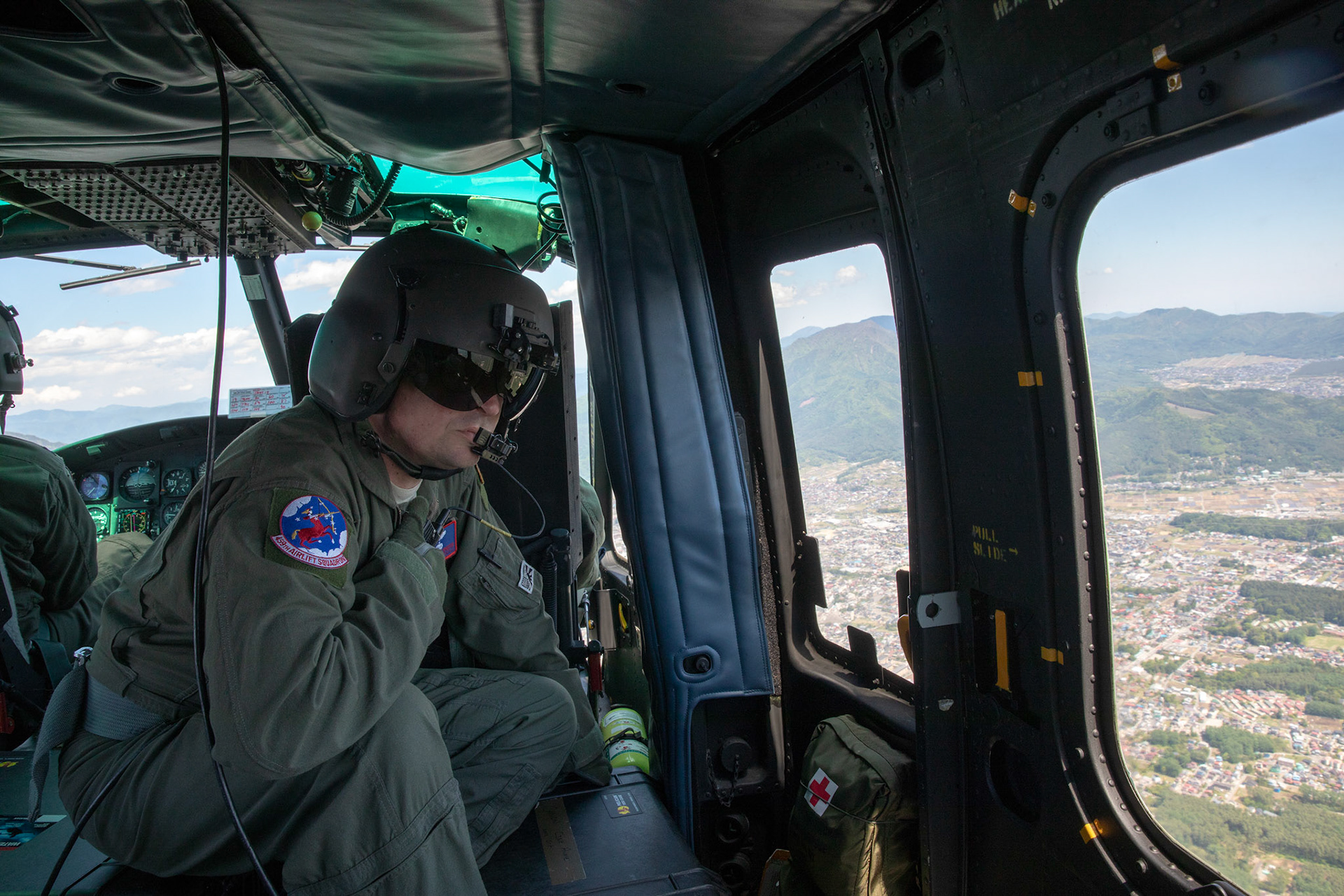
UH-1N Iroquois pilots from the 459th Airlift Squadron fly over Yamanashi Prefecture, Japan, during the 374th Airlift Wing Generation Exercise, May 4, 2018. This part of the exercise was conducted in order to demonstrate the wing’s ability to complete a formation flight with multiple aircraft. (U.S. Air Force photo by Yasuo Osakabe)
A C-130J Super Hercules, assigned to the 36th Airlift Squadron (AS), and a C-12 Huron, assigned to the 459th AS, fly over mountainous terrain during the 374th Airlift Wing (AW) Generation Exercise at Yamanashi Prefecture, Japan, May 4, 2018. The 374th AW maintains and operates C-130Js, C-12 Hurons, and UH-1Ns, making it the primary Western Pacific airlift hub for U.S. Air Forces during peacetime and contingency operations. (U.S. Air Force photo by Yasuo Osakabe)
C-130J Super Hercules assigned to the 36th Airlift Squadron maneuvers by Mount Fuji, Japan, during the 374th Airlift Wing Generation Exercise, May 4, 2018. During the formation flight portion of the exercise, the aircrews flew together over the ocean, through mountainous terrain and dropped sand bags on Yokota’s airfield to test and improve on their humanitarian aid and disaster relief capabilities. (U.S. Air Force photo by Yasuo Osakabe)
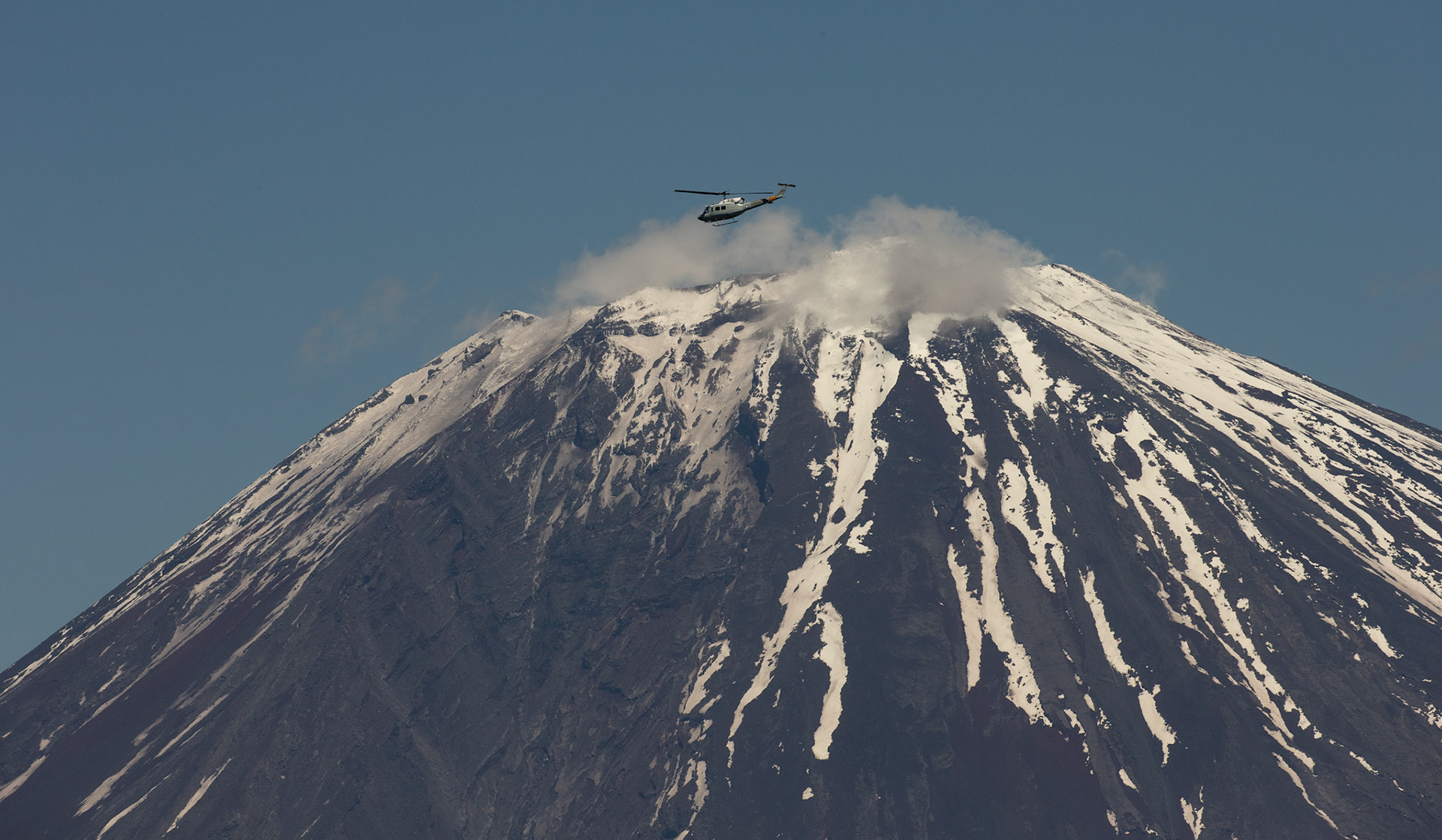
Aircraft from the 374th Airlift Wing (AW) fly by Mount Fuji, Japan, during the 374th AW Generation Exercise, May 4, 2018. The 374th AW maintains and operates the C-130J Super Hercules, C-12 Huron, and UH-1N Iroquois, making it the primary Western Pacific airlift hub for U.S. Air Forces during peacetime and contingency operations. (U.S. Air Force photo by Yasuo Osakabe)
A UH-1N Iroquois assigned to the 459th Airlift Squadron maneuvers over Mount Fuji, Japan, during the 374th Airlift Wing Generation Exercise, May 4, 2018. During the formation flight portion of the exercise, the aircrews flew together over the ocean, through mountainous terrain and dropped sand bags on Yokota’s airfield to test and improve their humanitarian aid and disaster relief capabilities. (U.S. Air Force photo by Yasuo Osakabe)
A UH-1N flight engineer from the 459th Airlift Squadron communicates with his crewmembers during the 374th Airlift Wing Generation Exercise at Shizuoka Prefecture, Japan, May 4, 2018. This part of the exercise was conducted in order to demonstrate the wing’s ability to complete a formation flight with multiple aircraft. (U.S. Air Force photo by Yasuo Osakabe)
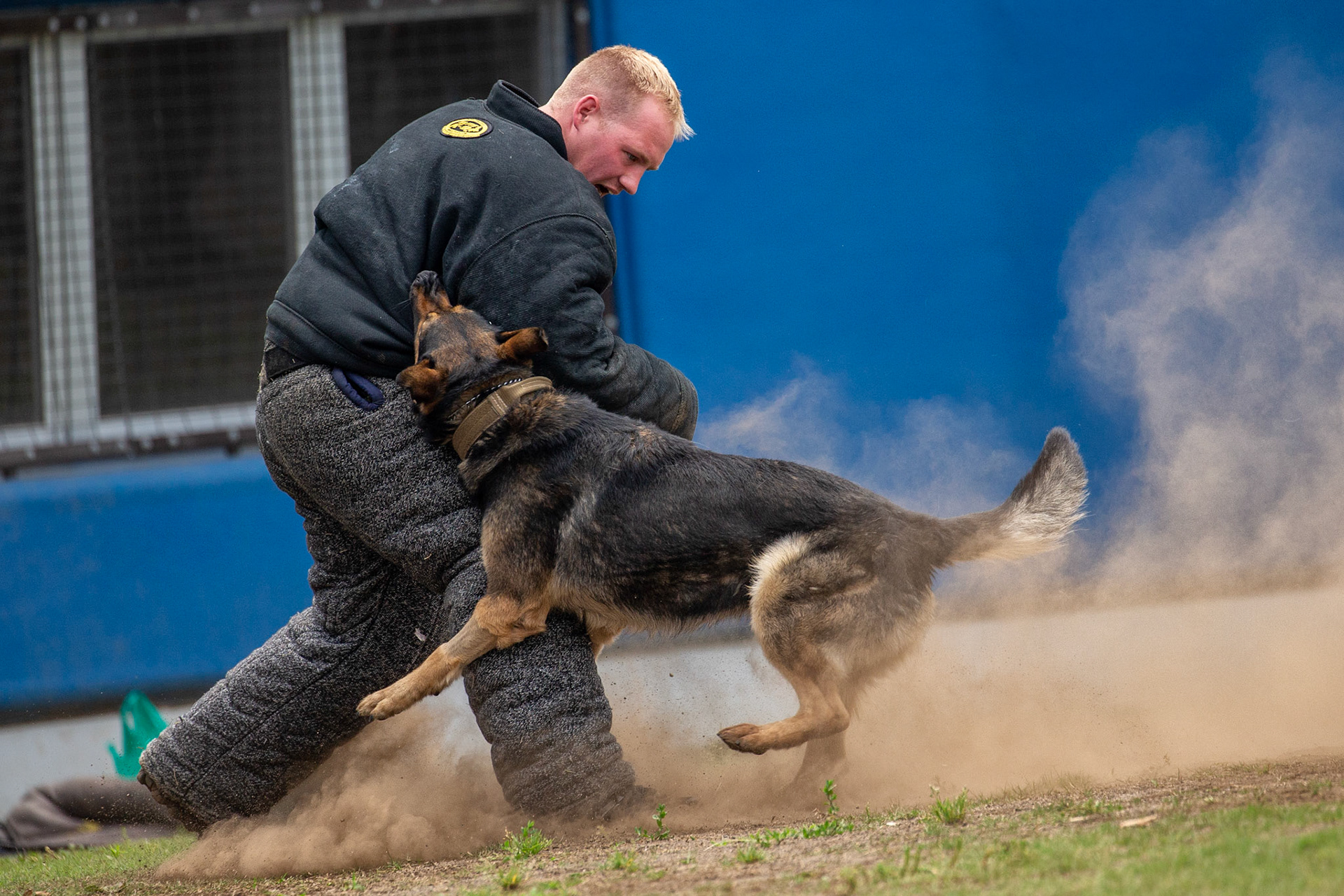
U.S. Navy Petty Officer 1st Class Kolby James Jones, Commander Fleet Activities Yokosuka military working dog handler, acts as a decoy for Benjo, 374th Security Forces Squadron MWD, during 2018 United States Forces Japan Top Dog Competition May 17 ,2018. The decoy is a person who wears a personal protective suit allowing the dog to practice subduing a suspect in the correct way. The competition was a part of the National Police Week and brought together military and civilian working dogs to showcase the dogs' skills. (U.S. Air Force photo by Yasuo Osakabe)
Maj. Logan Smith, left, 374th Civil Engineer Squadron operation flight commander, removes Senior Airman Felix Nunez, right, 374th CES electrical system technician, gas mask during an Ability to Survive and Operate (ATSO) Rodeo at Yokota Air Base, Japan, June 8, 2018. The rodeo involved participants wearing different stages of mission-oriented protective posture (MOPP) gear after pushing a Humvee and going through various areas of training including self-aid and buddy care, post-attack reconnaissance, four-person relay, and "shoot, move and communicate." (U.S. Air Force photo by Yasuo Osakabe)
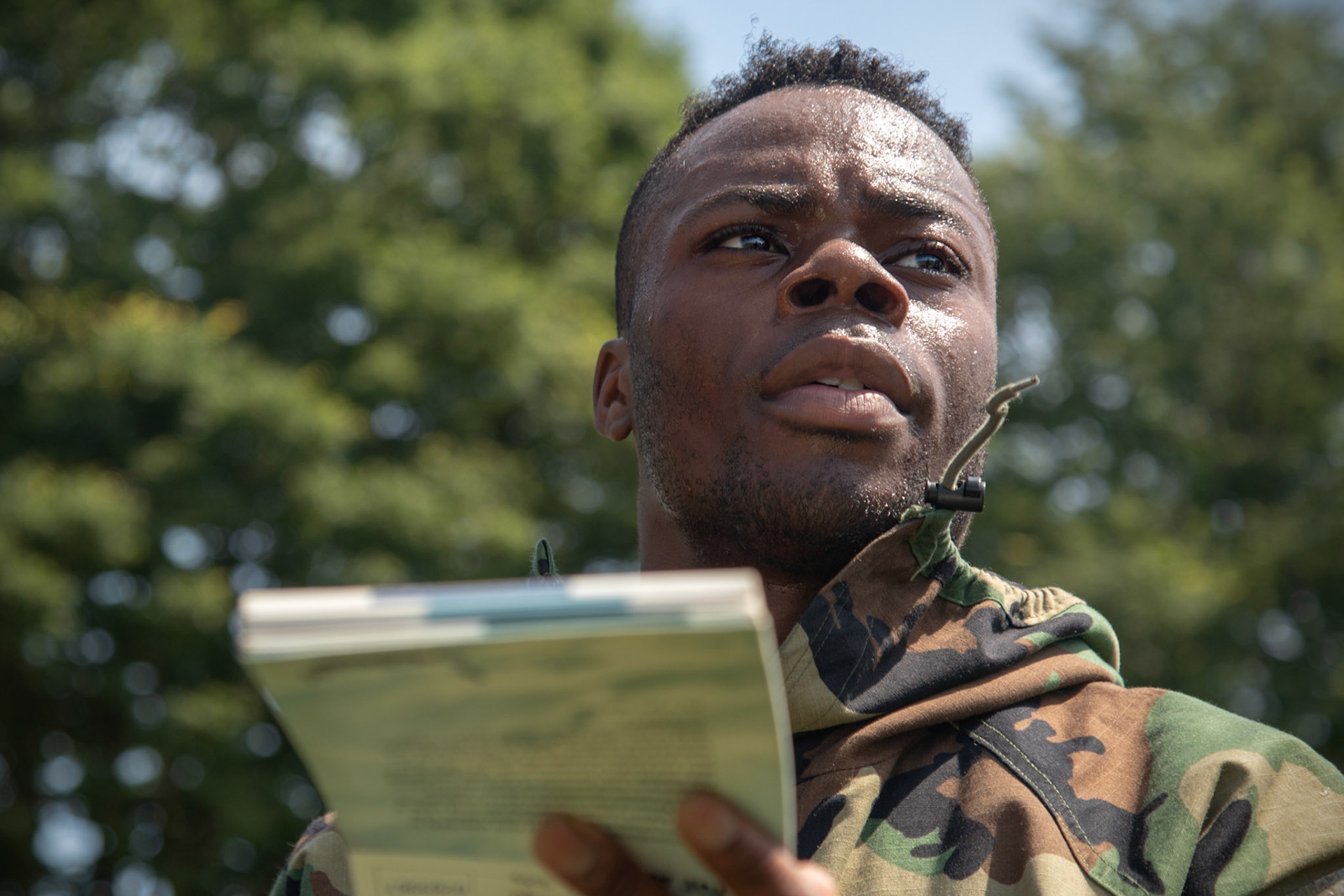
Senior Airman Felix Nunez, 374th Civil Engineer Squadron electrical system technician, glances through his Airman's Manual before performing a post-attack reconnaissance during an Ability to Survive and Operate (ATSO) Rodeo at Yokota Air Base, Japan, June 8, 2018. The rodeo involved participants wearing different stages of mission-oriented protective posture (MOPP) gear after pushing a Humvee and going through various areas of training including self-aid and buddy care, post-attack reconnaissance, four-person relay, and "shoot, move and communicate." (U.S. Air Force photo by Yasuo Osakabe)
Airmen with the 374th Civil Engineer Squadron prepare to perform a post attack reconnaissance check during an Ability to Survive and Operate (ATSO) Rodeo at Yokota Air Base, Japan, June 8, 2018. The rodeo involved participants wearing different stages of mission-oriented protective posture (MOPP) gear after pushing a Humvee and going through various areas of training including self-aid and buddy care, post-attack reconnaissance, four-person relay, and "shoot, move and communicate." (U.S. Air Force photo by Yasuo Osakabe)
Maj. Logan Smith, 374 th Civil Engineer Squadron operations flight commander, right front, shouts to Airmen to move forwards after providing simulated cover during an Ability to Survive and Operate (ATSO) Rodeo at Yokota Air Base, Japan, June 8, 2018. The rodeo involved participants wearing different stages of mission-oriented protective posture (MOPP) gear after pushing a Humvee and going through various areas of training including self-aid and buddy care, post-attack reconnaissance, four-person relay, and "shoot, move and communicate." (U.S. Air Force photo by Yasuo Osakabe)
Airmen with the 374th Civil Engineer Squadron perform a self-aid and buddy care during an Ability to Survive and Operate (ATSO) Rodeo at Yokota Air Base, Japan, June 8, 2018. The rodeo involved participants wearing different stages of mission-oriented protective posture (MOPP) gear after pushing a Hunvee and going through various areas of training including self-aid and buddy care, post-attack reconnaissance, four-person relay, and "shoot, move and communicate." (U.S. Air Force photo by Yasuo Osakabe)
Maj. Logan Smith, 374th Civil Engineer Squadron operations flight commander, passes the baton to Senior Airman Felix Nunez, 374th CES electrical system technician, during an Ability to Survive and Operate (ATSO) Rodeo at Yokota Air Base, Japan, June 8, 2018. The rodeo involved participants wearing different stages of mission-oriented protective posture (MOPP) gear after pushing a Humvee and going through various areas of training including self-aid and buddy care, post-attack reconnaissance, four-person relay, and "shoot, move and communicate." (U.S. Air Force photo by Yasuo Osakabe)
Airman 1st Class Matthew Byce, 374th Civil Engineer Squadron structural apprentice, gets drenched with a cold water after finished four-person relay during an Ability to Survive and Operate (ATSO) Rodeo at Yokota Air Base, Japan, June 8, 2018. The rodeo involved participants wearing different stages of mission-oriented protective posture (MOPP) gear after pushing a Humvee and going through various areas of training including self-aid and buddy care, post-attack reconnaissance, four-person relay, and "shoot, move and communicate." (U.S. Air Force photo by Yasuo Osakabe)
Senior Airman Antonio Gant, 374th Security Forces Squadron armorer, carries his chemical gear bag during an Ability to Survive and Operate (ATSO) Rodeo at Yokota Air Base, Japan, June 8, 2018. The rodeo involved participants wearing different stages of mission-oriented protective posture (MOPP) gear after pushing a Humvee and going through various areas of training including self-aid and buddy care, post-attack reconnaissance, four-person relay, and "shoot, move and communicate." (U.S. Air Force photo by Yasuo Osakabe)
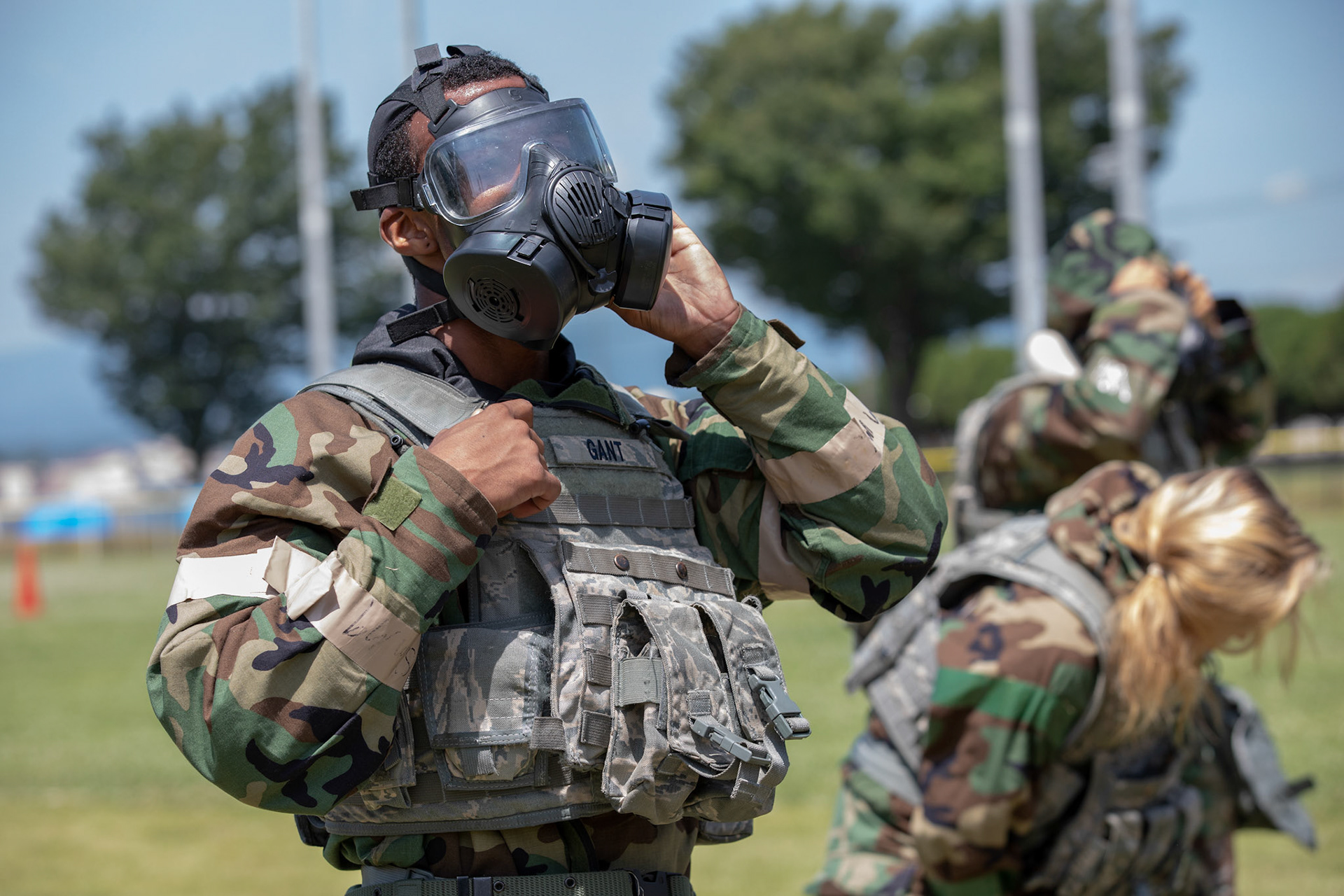
Senior Airman Antonio Gant, left, 374th Security Forces Squadron armorer, dons a mission-oriented protective posture (MOPP) gear during an Ability to Survive and Operate (ATSO) Rodeo at Yokota Air Base, Japan, June 8, 2018. The rodeo involved participants wearing different stages of MOPP gear after pushing a Humvee and going through various areas of training including self-aid and buddy care, post-attack reconnaissance, four-person relay, and "shoot, move and communicate." (U.S. Air Force photo by Yasuo Osakabe)
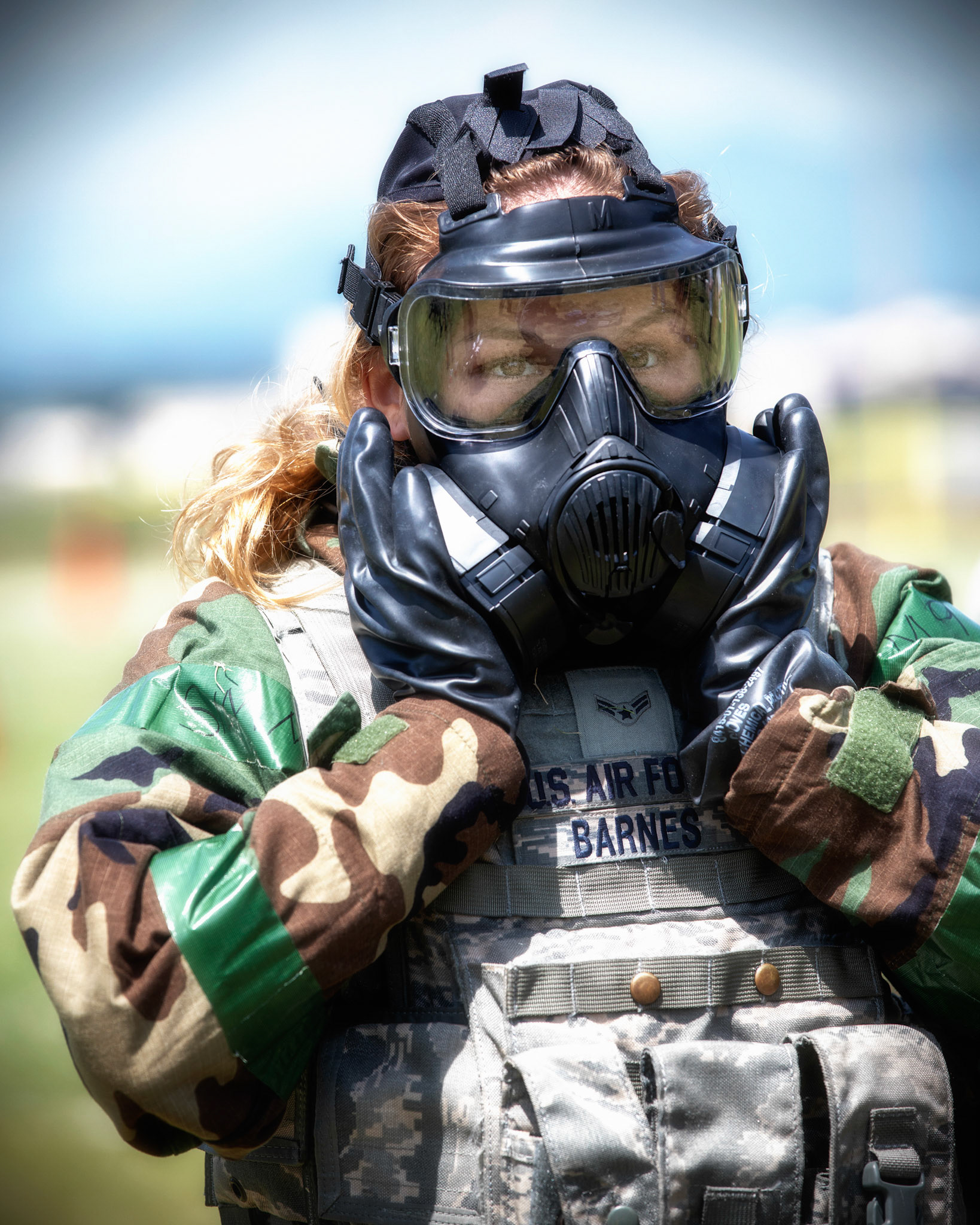
Airman 1st Class Hannah Barnes, 374th Security Forces Squadron patrolman, checks her gas mask seal during an Ability to Survive and Operate (ATSO) Rodeo at Yokota Air Base, Japan, June 8, 2018. The rodeo involved participants wearing different stages of mission-oriented protective posture (MOPP) gear after pushing a Humvee and going through various areas of training including self-aid and buddy care, post-attack reconnaissance, four-person relay, and "shoot, move and communicate." (U.S. Air Force photo by Yasuo Osakabe)
180608-F-PM645-0422
Senior Airman Antonio Gant, 374th Civil Engineer Squadron armorer, sprints into position during an Ability to Survive and Operate (ATSO) Rodeo at Yokota Air Base, Japan, June 8, 2018. The rodeo involved participants wearing different stages of mission-oriented protective posture (MOPP) gear after pushing a Humvee and going through various areas of training including self-aid and buddy care, post-attack reconnaissance, four-person relay, and "shoot, move and communicate." (U.S. Air Force photo by Yasuo Osakabe)
Airmen with the 374th Security Forces Squadron run to the next stage during an Ability to Survive and Operate (ATSO) Rodeo at Yokota Air Base, Japan, June 8, 2018. The rodeo involved participants wearing different stages of mission-oriented protective posture (MOPP) gear after pushing a Humvee and going through various areas of training including self-aid and buddy care, post-attack reconnaissance, four-person relay, and "shoot, move and communicate." (U.S. Air Force photo by Yasuo Osakabe)
Staff Sgt. Daniel Lanata, 374th Security Forces Squadron patrolman, sprints toward the finish line during an Ability to Survive and Operate (ATSO) Rodeo at Yokota Air Base, Japan, June 8, 2018. The rodeo involved participants wearing different stages of mission-oriented protective posture (MOPP) gear after pushing a Humvee and going through various areas of training including self-aid and buddy care, post-attack reconnaissance, four-person relay, and "shoot, move and communicate." (U.S. Air Force photo by Yasuo Osakabe)
A U.S. Air Force C-130J Super Hercules aircraft flies under mammatus clouds at Yokota Air Base, Japan, June 27, 2018, during a training mission. Mammatus clouds form as moist warm air rises and meets cooler air to form pockets of clouds. (U.S. Air Force photo by Yasuo Osakabe)
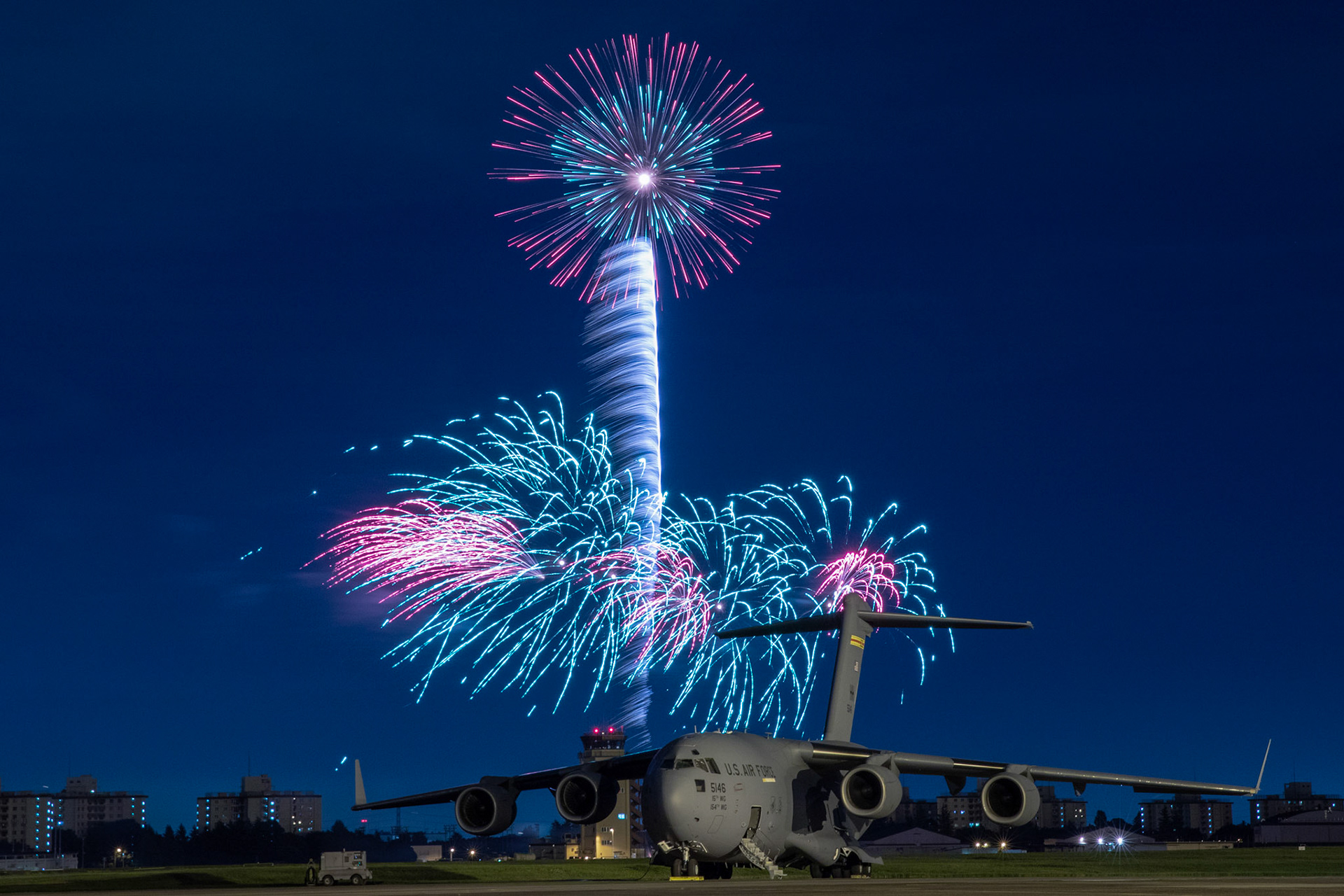
Fireworks explode behind a U.S. Air Force C-17 Globemaster III aircraft assigned to the 15th Wing during Celebrate America, July 3, 2018, at Yokota Air Base, Japan. Celebrate America is an annual event that provides military members and their families the opportunity to enjoy games, food and bands before culminating in a fireworks display over the Yokota AB airfield to celebrate Independence Day. (U.S. Air Force photo by Yasuo Osakabe)
Fireworks explode behind a U.S. Air Force C-17 Globemaster III aircraft assigned to the 15th Wing during Celebrate America, July 3, 2018, at Yokota Air Base, Japan. Celebrate America is an annual event that provides military members and their families the opportunity to enjoy games, food and bands before culminating in a fireworks display over the Yokota AB airfield to celebrate Independence Day. (U.S. Air Force photo by Yasuo Osakabe)
Fireworks explode behind a U.S. Air Force C-17 Globemaster III aircraft assigned to the 15th Wing during Celebrate America, July 3, 2018, at Yokota Air Base, Japan. Celebrate America is an annual event that provides military members and their families the opportunity to enjoy games, food and bands before culminating in a fireworks display over the Yokota AB airfield to celebrate Independence Day. (U.S. Air Force photo by Yasuo Osakabe)
A U.S. Air Force F-22 Raptor from Joint Base Elmendorf-Richardson, Alaska, sits on the flightline, July 8, 2018, at Yokota Air Base, Japan. Eight F-22s evacuated from Kadena Air Base, Japan due to Typhoon Maria. The F-22 is being deployed under U.S. PACOM’s theater security package (TSP) program, which has been in operation since 2004. (U.S. Air Force photo by Yasuo Osakabe)
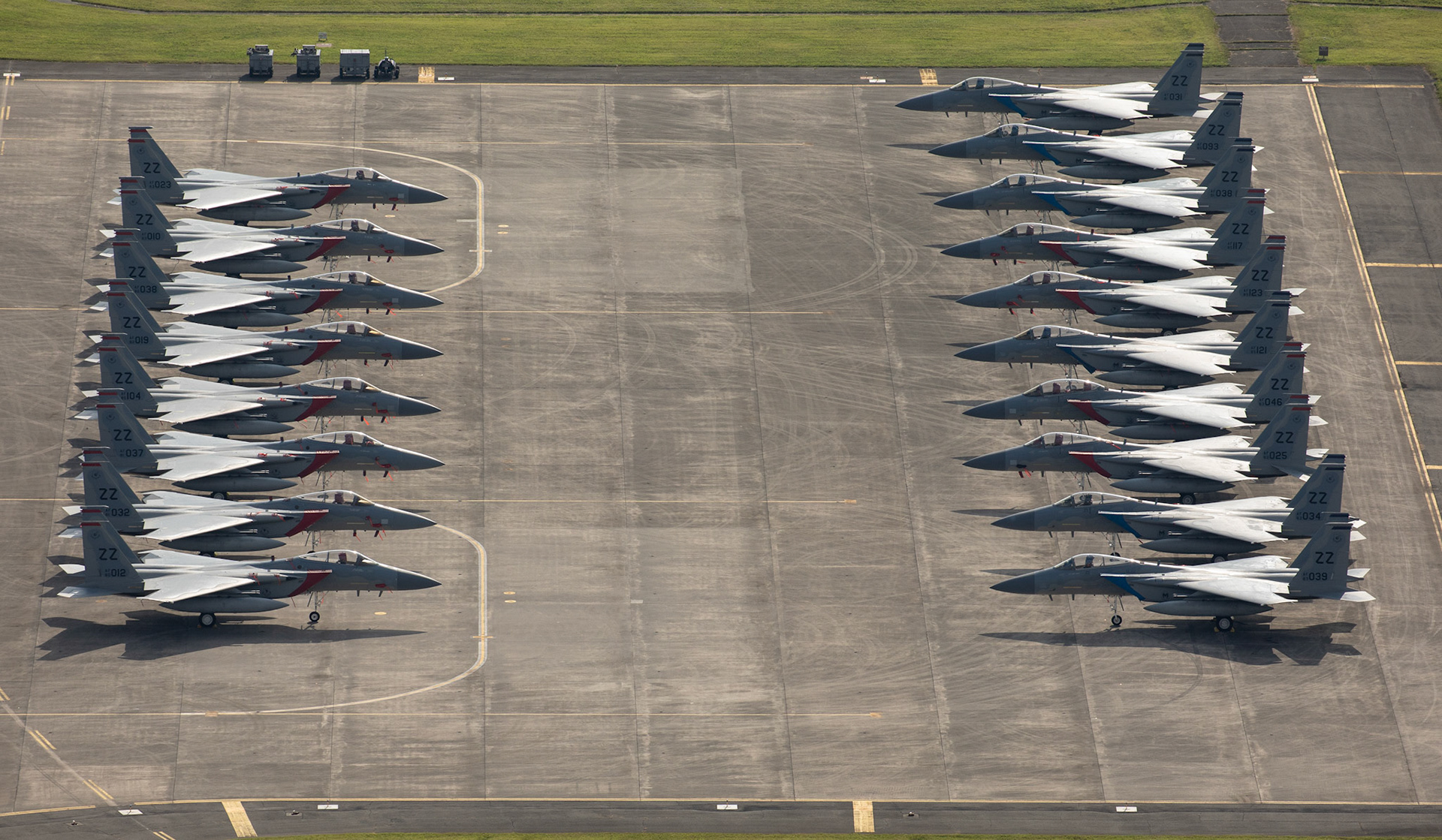
Eighteen U.S. Air Froce F-15 Eagles from Kadena Air Base are parked on the ramp, July 9, 2018, at Yokota Air Base, Japan. The F-15s evacuated due to Typhoon Maria. This is the most aircraft to ever evacuate to Yokota AB from Kadena AB. (U.S. Air Force photo by Yasuo Oaskabe)
Eighteen U.S. Air Force F-15 Eagles from Kadena Air Base are parked on the ramp, July 9, 2018, at Yokota Air Base, Japan. The F-15s evacuated due to Typhoon Maria. This is the most aircraft to ever evacuate to Yokota AB from Kadena AB. (U.S. Air Force photo by Yasuo Oaskabe)
Eight U.S. Air Force F-22 Raptors from Joint Base Elmendorf-Richardson, Alaska, sit on the flightline, July 9, 2018, at Yokota Air Base, Japan. Eight F-22s evacuated from Kadena Air Base, Japan due to Typhoon Maria. The F-22 are deployed under U.S. PACOM’s theater security package (TSP) program, which has been in operation since 2004. (U.S. Air Force photo by Yasuo Osakabe)
A C-130J Super Hercules assigned to the 36th Airlift Squadron prepares to land at Yokota Air Base, Japan, July 17, 2018. Yokota serves as the primary Western Pacific airlift hub for U.S. Air Force peacetime and contingency operations. Missions include tactical air land, airdrop, aeromedical evacuation, special operations and distinguished visitor airlift. (U.S. Air Force photo by Yasuo Osakabe)
A U.S.Air Force C-130J Super Hercules assigned to the 36th Airlift Squadron flies over Yokota Air Base, Japan, July 18, 2018, during a "fini-flight" for Col. Kenneth Moss, 374th Airlift Wing commander. The "fini-flight" marked Moss's final flight as a commander of the 374th AW. (U.S. Air Force photo by Yasuo Osakabe)
A C-130J Super Hercules assigned to the 36th Airlift Squadron sits on the flightline at Yokota Air Base, Japan, Aug. 8, 2018, during Tropical Cyclone Conditions of Readiness (TCCOR) 3. Typhoon Shanshan approached near the Kanto Plain and made its move quickly Northeast away from the Kanto Plain on Aug. 9. (U.S. Air Force photo by Yasuo Osakabe)
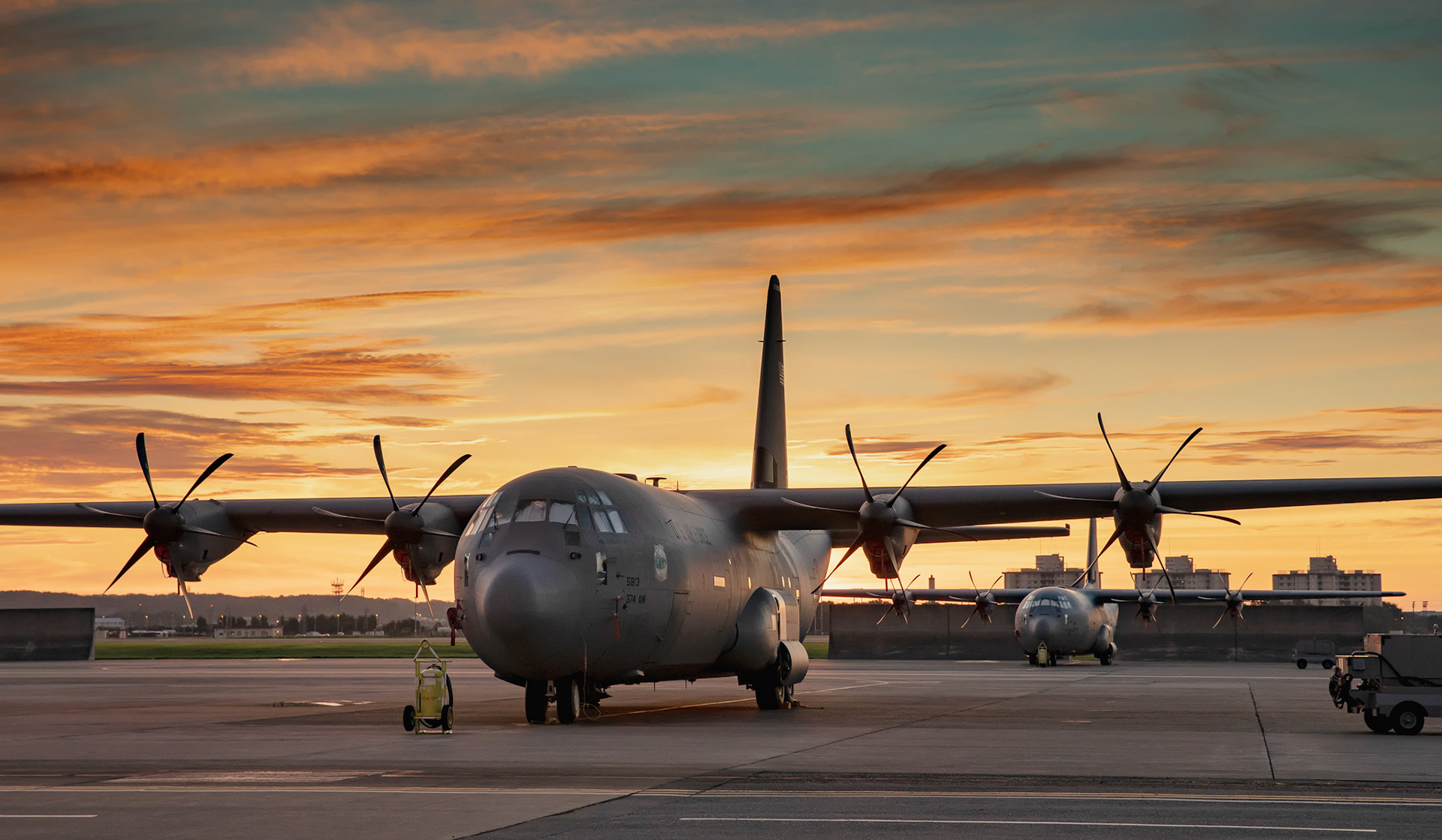
The early morning sunrise highlights a C-130J Super Hercules assigned to the 36th Airlift Squadron at Yokota Air Base, Japan, Aug. 15, 2018. A reddish sky around sunrise means a lot of water vapor already present in the atmosphere. (U.S. Air Force photo by Yasuo Osakabe)
The early morning sunrise highlights a C-130J Super Hercules assigned to the 36th Airlift Squadron at Yokota Air Base, Japan, Aug. 15, 2018. A colorful sky around sunrise means a lot of water vapor already present in the atmosphere. (U.S. Air Force photo by Yasuo Osakabe)
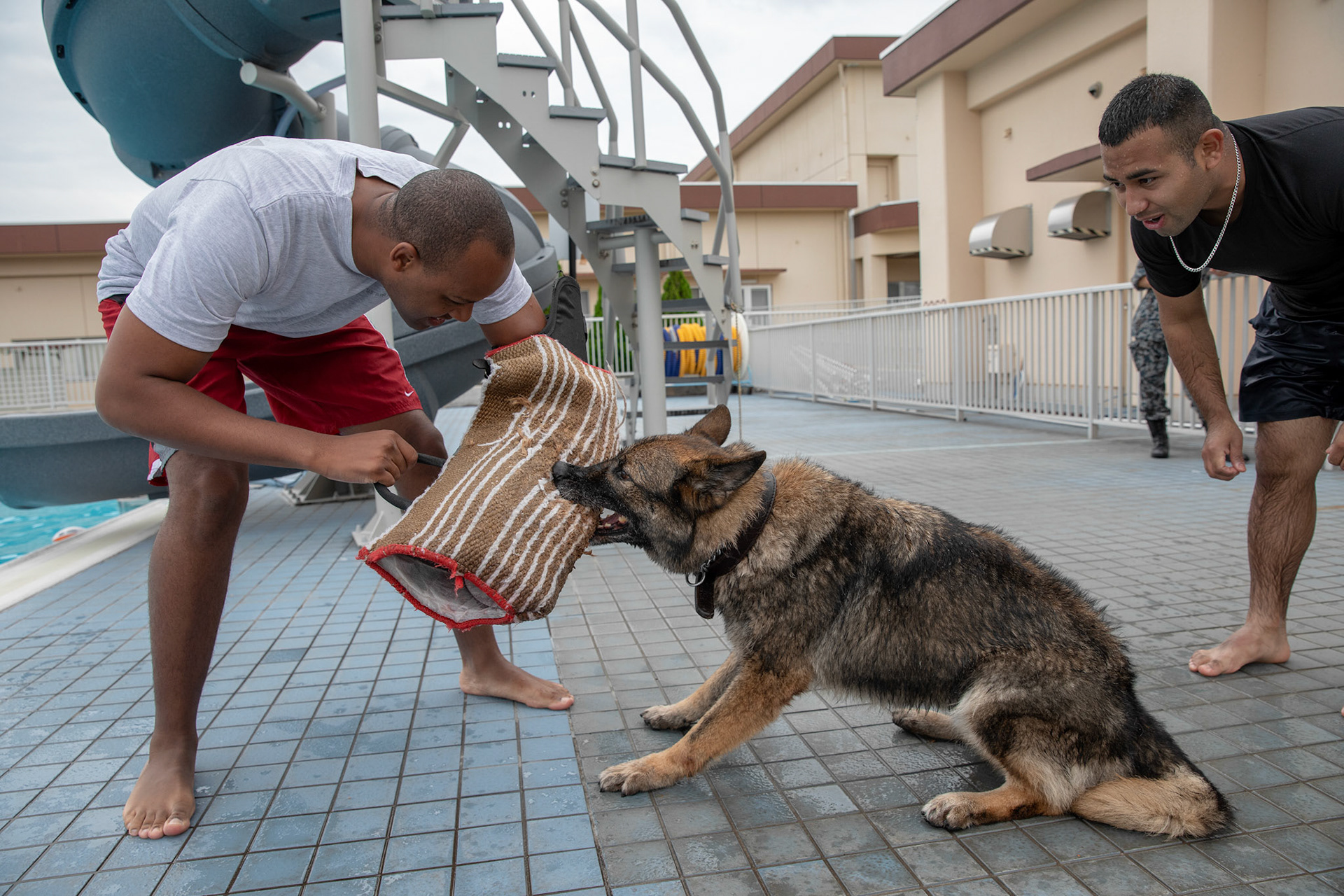
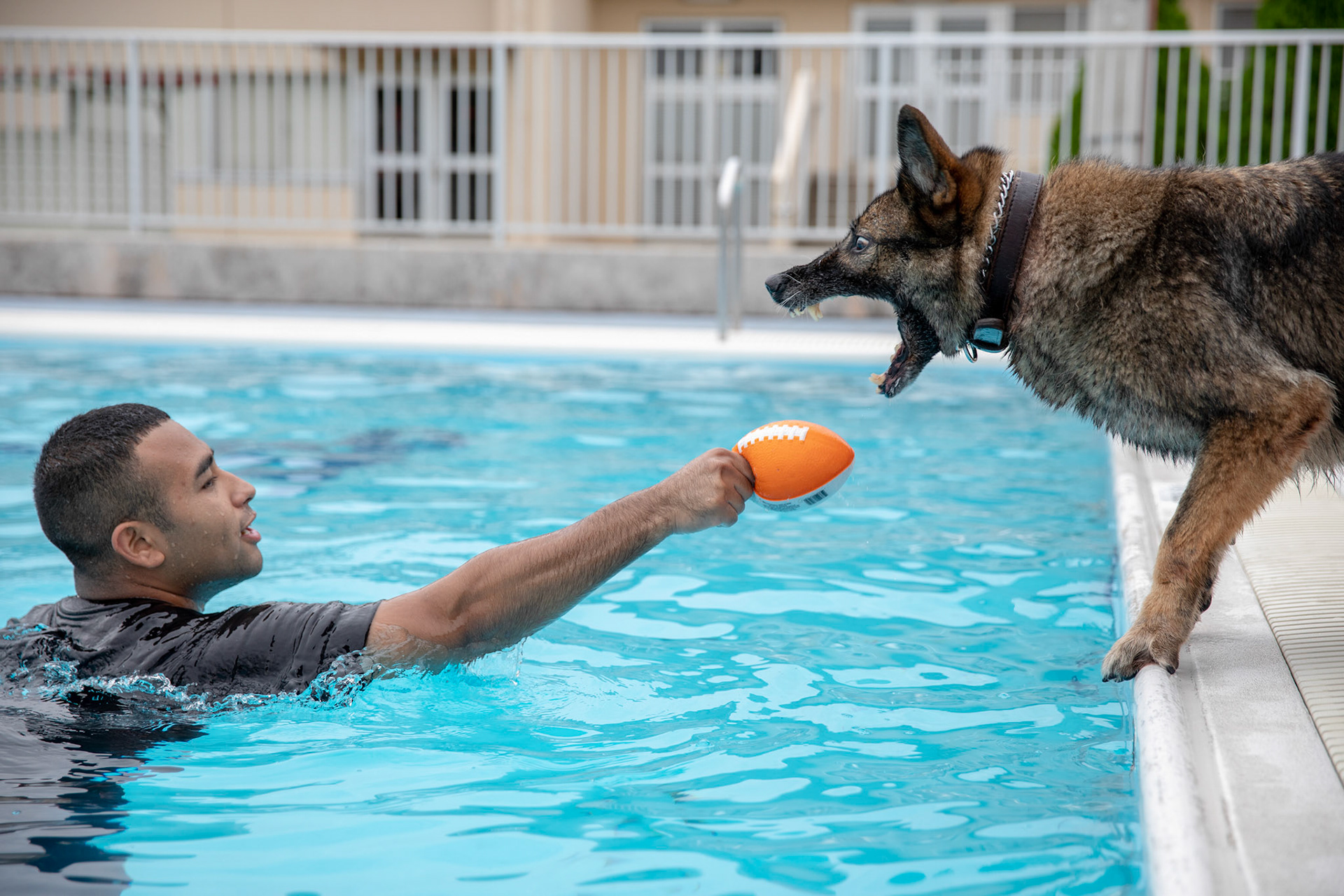
Demo, 374th Security Forces Squadron military working dog, bites his toy before conducting water-based aggression training at Yokota Air Base, Japan, Sept. 12, 2018. MWDs performed bite drills designed to slow down or stop suspects attempting to flee apprehension by escaping into a body of water. (U.S. Air Force photo by Yasuo Osakabe)
Staff Sgt. Mario Hernandez, 374th Security Forces Squadron military working dog handler, assist Demo, 374th SFS military working dog, during his first lesson in water-aggression training at Yokota Air Base, Japan, Sept. 12, 2018. The water aggression training offers a unique opportunity for working dogs to become familiar with water. (U.S. Air Force photo by Yasuo Osakabe)
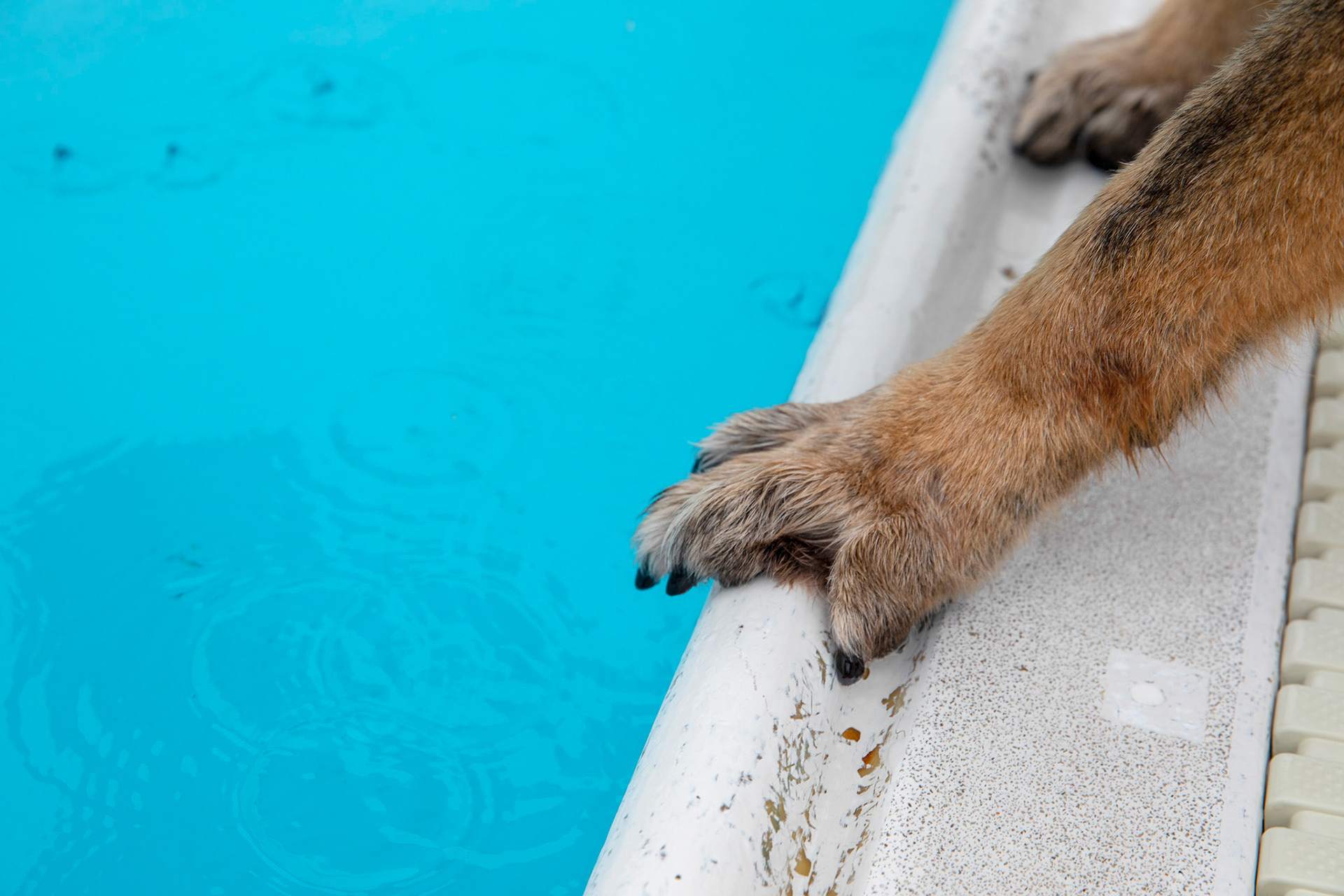
Demo, 374th Security Forces Squadron military working dog, swims in the pool during water-based aggression training at Yokota Air Base, Japan, Sept. 12, 2018. The MWD section takes advantage of the training when available due to the dogs' limited exposure to water. (U.S. Air Force photo by Yasuo Osakabe)
Staff Sgt. Mario Hernandez, 374th Security Forces Squadron military working dog handler, and military working dog Demo play after a water-based aggression training at Yokota Air Base, Japan, Sept. 12, 2018. The water aggression training offers a unique opportunity for working dogs to become familiar with water. (U.S. Air Force photo by Yasuo Osakabe)
Staff Sgt. Mario Hernandez, 374th Security Forces Squadron military working dog handler, tells Demo, 374th SFS military working dog, to leap from the edge of a pool during a water-based aggression training at Yokota Air Base, Japan, Sept. 12, 2018. MWDs performed bite drills designed to slow down or stop suspects attempting to flee apprehension by escaping into a body of water. (U.S. Air Force photo by Yasuo Osakabe)
Demo, 347th Security Forces military working dog, age eight, poses for a photo during a water-based aggression training at Yokota Air Base, Japan, Sept. 12, 2018. 374 SFS working dogs ensure the safety of USAF personnel and equipment through detection and deterrence. (U.S. Air Force photo by Yasuo Osakabe)
Demo, 374th Security Forces Squadron military working dog, leaps into the pool during a water-based aggression training at Yokota Air Base, Japan, Sept. 12, 2018. The MWD section takes advantage of the training when available due to the dogs' limited exposure to water. (U.S. Air Force photo by Yasuo Osakabe)
Staff Sgt. Mario Hernandez, 374th Security Forces Squadron military working dog handler, and Demo, 374th SFS military working dog, relax before conducting a water-based aggression training at Yokota Air Base, Japan, Sept. 12, 2018. MWDs performed bite drills designed to slow down or stop suspects attempting to flee apprehension by escaping into a body of water. (U.S. Air Force photo by Yasuo Osakabe)
Demo, 374th Security Forces Squadron military working dog, listens to instructions during a water-based aggression training at Yokota Air Base, Japan, Sept. 12, 2018. Demo performed his first-time water aggression training at Yokota AB. (U.S. Air Force photo by Yasuo Osakabe)
Demo, 374th Security Forces Squadron military working dog, prepares to leap from the edge of a pool during a water-based aggression training at Yokota Air Base, Japan, Sept. 12, 2018. Demo performed his first-time water aggression training at Yokota AB. The water aggression training offers a unique opportunity for working dogs to become familiar with water. (U.S. Air Force photo by Yasuo Osakabe)
Staff Sgt. Matthew Clark, 374th Security Forces Squadron military working dog trainer, attempts to evade Demo, 374th SFS military working dog, during water-based aggression training at Yokota Air Base, Japan, Sept. 12, 2018. MWDs performed bite drills designed to slow down or stop suspects attempting to flee apprehension by escaping into a body of water. (U.S. Air Force photo by Yasuo Osakabe)
Demo, 374th Security Forces Squadron military working dog, gets out of the water after a water-based aggression training at Yokota Air Base, Japan, Sept. 12, 2018. The water aggression training offers a unique opportunity for working dogs to become familiar with water. (U.S. Air Force photo by Yasuo Osakabe)
Staff Sgt. Mario Hernandez, 374th Security Forces Squadron military working dog handler, persuades Demo, 374th SFS military working dog, to jump in the pool during water-based aggression training at Yokota Air Base, Japan, Sept. 12, 2018. The water aggression training offers a unique opportunity for working dogs to become familiar with water. (U.S. Air Force photo by Yasuo Osakabe)
Tech. Sgt. Nicholas Poe, 459th Airlift Squadron special mission aviator, secures a rescue stretcher during pre-flight inspection at Yokota Air Base, Japan, Sept. 15, 2018, during a Capabilities Exercise as part of the 2018 Japanese-American Friendship Festival at Yokota Air Base, Japan, Sept. 15, 2018. Members with the 459th AS showcased their rescue capabilities to execute search-and-rescue mission. (U.S. Air Force photo by Yasuo Osakabe)
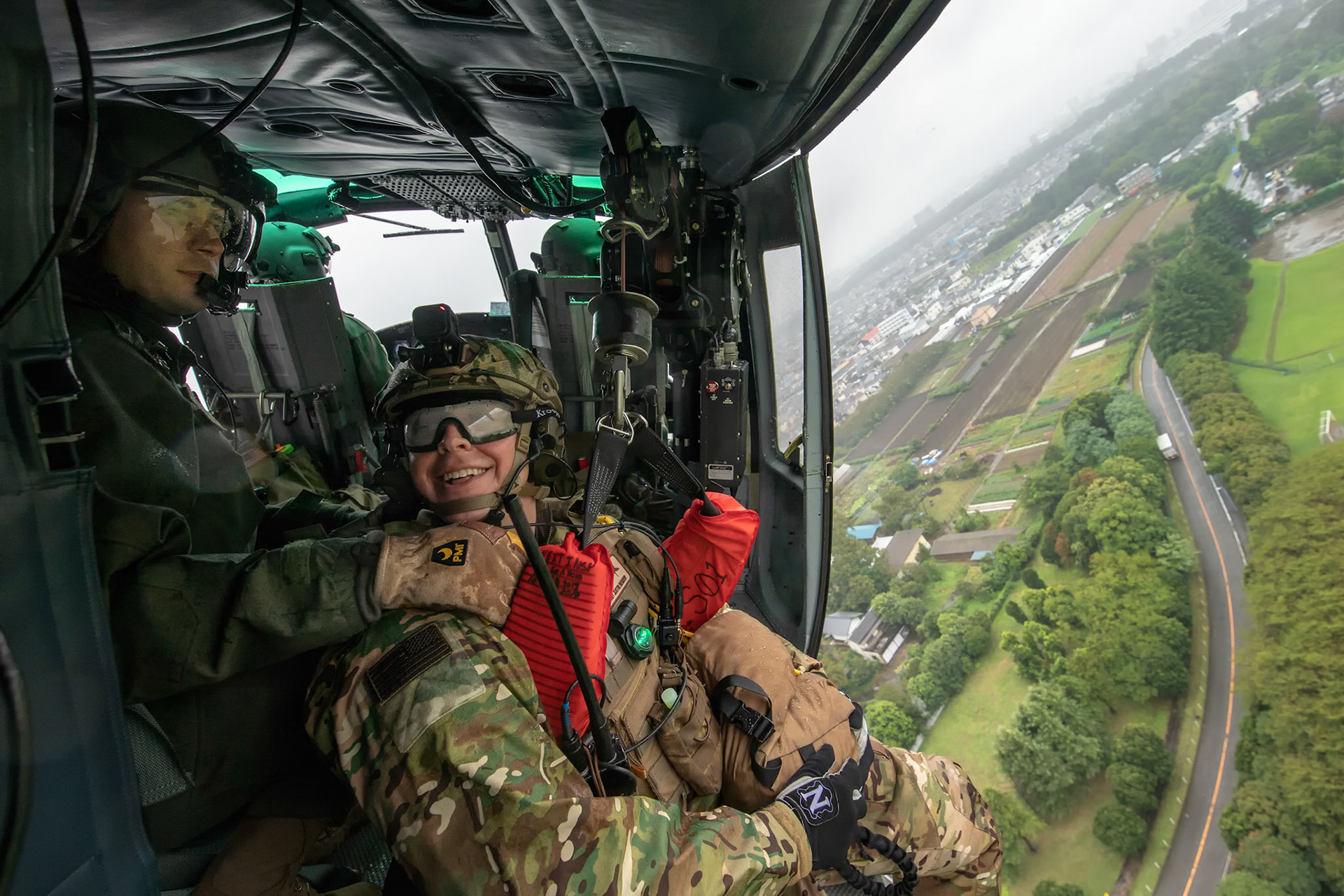
An aerial view of the 2018 Japanese-American Friendship Festival from a UH-1N Iroquois assigned to the 459th Airlift Squadron, Sept. 15, 2018. (U.S. Air Force photo by Yasuo Osakabe)
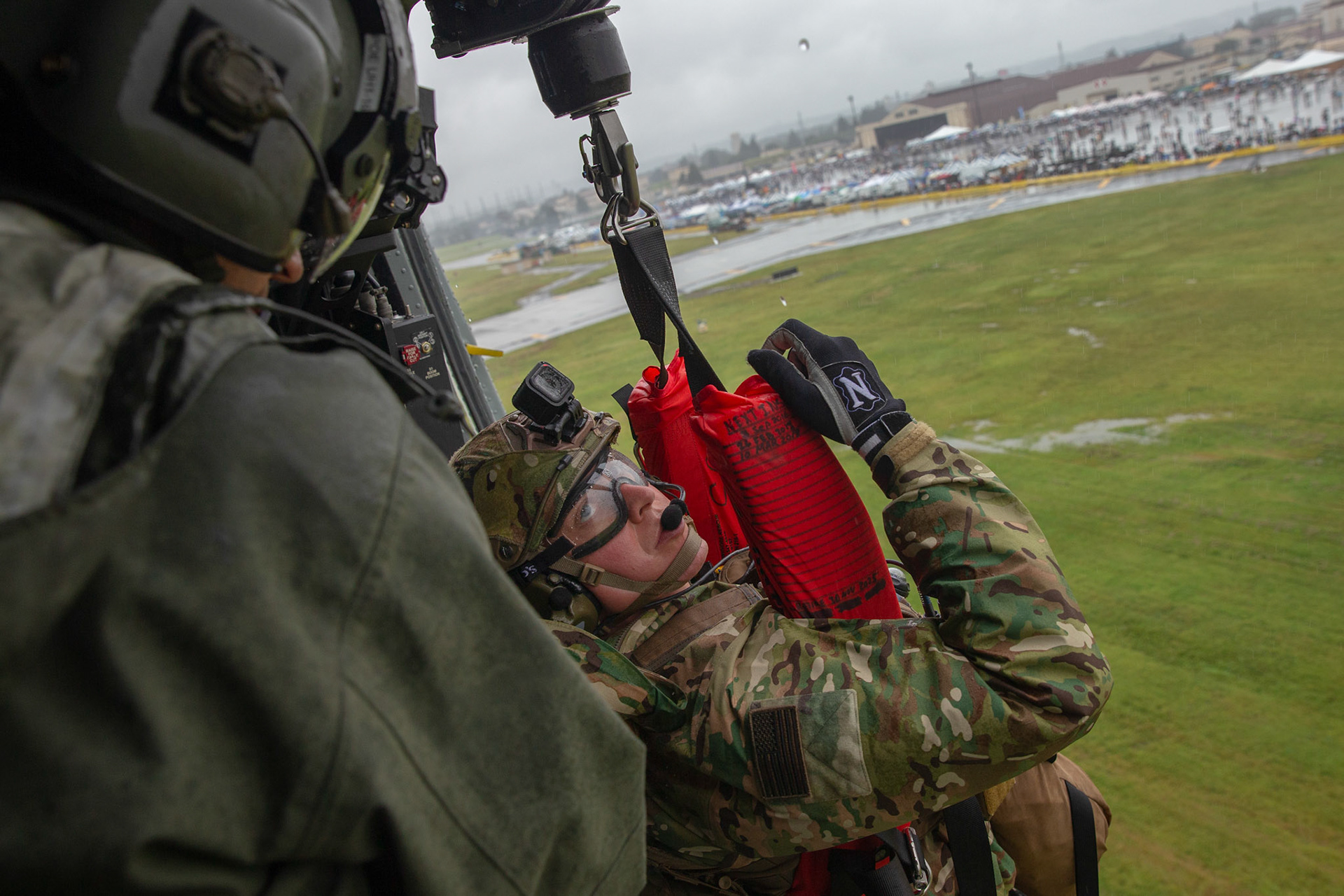
(Left to right) Tech. Sgt. Dustin Sheffield, 459th Airlift Squadron UH-1N standardized and evaluation flight engineer, communicates with Tech. Sgt. Nicholas Poe, 459th AS special mission aviator, to guide down a hoist during a Capabilities Exercise as part of the 2018 Japanese-American Friendship Festival at Yokota Air Base, Japan, Sept. 15, 2018. Members with the 459th AS showcased their rescue capabilities to execute search-and-rescue mission. (U.S. Air Force photo by Yasuo Osakabe)
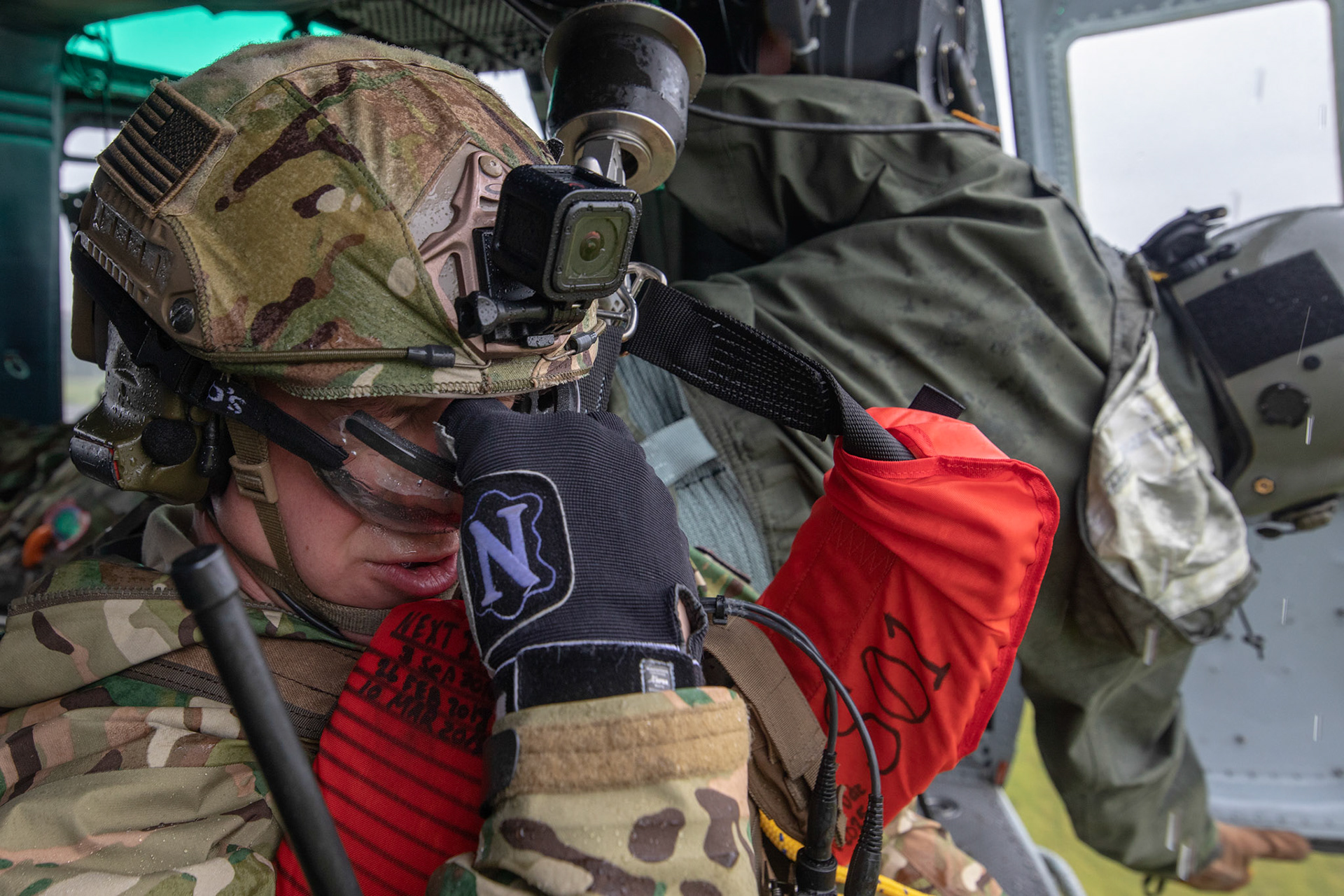
Tech. Sgt. Nicholas Poe, 459th Airlift Squadron special mission aviator, performs a visual confirmation above Yokota Air Base, Japan, Sept. 15, 2018, during a Capabilities Exercise as part of the 2018 Japanese-American Friendship Festival at Yokota Air Base, Japan, Sept. 15, 2018. Members with the 459th AS showcased their rescue capabilities to execute search-and-rescue mission. (U.S. Air Force photo by Yasuo Osakabe)
Tech. Sgt. Dustin Sheffield and Nicholas Poe, both with the 459th Airlift Squadron special mission aviators, perform visual confirmation during a Capabilities Exercise as part of the 2018 Japanese-American Friendship Festival at Yokota Air Base, Japan, Sept. 15, 2018. Members with the 459th AS showcased their rescue capabilities to execute search-and-rescue mission. (U.S. Air Force photo by Yasuo Osakabe)
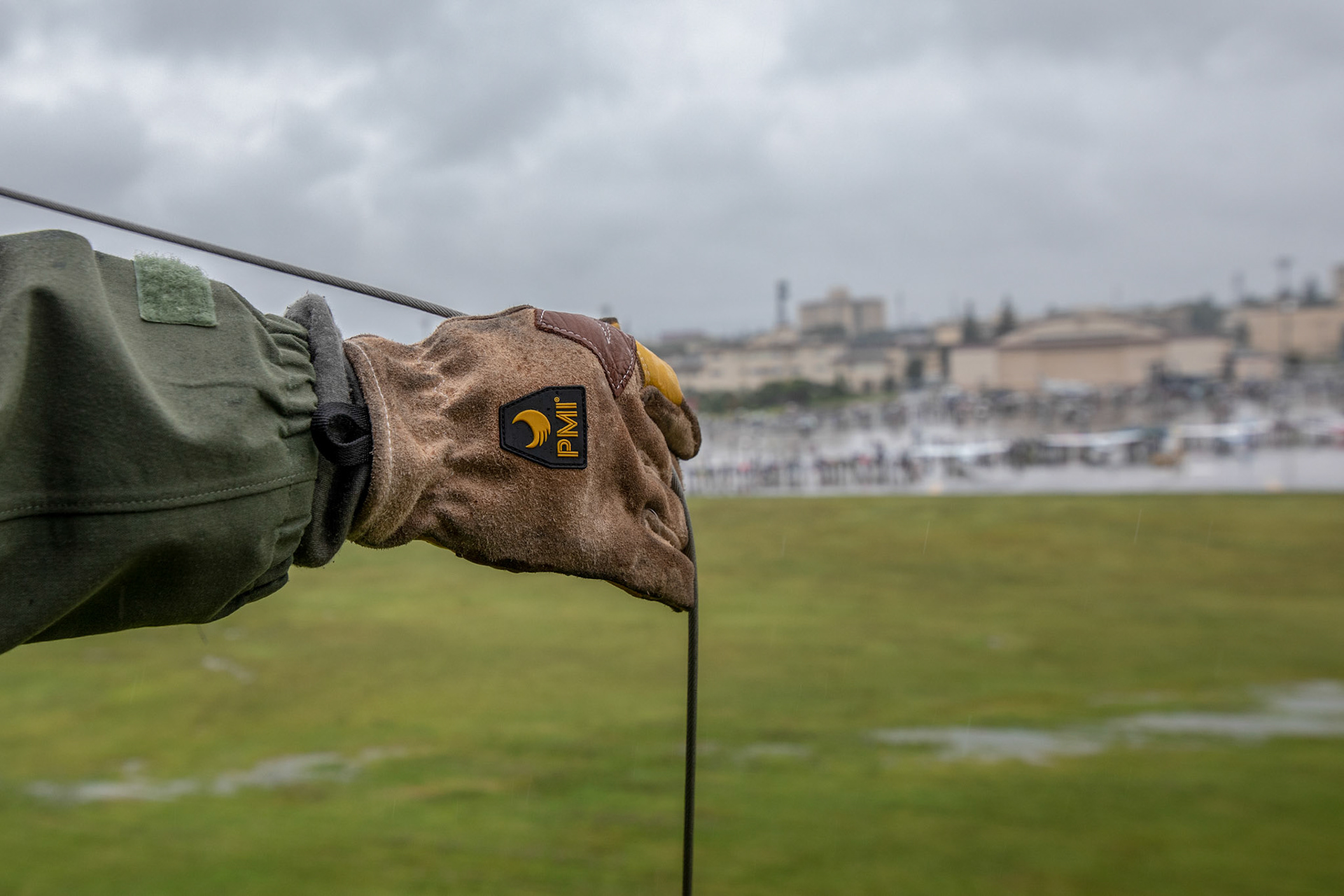
Tech. Sgt. Nicholas Poe, 459th Airlift Squadron special mission aviator, controls a hoist to a training target during a Capabilities Exercise as part of the 2018 Japanese-American Friendship Festival at Yokota Air Base, Japan, Sept. 15, 2018. Members with the 459th AS showcased their rescue capabilities to execute search-and-rescue mission. (U.S. Air Force photo by Yasuo Osakabe)
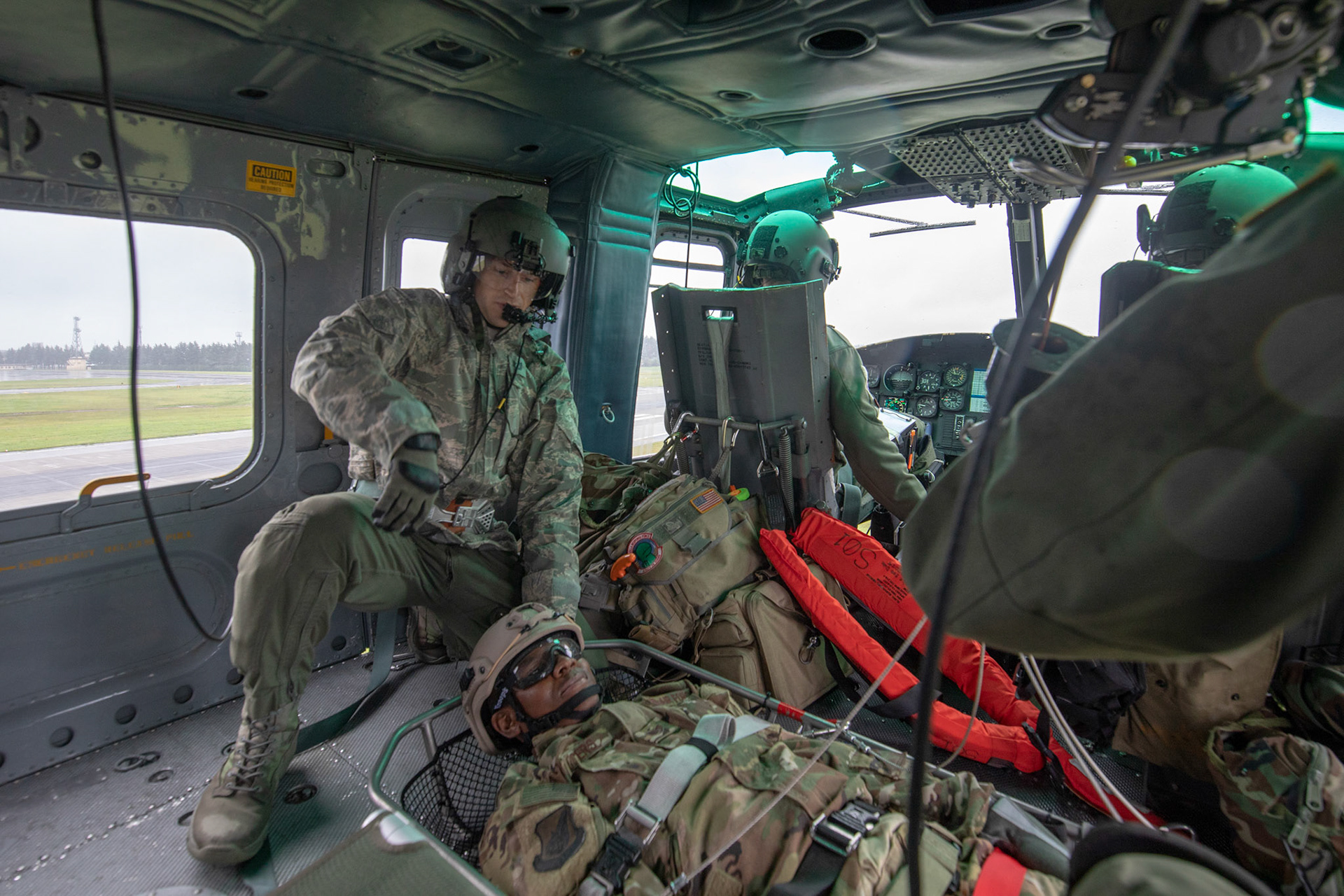
Tech. Sgt. Justin Bender, 374th Operations Support Squadron survival, evasion, resistance and escape specialist, secures a simulated victim to a stokes stretcher during a Capabilities Exercise as part of the 2018 Japanese-American Friendship Festival at Yokota Air Base, Japan, Sept. 15, 2018. Members with the 459th AS showcased their rescue capabilities to execute search-and-rescue mission. (U.S. Air Force photo by Yasuo Osakabe)
Tech. Sgt. Justin Bender, 374th Operations Support Squadron survival, evasion, resistance and escape specialist, guides a stokes stretcher lifting into a UH-1N Iroquois helicopter assigned to the 459th Airlift Squadron during a Capabilities Exercise as part of the 2018 Japanese-American Friendship Festival at Yokota Air Base, Japan, Sept. 15, 2018. Members with the 459th AS showcased their rescue capabilities to execute search-and-rescue mission. (U.S. Air Force photo by Yasuo Osakabe)
Tech. Sgt. Justin Bender, 374th Operations Support Squadron survival, evasion, resistance and escape specialist, is ready to hoist up after performing a simulated rescue mission during a Capabilities Exercise as part of the 2018 Japanese-American Friendship Festival at Yokota Air Base, Japan, Sept. 15, 2018. Members with the 459th AS showcased their rescue capabilities to execute search-and-rescue mission. (U.S. Air Force photo by Yasuo Osakabe)
Tech. Sgt. Nicholas Poe and Dustin Sheffield, both with the 459th Airlift Squadron special mission aviators, hoist a stokes stretcher onto a UH-1N Iroquois helicopter during a Capabilities Exercise as part of the 2018 Japanese-American Friendship Festival at Yokota Air Base, Japan, Sept. 15, 2018. Members with the 459th AS showcased their rescue capabilities to execute search-and-rescue mission. (U.S. Air Force photo by Yasuo Osakabe)
Tech. Sgt. Dustin Sheffield, 459th Airlift Squadron UH-1N standardized and evaluation flight engineer, loads a simulated victim into a UH-1N Iroquois during a Capabilities Exercise as part of the 2018 Japanese-American Friendship Festival at Yokota Air Base, Japan, Sept. 15, 2018. Members with the 459th AS showcased their rescue capabilities to execute search-and-rescue mission. (U.S. Air Force photo by Yasuo Osakabe)
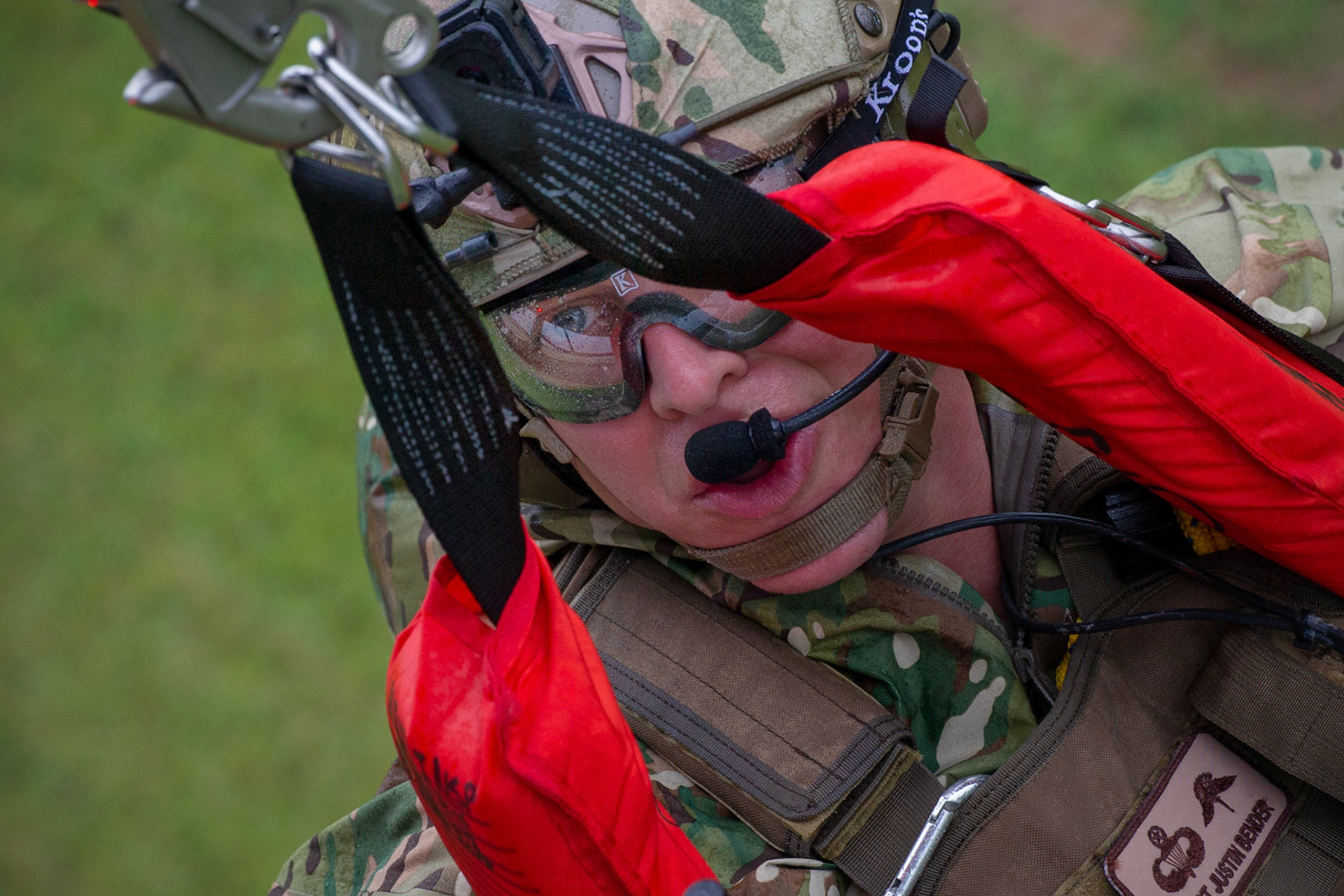
Tech. Sgt. Justin Bender, 374th Operations Support Squadron survival, evasion, resistance and escape specialist, is hoisted into a UH-1N Iroquois during a Capabilities Exercise as part of the 2018 Japanese-American Friendship Festival at Yokota Air Base, Japan, Sept. 15, 2018. Members with the 459th AS showcased their rescue capabilities to execute search-and-rescue mission. (U.S. Air Force photo by Yasuo Osakabe)
Tech. Sgt. Justin Bender, 374th Operations Support Squadron survival, evasion, resistance and escape specialist, is hoisted into a UH-1N Iroquois during a Capabilities Exercise as part of the 2018 Japanese-American Friendship Festival at Yokota Air Base, Japan, Sept. 15, 2018. Members with the 459th AS showcased their rescue capabilities to execute search-and-rescue mission. (U.S. Air Force photo by Yasuo Osakabe)
Tech. Sgt. Justin Bender, 374th Operations Support Squadron survival, evasion, resistance and escape specialist, is hoisted into a UH-1N Iroquois during a Capabilities Exercise as part of the 2018 Japanese-American Friendship Festival at Yokota Air Base, Japan, Sept. 15, 2018. Members with the 459th AS showcased their rescue capabilities to execute search-and-rescue mission. (U.S. Air Force photo by Yasuo Osakabe)
180915-F-PM645-1714
Tech. Sgt. Nicholas Poe, 459th Airlift Squadron special mission aviator and Tech. Sgt. Justin Bender, 374th Operations Support Squadron survival, evasion, resistance and escape specialist, talk during a Capabilities Exercise as part of the 2018 Japanese-American Friendship Festival at Yokota Air Base, Japan, Sept. 15, 2018. Members with the 459th AS showcased their rescue capabilities to execute search-and-rescue mission. (U.S. Air Force photo by Yasuo Osakabe)
A U.S. Air Force C-130J Super Hercules assigned to the 36th Airlift Squadron parks at Japan Air Self-Defense Force Tsuiki Air Base, Japan, Nov. 4, 2018, during Keen Sword 19. The prior-arrived 120 Japan Ground Self-Defense Force personnel at JASDF Tsuiki AB conducted airdrop training from the C-130J at Hiju-dai drop zone, Oita prefecture for the first time. (U.S. Air Force photo by Yasuo Osakabe)
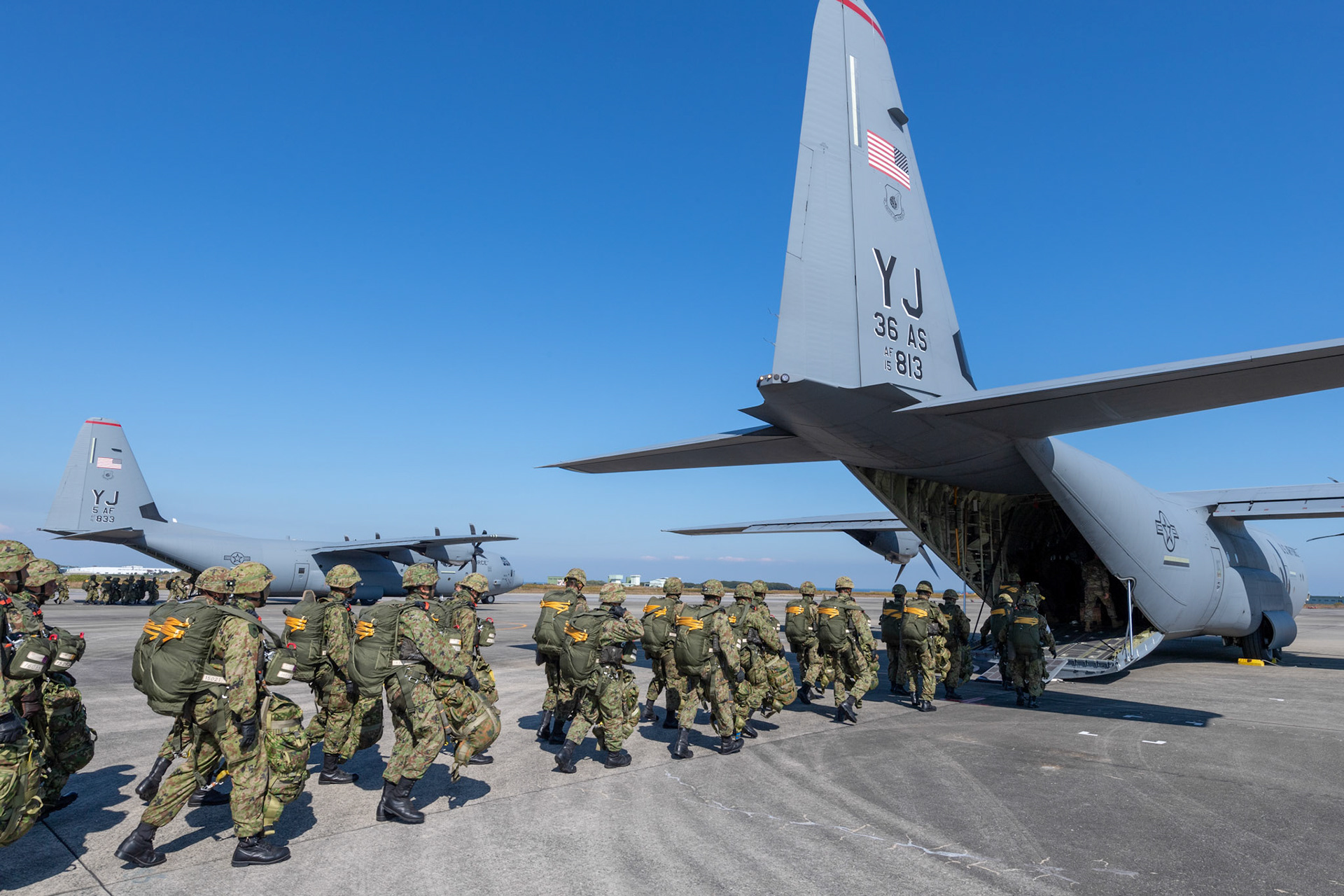
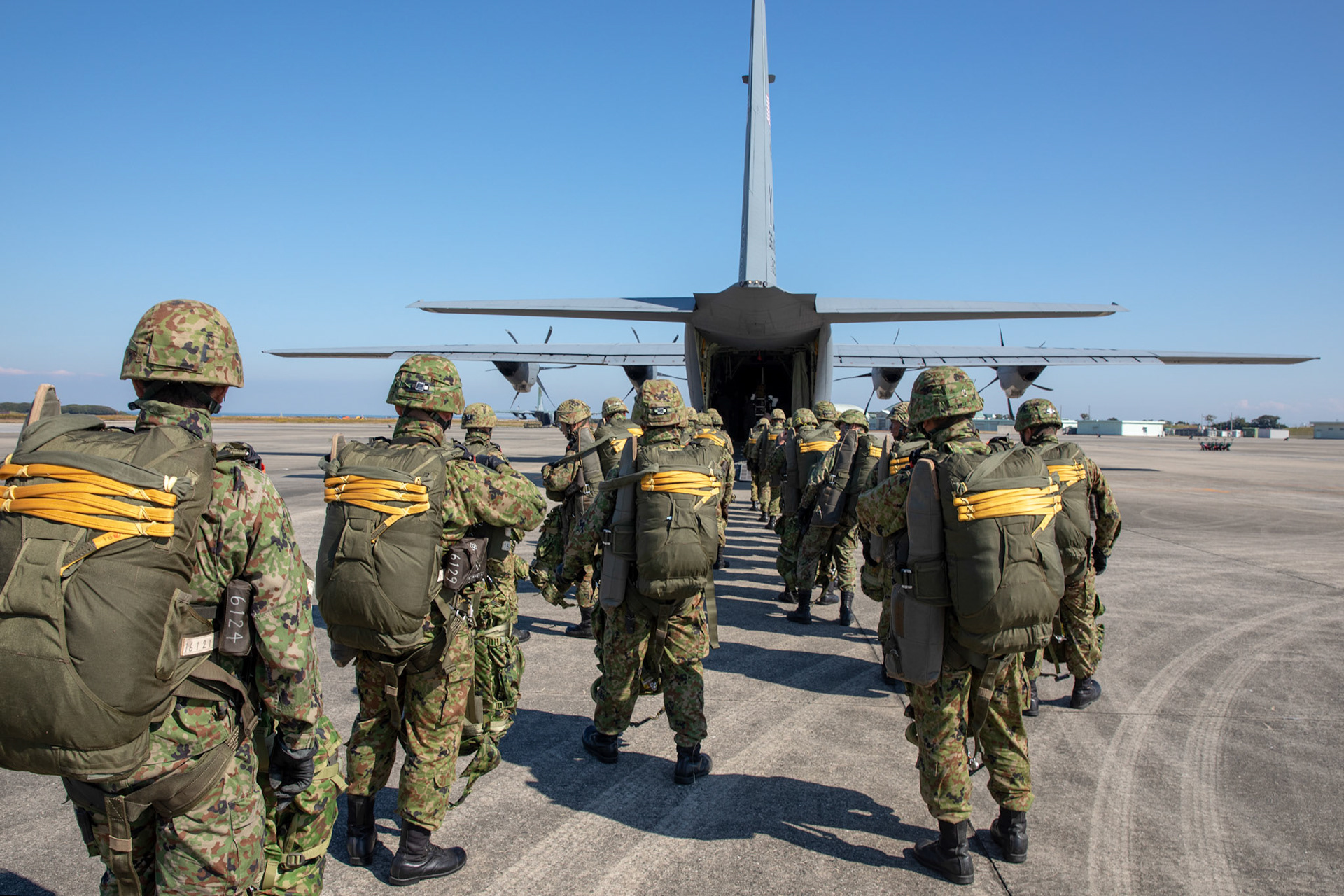
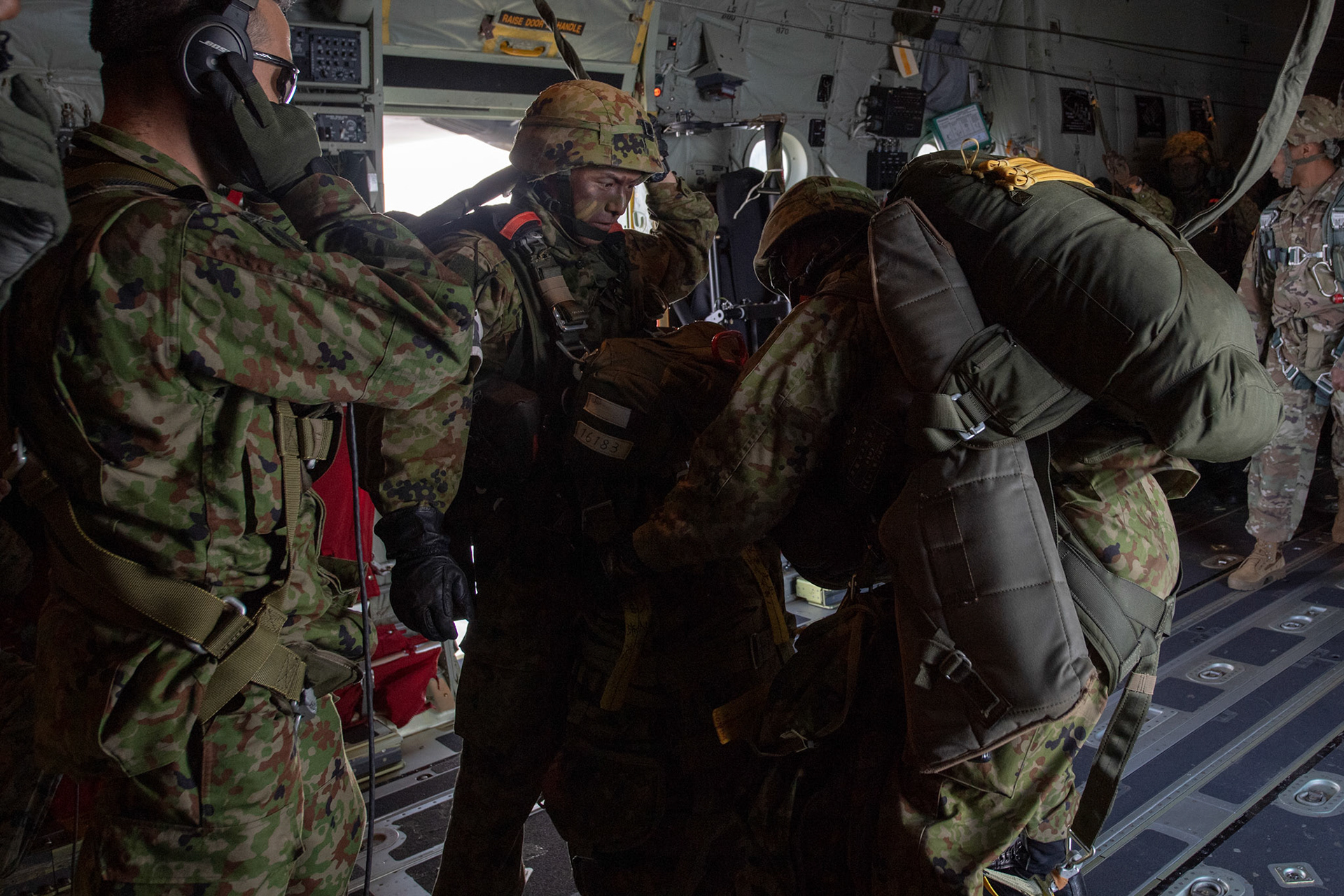
Japan Ground Self-Defense Force soldiers with the 1st Airborne Brigade prepareto board a U.S. Air Force C-130J Super Hercules assigned to the 36th Airlift Squadron at Japan Air Self-Defense Force Tsuiki Air Base, Japan, Nov. 4, 2018, during Keen Sword 19. Air Force C-130J Super Hercules’ with the 36 AS became the first U.S. aircraft to drop Japan Ground Self-Defense Force soldiers on Hiju-dai drop zone, Oita prefecture, Japan. (U.S. Air Force photo by Yasuo Osakabe)
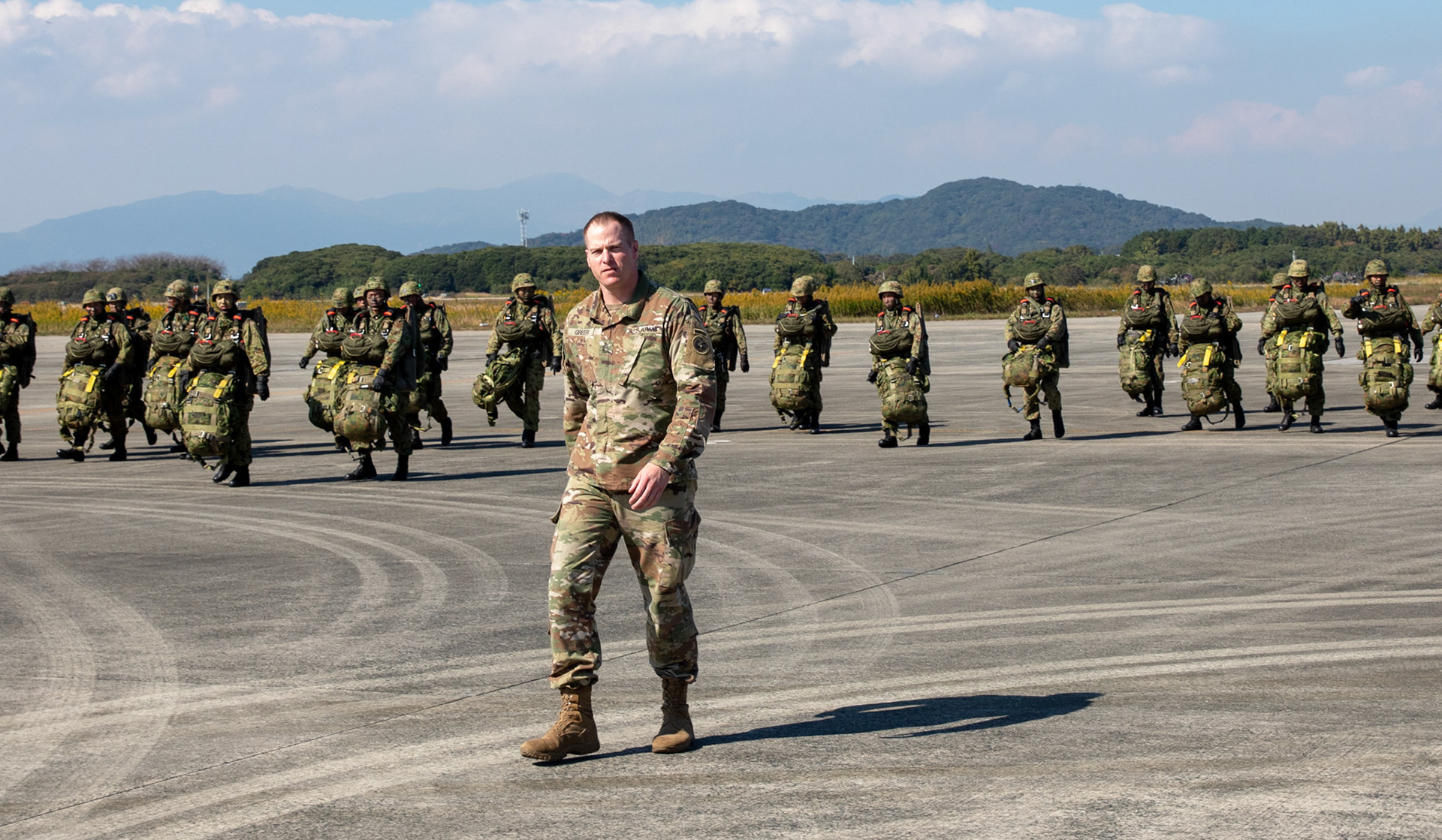
U.S. Army Master Sgt. Nathan Greer, U.S. Army Alaska jump master, leads Japan Ground Self-Defense Force paratroopers assigned to the 1st Airborne Brigade at Japan Air Self-Defense Force Tsuiki Air Base, Japan, Nov. 4, 2018, during Keen Sword 19. U.S. Army jump masters assigned to the USARAK supported JGSDF paratroopers as they jumped from U.S. Air Force C-130J Super Hercules aircraft. (U.S. Air Force photo by Yasuo Osakabe)
Japan Ground Self-Defense Force soldiers assigned to the 1st Airborne Brigade board a U.S. Air Force C-130J Super Hercules assigned to the 36th Airlift Squadron at Japan Air Self-Defense Force Tsuiki Air Base, Japan, Nov. 4, 2018, during Keen Sword 19. Air Force C-130J Super Hercules’ from the 36 AS became the first U.S. aircraft to drop JGSDF soldiers on Hiju-dai drop zone, Oita prefecture, Japan. (U.S. Air Force photo by Yasuo Osakabe)
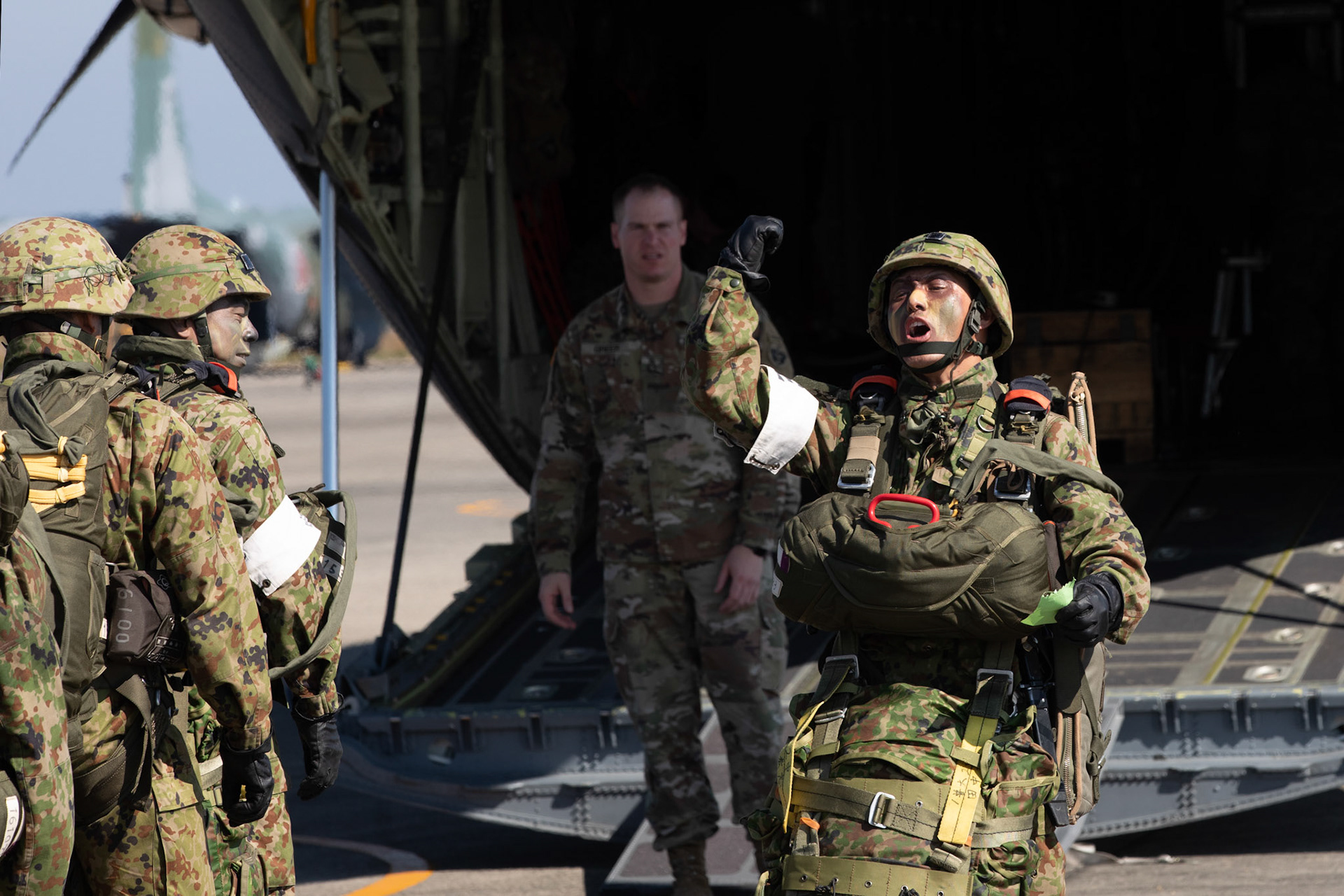
A Japan Ground Self-Defense Force soldier assigned to the 1st Airborne Brigade, calls boarding to a U.S. Air Force C-130J Super Hercules assigned to the 36th Airlift Squadron at Japan Air Self-Defense Force Tsuiki Air Base, Japan, Nov. 4, 2018, during Keen Sword 19. Air Force C-130J Super Hercules’ with the 36 AS became the first U.S. aircraft to drop JGSDF soldiers on Hiju-dai drop zone, Oita prefecture, Japan. (U.S. Air Force photo by Yasuo Osakabe)
U.S. Army Staff Sgt. Kevin Stewart, U.S. Army Alaska jump master, talks to a Japan Ground Self-Defense Force soldier assigned to the 1st Airborne Brigade at Japan Air Self-Defense Force Tsuiki Air Base, Japan, Nov. 4, 2018, during Keen Sword 19. Air Force C-130J Super Hercules’ from the 36 AS became the first U.S. aircraft to drop JGSDF soldiers on Hiju-dai drop zone, Oita prefecture, Japan. (U.S. Air Force photo by Yasuo Osakabe)
A Japan Ground Self-Defense Force solider assigned to the 1st Airborne Brigade performs personnel accountability on a U.S. Air Force C-130J Super Hercules at Japan Air Self-Defense Force Tsuiki Air Base, Japan, Nov. 4, 2018, during Keen Sword 19. Air Force C-130J Super Hercules’ from the 36 AS became the first U.S. aircraft to drop JGSDF soldiers on Hiju-dai drop zone, Oita prefecture, Japan. (U.S. Air Force photo by Yasuo Osakabe)
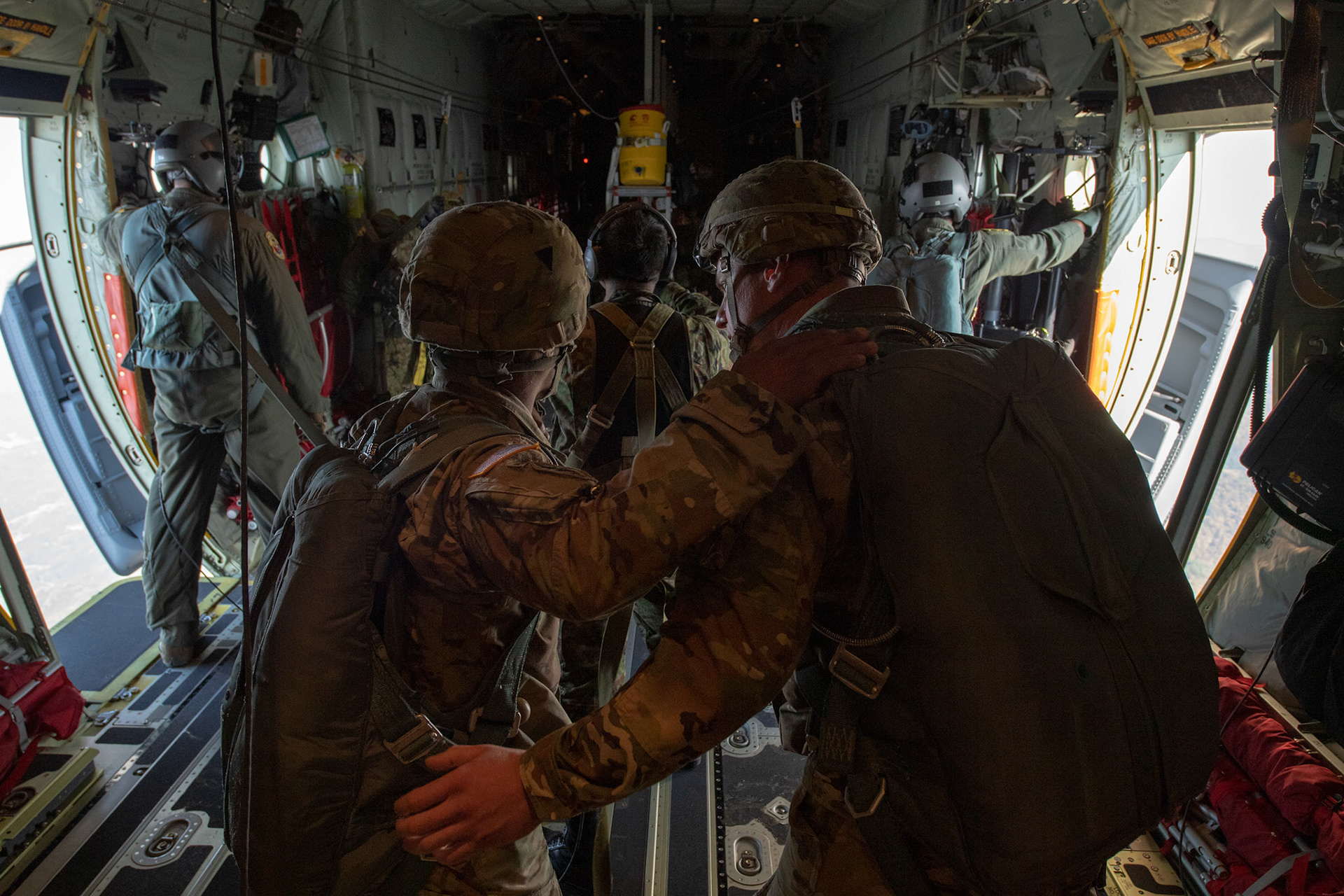
U.S. Army Master Sgt. Nathan Greer, right, U.S. Army Alaska jump master, gives a hand signal to Japan Ground Self-Defense Force soldiers assigned to the 1st Airborne Brigade over Hiju-dai drop zone, Oita prefecture, Japan, Nov. 4, 2018, during Keen Sword 19. Approximately 280 JGSDF personnel conducted jump training from U.S. Air Force C-130J Super Hercules’ for the first time in Japan. (U.S. Air Force photo by Yasuo Osakabe)
A Japan Ground Self-Defense Force soldier assigned to the 1st Airborne Brigade is ready to jump from a U.S. Air Force C-130J Super Hercules assigned to the 36th Airlift Squadron over Hiju-dai drop zone, Oita prefecture, Japan, Nov. 4, 2018. Approximately 280 JGSDF personnel conducted jump training from U.S. Air Force C-130J Super Hercules’ for the first time in Japan. (U.S. Air Force photo by Yasuo Osakabe)
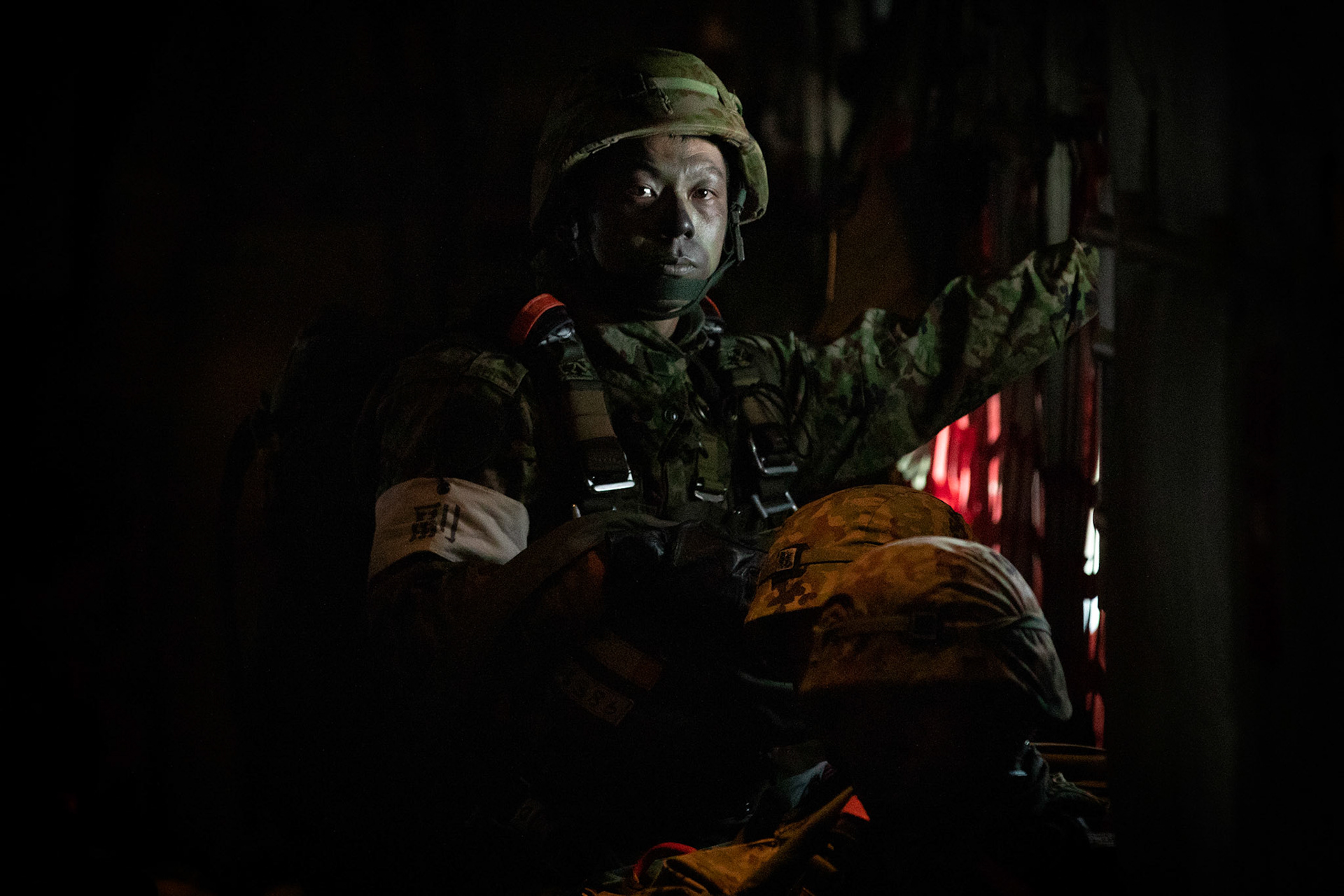
A Japan Ground Self-Defense Force soldier assigned to the 1st Airborne Brigade concentrates himself before jumping from a U.S. Air Force C-130J Super Hercules assigned to the 36th Airlift Squadron over Hiju-dai drop zone, Oita prefecture, Japan, Nov. 4, 2018, during Keen Sword 19. Approximately 280 JGSDF personnel conducted jump training from U.S. Air Force C-130J Super Hercules’ for the first time in Japan. (U.S. Air Force photo by Yasuo Osakabe)
A Japan Ground Self-Defense Force soldier assigned to the 1st Airborne Brigade looks outside before conducting a jump from a U.S. Air Force C-130J Super Hercules assigned to the 36th Airlift Squadron over Hiju-dai drop zone, Oita prefecture, Japan, Nov. 4, 2018, during Keen Sword 19. Approximately 280 JGSDF personnel conducted jump training from U.S. Air Force C-130J Super Hercules’ for the first time in Japan. (U.S. Air Force photo by Yasuo Osakabe)
U.S. Army Master Sgt. Nathan Greer, U.S. Army Alaska jump master, takes a breath after supporting Japan Ground Self-Defense Force soldiers jumping from a U.S. Air Force C-130J Super Hercules assigned to the 36th Airlift Squadron over Hiju-dai drop zone, Oita prefecture, Japan, Nov. 4, 2018, during Keen Sword 19. Approximately 280 JGSDF personnel conducted jump training from U.S. Air Force C-130J Super Hercules’ for the first time in Japan. (U.S. Air Force photo by Yasuo Osakabe)
A Japan Ground Self-Defense Force soldier assigned to the 1st Airborne Brigade waits to jump from a U.S. Air Force C-130J Super Hercules assigned to the 36th Airlift Squadron over Hiju-dai drop zone, Oita prefecture, Japan, Nov. 4, 2018, during Keen Sword 19. Approximately 280 JGSDF personnel conducted jump training from U.S. Air Force C-130J Super Hercules’ for the first time in Japan. (U.S. Air Force photo by Yasuo Osakabe)
(Right to left) U.S. Army Master Sgt. Nathan Greer and Staff Sgt. Kevin Stewart, both with the U.S. Army Alaska jump masters, talk after supporting Japan Ground Self-Defense Force soldiers jumps from a C-130J Super Hercules assigned to the 36th Airlift Squadron over Hiju-dai drop zone, Oita prefecture, Japan, Nov. 4, 2018, during Keen Sword 19. Approximately 280 JGSDF personnel conducted jump training from U.S. Air Force C-130J Super Hercules’ for the first time in Japan. (U.S. Air Force photo by Yasuo Osakabe)
A Japan Ground Self-Defense Force soldier assigned to the 1st Airborne Brigade waits to jump from a U.S. Air Force C-130J Super Hercules over Hiju-dai drop zone, Oita prefecture, Japan, Nov. 4, 2018, during Keen Sword 19. Approximately 280 JGSDF personnel conducted jump training from U.S. Air Force C-130J Super Hercules’ for the first time in Japan. (U.S. Air Force photo by Yasuo Osakabe)
Japan Ground Self-Defense Force soldiers assigned to the 1st Airborne Brigade check their gear before conducting a jump from a U.S. Air Force C-130J Super Hercules assigned to the 36th Airlift Squadron over Hiju-dai drop zone, Oita prefecture, Japan, Nov. 4, 2018, during Keen Sword 19. Approximately 280 JGSDF personnel conducted jump training from U.S. Air Force C-130J Super Hercules’ for the first time in Japan. (U.S. Air Force photo by Yasuo Osakabe)
Japan Ground Self-Defense Force soldiers assigned to the 1st Airborne Brigade confirm their delivery procedures over Hiju-dai drop zone, Oita prefecture, Japan, Nov. 4, 2018, during Keen Sword 19. Approximately 280 JGSDF personnel conducted jump training from U.S. Air Force C-130J Super Hercules’ for the first time in Japan. (U.S. Air Force photo by Yasuo Osakabe)
A Japan Ground Self-Defense Force soldier assigned to the 1st Airborne Brigade jumps from a U.S. Air Force C-130J Super Hercules assigned to the 36th Airlift Squadron over Hiju-dai drop zone, Oita prefecture, Japan, Nov. 4, 2018, during Keen Sword 19. Approximately 280 JGSDF personnel conducted jump training from U.S. Air Force C-130J Super Hercules’ for the first time in Japan. (U.S. Air Force photo by Yasuo Osakabe)
Crewmembers with the 36th Airlift Squadron fly over Kyushu, Japan, Nov. 4, 2018, during Keen Sword 19. U.S. Air Force C-130J Super Hercules’ with the 36 AS became the first U.S. aircraft to drop Japan Ground Self-Defense Force soldiers on Hiju-dai drop zone, Oita prefecture, Japan. (U.S. Air Force photo by Yasuo Osakabe)
An aerial view of Oita prefecture from an Air Force C-130J Super Hercules assigned to the 36th Airlift Squadron, Nov. 4, 2018, during Keen Sword 19. Keen Sword is a concrete example of the strength of the U.S.-Japan alliance, the foundation of peace and security in the Indo-Pacific region for almost 60 years. The relationships that are built and maintained during these events are critical to the shared capability to respond to contingencies at a moment’s notice. (U.S. Air Force photo by Yasuo Osakabe)